
- BGG-Rang
- BGG #10.789
- BGG-Bewertung
- 7,7
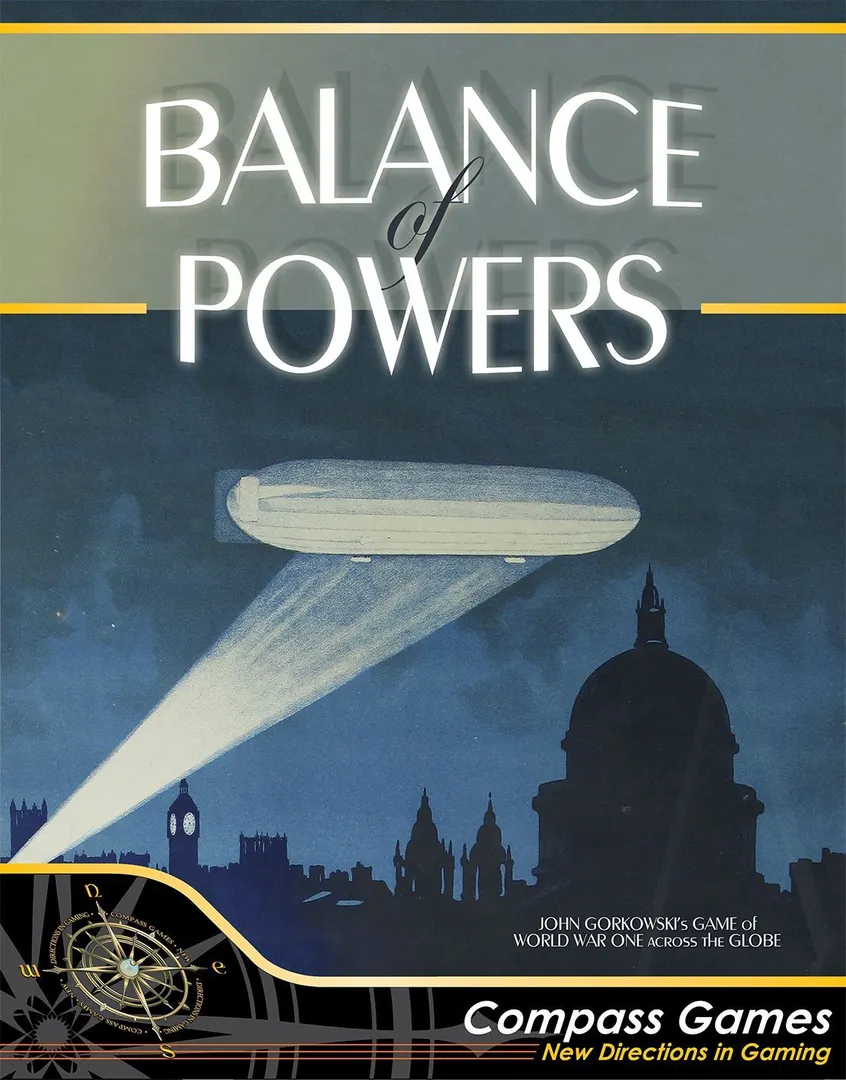
Balance of Powers
- 2–7 Spieler
- 120–1440 Min.
- Komplexität 3,4/5
- 2015
2017
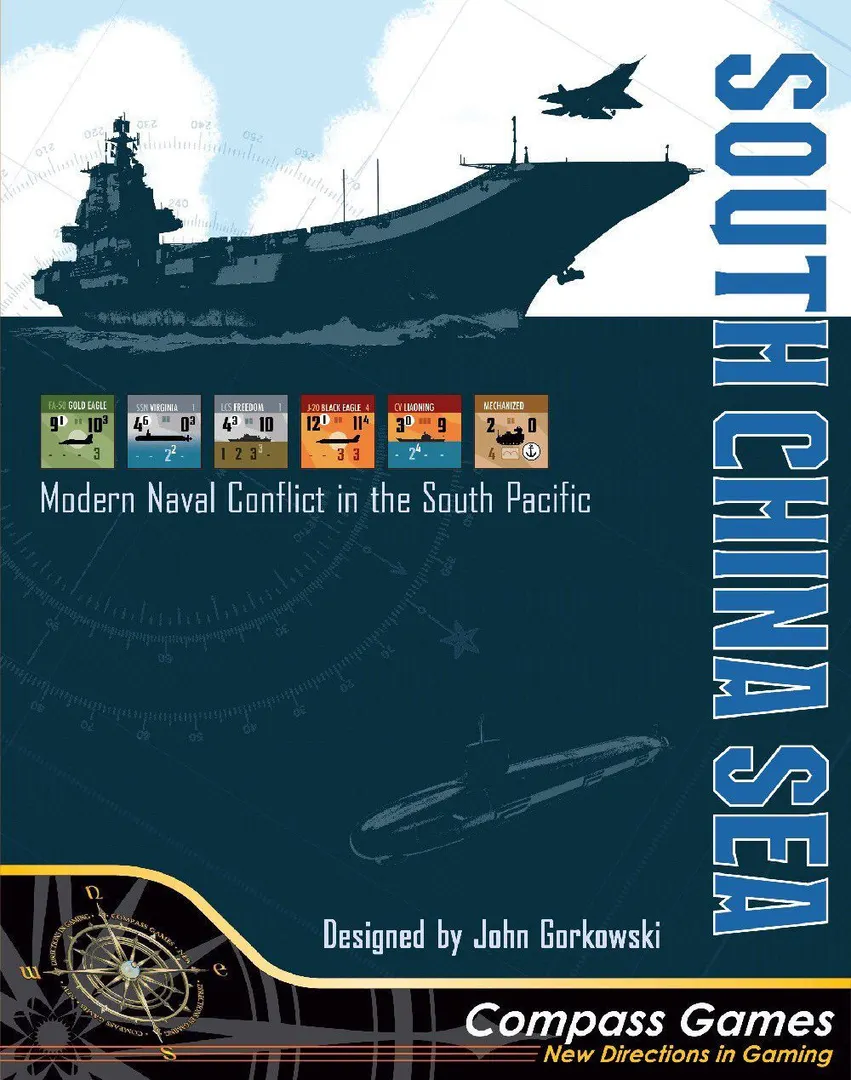
Regelhilfe für South China Sea: Modern Naval Conflict in the South Pacific
Verständliche Erklärungen zu Spielzügen, Karteneffekten und strittigen Situationen mit Verweisen auf offizielle Quellen und gespeichertem Fragenverlauf.
Für 2 Personen
Was möchtest du wissen?
Antworten stammen aus dem offiziellen Regelheft, mit Seitenangabe zum Nachprüfen.
South China Sea: Modern Naval Conflict in the South Pacific ist ein Brettspiel aus dem Jahr 2017 für 2–3 Personen, mit 120–240 Minuten pro Partie und ab 11 Jahren. Entwickelt wurde es von John Gorkowski; die wichtigsten Mechaniken sind Dice Rolling, Hexagon Grid und Simulation.




Auf Englisch
South China Sea (SCS) provides an integrated political-military simulation of near future contention and conflict around the South China Sea. Players take on the roles of China, the United States, Malaysia, the Philippines, and Vietnam. They simulate current political tensions through card play and structured negotiation keyed to real world events in an effort to "move the needle" to their side. Unfortunately, the cards with the greatest chance of moving that needle, such as Chinese Coast Guard and U.S. Freedom of Navigation Exercise, are also most likely to trigger armed conflict. If and when that happens, play transitions to traditional hex-and-counter format on a map scaled at 45 nautical miles (nmi) per hex and turns of 3-7 hours. SCS is derived from Breaking the Chains (BtC), but is definitely a different game. How do the two differ? SCS begins with political turns that can lead to victory without armed conflict. For armed conflict, SCS focuses more closely on the South China Sea (45 nmi per hex) rather than the larger southeast Asian region of BtC (70 nmi per hex) and uses smaller units such as air squadrons, ship pairs, and land battalions. Therefore, the SCS map shows more detail, but less territory. SCS employs streamlined versions of BtC's turn structure and strike mechanisms that expedite play by dispensing with numerous cycles and strike paths. SCS nodded to ergonomics by putting all scores on one side of each counter – less flipping. Most important, SCS allows naval units to move more than one hex in a single turn, but includes a mechanism, based on stealth, that enables the other side to "check" multi-hex moves to create a more dynamic, variable, and volatile environment. This last adjustment allows quick moves at a distance, but prevents close-in ships from "jumping" through the beaten zone of modern anti-ship cruise missiles (ASCM), 290 nmi in some cases. And, every turn has the option for a negotiations phase with some structure to enhance political play if desired.
Laut Katalog unterstützt South China Sea: Modern Naval Conflict in the South Pacific 2–3 Personen. Diese Spanne entspricht der vom Verlag angegebenen Spielerzahl, das Spiel lässt sich also für jede Gruppengröße innerhalb dieser Spanne aufbauen. Aufbau, einzelne Regeln und Wertungsdetails können je nach Personenzahl trotzdem abweichen; prüfe daher die genaue Konfiguration in der Anleitung deiner Ausgabe.
Die angegebene Spieldauer für South China Sea: Modern Naval Conflict in the South Pacific beträgt 120–240 Minuten. Das ist die Schätzung des Verlags für eine vollständige Partie. Die tatsächliche Dauer hängt von der Gruppe, der Personenzahl und der Regelkenntnis ab: Erste Partien dauern meist länger, erfahrene Gruppen sind oft schneller fertig. Aufbau und Regelerklärung sind in dieser Schätzung nicht enthalten.
Im Katalog wird South China Sea: Modern Naval Conflict in the South Pacific ab 11 Jahren empfohlen. Das ist die Empfehlung des Verlags und berücksichtigt Leseanforderungen, Regelkomplexität und Kleinteile, nicht nur das Thema. Jüngere Kinder können oft mit Hilfe eines Erwachsenen mitspielen; beachte die Altersangabe deiner Ausgabe und die Brettspielerfahrung deiner Gruppe.
South China Sea: Modern Naval Conflict in the South Pacific hat bei BoardGameGeek eine Komplexitätswertung von 2,9 von 5 und gilt damit als eher leichtes Spiel. Die Wertung zeigt, wie viel Regelwissen, Planung und Entscheidungen eine typische Partie verlangt. Schwerere Spiele brauchen bei der ersten Erklärung mehr Zeit, daher hilft vor dem Spieleabend eine Vorbereitungsanleitung.
South China Sea: Modern Naval Conflict in the South Pacific gehört zu diesen Kategorien: Wargame, Nautical und Political. Die wichtigsten Mechaniken sind Dice Rolling, Hexagon Grid und Simulation. Kategorien beschreiben Thema und Setting eines Spiels, Mechaniken dagegen, was die Spielenden in ihrem Zug tatsächlich tun. Jede Mechanik führt zu einer Katalogseite mit ähnlichen Spielen, falls du etwas Vergleichbares suchst.
Als Autoren von South China Sea: Modern Naval Conflict in the South Pacific sind angegeben: John Gorkowski. Diese Angaben stammen aus den veröffentlichten Spieldaten und nennen die für das Spieldesign verantwortlichen Personen, nicht die Illustratoren oder Verlage. Die Autorenseiten auf MeepleRules sammeln weitere Titel derselben Autoren – praktisch, wenn dir ein Spiel gefällt und du ähnliche Spiele suchst.
Im Katalog ist South China Sea: Modern Naval Conflict in the South Pacific als Grundspiel aufgeführt. Es lässt sich eigenständig mit dem Material aus der Schachtel spielen und benötigt keinen weiteren Titel. Erweiterungen, sofern es welche gibt, ergänzen neues Material oder neue Regeln und sind im Katalog separat mit einem Verweis auf dieses Grundspiel aufgeführt.