

- BGG-Rang
- BGG #6.925
- BGG-Bewertung
- 7,5
Raas: A Dance of Love
- 1–6 Spieler
- 30–90 Min.
- Komplexität 2,5/5
- 2026
2018
Regelhilfe für Symphony
Verständliche Erklärungen zu Spielzügen, Karteneffekten und strittigen Situationen mit Verweisen auf offizielle Quellen und gespeichertem Fragenverlauf.
Für 2 Personen
Was möchtest du wissen?
Antworten stammen aus dem offiziellen Regelheft, mit Seitenangabe zum Nachprüfen.
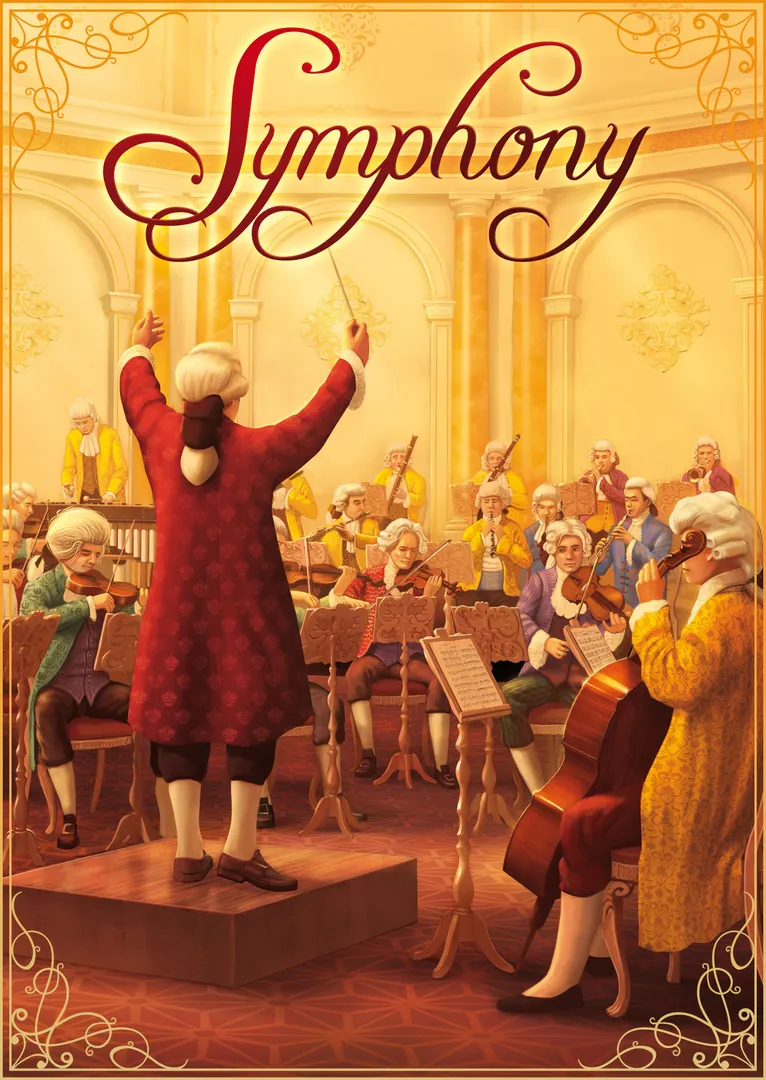
Symphony ist ein Brettspiel aus dem Jahr 2018 für 2–6 Personen, mit 30–45 Minuten pro Partie und ab 12 Jahren. Entwickelt wurde es von Angelo Tonin; die wichtigsten Mechaniken sind Variable Player Powers, Set Collection und Modular Board.


Auf Englisch
Take your musician band to the stage, and join with the other bands, to form an orchestra! Draft the best instruments available in your game, place them in an ideal locations for their acoustics, and then, play ... the Symphony (as well as scoring more victory points)! Every instrument plays in a different way, every music sheet is different, and every games sublime! Each Symphony game is divided into two phases: Orchestra Phase and Symphony Phase. 1) During the Orchestra Phase, the Orchestra is formed by placing the Instrument cards on the boards, and the players gradually take possession of the instruments they prefer. In turn order, every player play an instrument card on the board, choose an instrument and place its note discs on the choosen instrument. Each instrument plays a fixed number of notes and has two kind of abilities: an ability always-on, and another that is activated only if the instrument is placed in the proper location for its acoustics. 2) During the Symphony Phase, the so arranged orchestra plays the music score, which is modular, and therefore different in each game. The orchestra is divided into 5 columns, and each column plays in a specific part of the score (for example, column A plays in the first 2 bars, column B in the second, third and fourth, and so on). When a column of instruments has finished its notes, the next column plays, and so on. Within a column, the lower instrument start playing a note, then the instrument immediately above plays a note, and so on, upward. Once at the top, the lower instrument plays again, and so on, until all the notes of the column are played. Obviously the player who has their note disks on the instrument controls is it, and decide where to place the related disks to score VPs. In this way, the game is not subdivided in player tyrns, but rather into instrument turns. The main aim is to play better than their opponents (= score more VPs), so it is not important to play many notes, but play them properly. First, each note provides VPs according to the Voice that is placed on (1-3 VPs). Secondly, there are extra VPs for the Sheet note majorities (at the completiion of each sheet) and Voice note majorities (at the end of game). Also, different areas or notes on the music score are Scoring Areas, and grant you to advance on corresponding Scoring Tracks to score extra PV at the end of the game. Finally, some notes, as well as the placement of the initial instruments, provide yous Bonuses, that can be placed on your instruments (max 1 for Instrument) to potentiate their effects. So, to play better in such melodious context requires a careful strategy and good tactics. Type: Eurogame Target: soft gamers (Base mod.) / hard gamers (Advanced mod.) Modalities: Basic and Advanced Porta la tua compagnia sul palco, e fonditi con le altre, a formare un'Orchestra! Drafta gli strumenti migliori a disposizione in ogni partita, piazzali nella posizione ideale per la loro acustica, ed infine suona ... la Sinfonia (così da totalizzare più Punti Vittoria)! Ogni strumento suona in un modo diverso, ogni Spartito è diverso, ogni partita sublime! Ogni partita a Symphony é divisa in 2 Fasi: la Fase Orchestra e la Fase Sonata. 1) Durante la fase Orchestra, l'Orchestra viene formata disponendo le carte Strumento, ed i giocatori, gradualmente, prendono possesso degli Strumenti che preferiscono, piazzando, a turno i propri dischi nota, sullo Strumento che scelgono. Ogni Strumento suona un numero prefissato di note e dispone di due abilità: una sempre attiva, e l'altra che è attiva solo se lo Strumento è piazzato opportunamente, in una posizione appropriata per la sua acustica. 2) durante la fase Suonata, l'Orchestra così formata suona sullo Spartito, che è modulare, e quindi diverso in ogni partita. L'Orchestra è divisa in colonne, e ciascuna colonna, suona in una parte specifica dello spartito (ad esempio, la colonna A suona nelle prime 2 battute). Quando una colonna di Strumenti ha terminato le proprie note, suona la colonna successiva, e così via. All'interno di una colonna, suona prima una nota lo Strumento più in basso, poi una nota quello subito sopra, e così via, a salire. Arrivati in cima, riparte lo Strumento più in basso, e così via, fino ad esaurire le note della Colonna. Chiaramente il giocatore che ha i propri dischi su uno Strumento, lo controlla, e decide dove piazzare le relative note per ottenere i PV. In questo modo il gioco non ha una normale suddivisione di turni dei giocatori, quanto piuttosto una suddivisione in turni degli Strumenti. Dato che lo scopo è suonare meglio dei propri avversari (ovvero realizzare più PV), non è importante suonare tante note, ma suonarle opportunamente. Innanzitutto ogni nota fornisce PV in base alla Voce su cui è piazzata. Secondariamente, vi sono dei PV extra per le maggioranze di Foglio (al termine di ogni Foglio) e di Voce (a fine partita). Inoltre, diverse aree dello Spartito sono Aree Punteggio, che fanno avanzare su appositi Tracciati Punteggio e forniscono PV extra a fine partita. Infine, alcune note, così come il piazzamento degli Strumenti iniziali, forniscono dei bonus Musicista, che possono essere piazzati sui propri Strumenti (max 1 per Strumento) per potenziarne gli effetti. A causa di tutto ciò, prevalere in un simile contesto melodioso richiede un'attenta strategia ed una buona tattica. Tipologia: Tedesco Target: soft gamers (mod. Base) / hard gamers (mod. Avanzata) Modalità: Base e Avanzata
Laut Katalog unterstützt Symphony 2–6 Personen. Diese Spanne entspricht der vom Verlag angegebenen Spielerzahl, das Spiel lässt sich also für jede Gruppengröße innerhalb dieser Spanne aufbauen. Aufbau, einzelne Regeln und Wertungsdetails können je nach Personenzahl trotzdem abweichen; prüfe daher die genaue Konfiguration in der Anleitung deiner Ausgabe.
Die angegebene Spieldauer für Symphony beträgt 30–45 Minuten. Das ist die Schätzung des Verlags für eine vollständige Partie. Die tatsächliche Dauer hängt von der Gruppe, der Personenzahl und der Regelkenntnis ab: Erste Partien dauern meist länger, erfahrene Gruppen sind oft schneller fertig. Aufbau und Regelerklärung sind in dieser Schätzung nicht enthalten.
Im Katalog wird Symphony ab 12 Jahren empfohlen. Das ist die Empfehlung des Verlags und berücksichtigt Leseanforderungen, Regelkomplexität und Kleinteile, nicht nur das Thema. Jüngere Kinder können oft mit Hilfe eines Erwachsenen mitspielen; beachte die Altersangabe deiner Ausgabe und die Brettspielerfahrung deiner Gruppe.
Symphony hat bei BoardGameGeek eine Komplexitätswertung von 3,5 von 5 und gilt damit als mittelschweres Spiel. Die Wertung zeigt, wie viel Regelwissen, Planung und Entscheidungen eine typische Partie verlangt. Schwerere Spiele brauchen bei der ersten Erklärung mehr Zeit, daher hilft vor dem Spieleabend eine Vorbereitungsanleitung.
Symphony gehört zu diesen Kategorien: Abstract Strategy, Music und Puzzle. Die wichtigsten Mechaniken sind Variable Player Powers, Set Collection und Modular Board. Kategorien beschreiben Thema und Setting eines Spiels, Mechaniken dagegen, was die Spielenden in ihrem Zug tatsächlich tun. Jede Mechanik führt zu einer Katalogseite mit ähnlichen Spielen, falls du etwas Vergleichbares suchst.
Als Autoren von Symphony sind angegeben: Angelo Tonin. Diese Angaben stammen aus den veröffentlichten Spieldaten und nennen die für das Spieldesign verantwortlichen Personen, nicht die Illustratoren oder Verlage. Die Autorenseiten auf MeepleRules sammeln weitere Titel derselben Autoren – praktisch, wenn dir ein Spiel gefällt und du ähnliche Spiele suchst.
Im Katalog ist Symphony als Grundspiel aufgeführt. Es lässt sich eigenständig mit dem Material aus der Schachtel spielen und benötigt keinen weiteren Titel. Erweiterungen, sofern es welche gibt, ergänzen neues Material oder neue Regeln und sind im Katalog separat mit einem Verweis auf dieses Grundspiel aufgeführt.