
- BGG-Rang
- BGG #8.831
- BGG-Bewertung
- 8,8
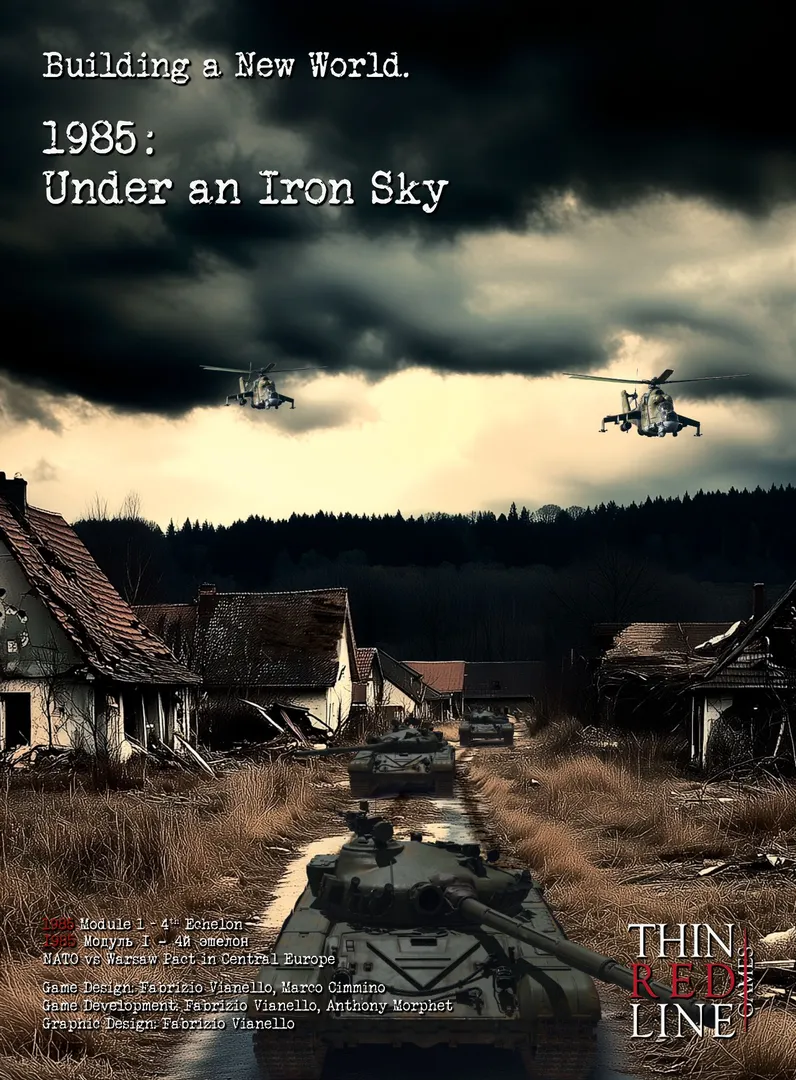
1985: Under an Iron Sky
- 2–6 Spieler
- 120–8640 Min.
- Komplexität 4,2/5
- 2018
2024
Regelhilfe für The Fate of All
Verständliche Erklärungen zu Spielzügen, Karteneffekten und strittigen Situationen mit Verweisen auf offizielle Quellen und gespeichertem Fragenverlauf.
Für 2 Personen
Was möchtest du wissen?
Antworten stammen aus dem offiziellen Regelheft, mit Seitenangabe zum Nachprüfen.
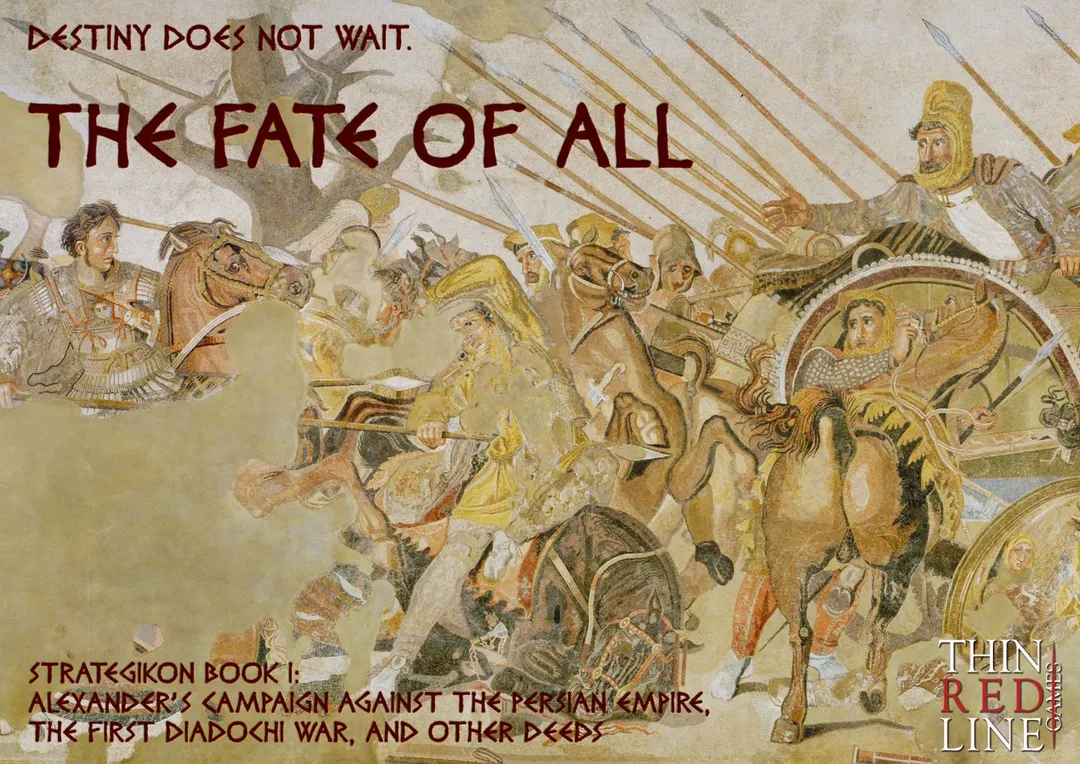
The Fate of All ist ein Brettspiel aus dem Jahr 2024 für 2 Personen, mit 240–1200 Minuten pro Partie und ab 14 Jahren. Entwickelt wurde es von Fabrizio Vianello; die wichtigsten Mechaniken sind Dice Rolling, Secret Unit Deployment und Hexagon Grid.







Auf Englisch
Loosely inspired on SPI’s “The Conquerors”, The Fate of All is an operational / tactical simulation covering the first four years of the campaign led by Alexander the Great against the Achaemenid Empire ruled by Darius III, and other related conflicts. The final goal is to give a realistic representation of ancient warfare, without strange salads of godly interventions, auguries and Homeric duels. In the end, players will find that the problems faced were similar to those encountered during the Napoleonic era or the American Civil War. Counters are 5/8″, each one representing a formation, from a Macedonian Phalanx Taxis (approx. 1500 soldiers) to a Cavalry Ile (200 – 300 mounted soldiers). Commanders and naval forces are also represented and will be key elements for the final victory. Rules are centred on the problems of army organisation, supply and morale: Commanders are essentials, armies must be organised in a balanced way or they will move slowly, cavalry must be used for foraging, raid and reconnaissance, morale must be kept under control using sound military achievements or donations. Political aspects are also a key element: Actions like Plundering and Sacking will have a negative impact on the local support by the ruling class and population, and both sides will have to use money or threats to gain it back. Last but not least, treason, revolts and dubious allies will be a problem too. The four maps cover Greece, part of the Balkans, Anatolia, Egypt and the Middle East up to Babylon. The scale is 30 km per hex with monthly turns. The maps are designed using the latest archaeological studies and findings, but despite centuries of research several things are still only vaguely known: Some examples are the extension and path of the Persian Royal Roads, the location of several important cities and the exact route of Alexander’s Army. In these cases, the “most accepted theory” rule has been used. Battles can be fought using Strategic Combat, still realistic but quicker, or to their full extent using the Tactical Rules and Map – probably the best choice for a decisive battle. All the classical sources and several modern military-focused studies have been used during development. In particular, The Anabasis of Alexander by Arrian was chosen as the main and most reliable classical source for two reasons: Arrian based most of his writing on the now lost Ptolemy’s account of the campaign, and he was himself a military commander, thus having a better understanding of the problems and key facts of a military campaign. Game Highlights 30 km per hex, one month per turn Units representing various formations, from Phalanx to Chariots Order of battle and commanders based on primary sources and the most recent historical research Realistic supply problems with realistic and possibly violent solutions Cavalry Reconnaissance, Foraging and Raiding Reaction Movement, not so easy retreats and catastrophic routs Attrition and Army Morale, your first problems in the morning Naval Warfare Satrapies, Taxation and Bribes Revolts, Treachery and worse Five different scenarios: The Anger of Achilles - The four decisive years of Alexander’s campaign, 334 BCE Ten Thousand, Again - Parmenion’s preparatory expedition in Anatolia, 336 BCE Arise, Hellas! - The Greek revolt following Alexander’s death, 323 BCE It All Comes to This - The final clash between Alexander and Darius, 331 BCE The Shattered Bonds - The first Diadochi war, 320 BCE Winner of the 2024 Charles Roberts Award in the Ancient category. —description from the publisher
Laut Katalog unterstützt The Fate of All 2 Personen. Das ist die vom Verlag angegebene Spielerzahl, das Spiel ist also genau für diese Anzahl von Mitspielenden ausgelegt. Varianten für andere Gruppengrößen sind, sofern vorhanden, in der Anleitung deiner Ausgabe beschrieben; prüfe sie, bevor du eine andere Konfiguration aufbaust.
Die angegebene Spieldauer für The Fate of All beträgt 240–1200 Minuten. Das ist die Schätzung des Verlags für eine vollständige Partie. Die tatsächliche Dauer hängt von der Gruppe, der Personenzahl und der Regelkenntnis ab: Erste Partien dauern meist länger, erfahrene Gruppen sind oft schneller fertig. Aufbau und Regelerklärung sind in dieser Schätzung nicht enthalten.
Im Katalog wird The Fate of All ab 14 Jahren empfohlen. Das ist die Empfehlung des Verlags und berücksichtigt Leseanforderungen, Regelkomplexität und Kleinteile, nicht nur das Thema. Jüngere Kinder können oft mit Hilfe eines Erwachsenen mitspielen; beachte die Altersangabe deiner Ausgabe und die Brettspielerfahrung deiner Gruppe.
The Fate of All hat bei BoardGameGeek eine Komplexitätswertung von 3,0 von 5 und gilt damit als mittelschweres Spiel. Die Wertung zeigt, wie viel Regelwissen, Planung und Entscheidungen eine typische Partie verlangt. Schwerere Spiele brauchen bei der ersten Erklärung mehr Zeit, daher hilft vor dem Spieleabend eine Vorbereitungsanleitung.
The Fate of All gehört zu diesen Kategorien: Wargame, Nautical und Ancient. Die wichtigsten Mechaniken sind Dice Rolling, Secret Unit Deployment und Hexagon Grid. Kategorien beschreiben Thema und Setting eines Spiels, Mechaniken dagegen, was die Spielenden in ihrem Zug tatsächlich tun. Jede Mechanik führt zu einer Katalogseite mit ähnlichen Spielen, falls du etwas Vergleichbares suchst.
Als Autoren von The Fate of All sind angegeben: Fabrizio Vianello. Diese Angaben stammen aus den veröffentlichten Spieldaten und nennen die für das Spieldesign verantwortlichen Personen, nicht die Illustratoren oder Verlage. Die Autorenseiten auf MeepleRules sammeln weitere Titel derselben Autoren – praktisch, wenn dir ein Spiel gefällt und du ähnliche Spiele suchst.
Im Katalog ist The Fate of All als Grundspiel aufgeführt. Es lässt sich eigenständig mit dem Material aus der Schachtel spielen und benötigt keinen weiteren Titel. Erweiterungen, sofern es welche gibt, ergänzen neues Material oder neue Regeln und sind im Katalog separat mit einem Verweis auf dieses Grundspiel aufgeführt.