- BGG-Rang
- BGG #127
- BGG-Bewertung
- 7,7
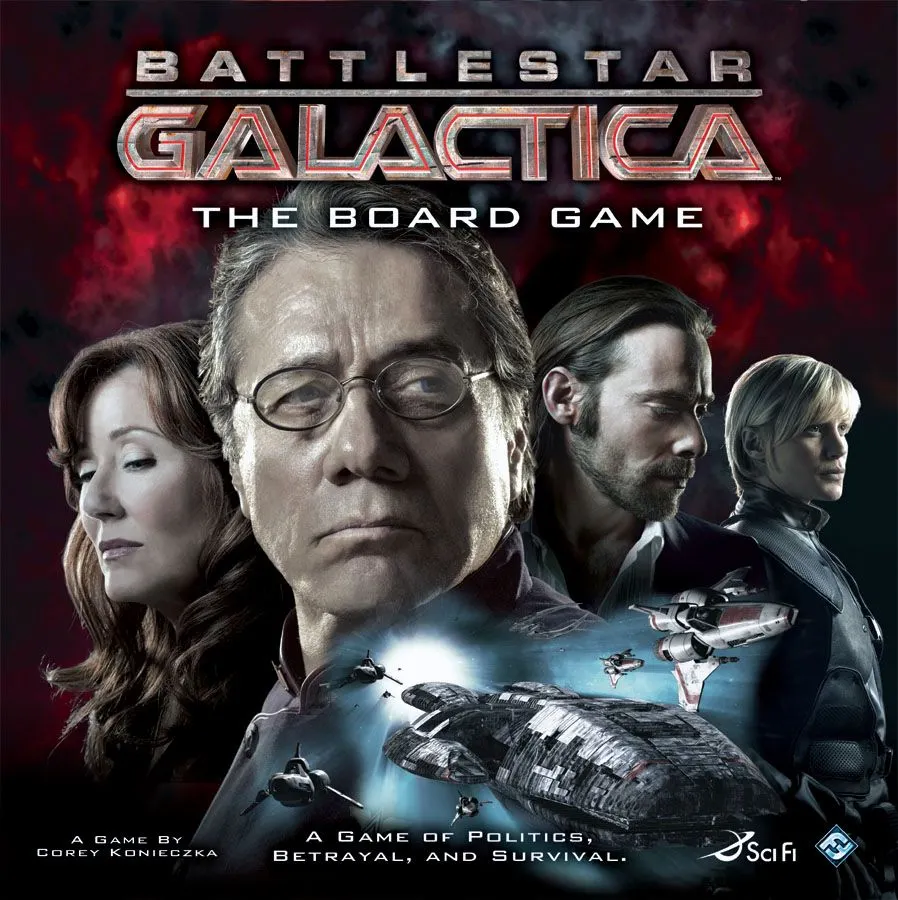
Battlestar Galactica: Das Brettspiel
- 3–6 Spieler
- 120–180 Min.
- Komplexität 3,3/5
- 2008

2019
Regelhilfe für The Menace Among Us
Verständliche Erklärungen zu Spielzügen, Karteneffekten und strittigen Situationen mit Verweisen auf offizielle Quellen und gespeichertem Fragenverlauf.
Was möchtest du wissen?
Antworten stammen aus dem offiziellen Regelheft, mit Seitenangabe zum Nachprüfen.
The Menace Among Us ist ein Brettspiel aus dem Jahr 2019 für 4–8 Personen, mit 40–60 Minuten pro Partie und ab 14 Jahren. Entwickelt wurde es von Jeff Gum; die wichtigsten Mechaniken sind Variable Player Powers, Semi-Cooperative Game und Traitor Game.




Auf Englisch
The Menace Among Us is a semi-cooperative game of intrigue and survival in deep space. Adrift and powerless, your crippled vessel is bleeding oxygen. As you effect repairs, every breath you take brings you one step closer to death. You must work together to restore power before the air runs out — but hidden among you, as loyal friends and crew members, are imposters who have infiltrated security and continue to sabotage the ship. Their only goal is to avoid detection and kill the crew, by force or by asphyxiation. Can you identify them in time and eliminate the threat? Or will succumb to the menace among us? The Menace Among Us is a 40 to 60-minute, asymmetrical card game for 4-8 players. Each player chooses an Agenda at random, either a loyal Crew member, a deadly Menace or the Coward, who’ll take any side just to survive. Your Agenda card sets a Team Goal and an Individual Goal, as well as outlines any special abilities and the card composition of your individual 13-card deck. Then, knowing your Agenda and Goals, you choose a Character who you believe will best help you achieve them or mask your true identity. Characters add 7 new cards to your deck, shuffle-building a unique combination of cards, as well as provide you two specialized Above Deck Actions. In this hidden traitor game, how you play your cards and abilities is far more important than the meta game aspects of accusations and denials. Cards are played face down and shuffled together as “Below Deck Actions.” Here, Menace players secretly sabotage the ship’s systems and attack crew members, who are trying to save the ship with their cards. If too few crew members risk going below deck to effect repairs, the ship’s Emergency Maintenance Assistant (EmMA) adds cards to the pile to help. However, the system has also been compromised and occasionally places damaging cards into the mix, providing plausible deniability to the Menace players. In contrast, Above Deck Actions are conducted in full view of the crew. Most of these abilities have costs, either in Energy or Oxygen, both resources the crew is trying to increase. So, while The Doctor has the ability to heal a crew member and remove a debilitating effect, a Menace player, who may be secretly in control of The Doctor, cares far more that it costs 2 Oxygen to perform the healing. At some point, someone’s behavior will raise suspicion. But, did they do so because they are trying to fulfill an Individual Goal – or are they a Menace? You can call a vote to expose their true nature. But if they are a loyal Crew member, you’ve just blown precious Oxygen in the effort to detain them. For that matter, was it a Menace player calling the vote in hopes of wasting the air on purpose? If the Crew can find and eliminate the Menace players – and raise the Energy to a safe threshold before the air runs out, they win. If the Menace can prevent this or kill the crew outright, their mission succeeds. Special commendations are awarded for surviving and for achieving your Individual Goal. —description from publisher
Laut Katalog unterstützt The Menace Among Us 4–8 Personen. Diese Spanne entspricht der vom Verlag angegebenen Spielerzahl, das Spiel lässt sich also für jede Gruppengröße innerhalb dieser Spanne aufbauen. Aufbau, einzelne Regeln und Wertungsdetails können je nach Personenzahl trotzdem abweichen; prüfe daher die genaue Konfiguration in der Anleitung deiner Ausgabe.
Die angegebene Spieldauer für The Menace Among Us beträgt 40–60 Minuten. Das ist die Schätzung des Verlags für eine vollständige Partie. Die tatsächliche Dauer hängt von der Gruppe, der Personenzahl und der Regelkenntnis ab: Erste Partien dauern meist länger, erfahrene Gruppen sind oft schneller fertig. Aufbau und Regelerklärung sind in dieser Schätzung nicht enthalten.
Im Katalog wird The Menace Among Us ab 14 Jahren empfohlen. Das ist die Empfehlung des Verlags und berücksichtigt Leseanforderungen, Regelkomplexität und Kleinteile, nicht nur das Thema. Jüngere Kinder können oft mit Hilfe eines Erwachsenen mitspielen; beachte die Altersangabe deiner Ausgabe und die Brettspielerfahrung deiner Gruppe.
The Menace Among Us hat bei BoardGameGeek eine Komplexitätswertung von 1,8 von 5 und gilt damit als leichtes Spiel. Die Wertung zeigt, wie viel Regelwissen, Planung und Entscheidungen eine typische Partie verlangt. Schwerere Spiele brauchen bei der ersten Erklärung mehr Zeit, daher hilft vor dem Spieleabend eine Vorbereitungsanleitung.
The Menace Among Us gehört zu diesen Kategorien: Card Game, Deduction und Science Fiction. Die wichtigsten Mechaniken sind Variable Player Powers, Semi-Cooperative Game und Traitor Game. Kategorien beschreiben Thema und Setting eines Spiels, Mechaniken dagegen, was die Spielenden in ihrem Zug tatsächlich tun. Jede Mechanik führt zu einer Katalogseite mit ähnlichen Spielen, falls du etwas Vergleichbares suchst.
Als Autoren von The Menace Among Us sind angegeben: Jeff Gum. Diese Angaben stammen aus den veröffentlichten Spieldaten und nennen die für das Spieldesign verantwortlichen Personen, nicht die Illustratoren oder Verlage. Die Autorenseiten auf MeepleRules sammeln weitere Titel derselben Autoren – praktisch, wenn dir ein Spiel gefällt und du ähnliche Spiele suchst.
Im Katalog ist The Menace Among Us als Grundspiel aufgeführt. Es lässt sich eigenständig mit dem Material aus der Schachtel spielen und benötigt keinen weiteren Titel. Erweiterungen, sofern es welche gibt, ergänzen neues Material oder neue Regeln und sind im Katalog separat mit einem Verweis auf dieses Grundspiel aufgeführt.

