
- BGG-Rang
- BGG #11.349
- BGG-Bewertung
- 6,0
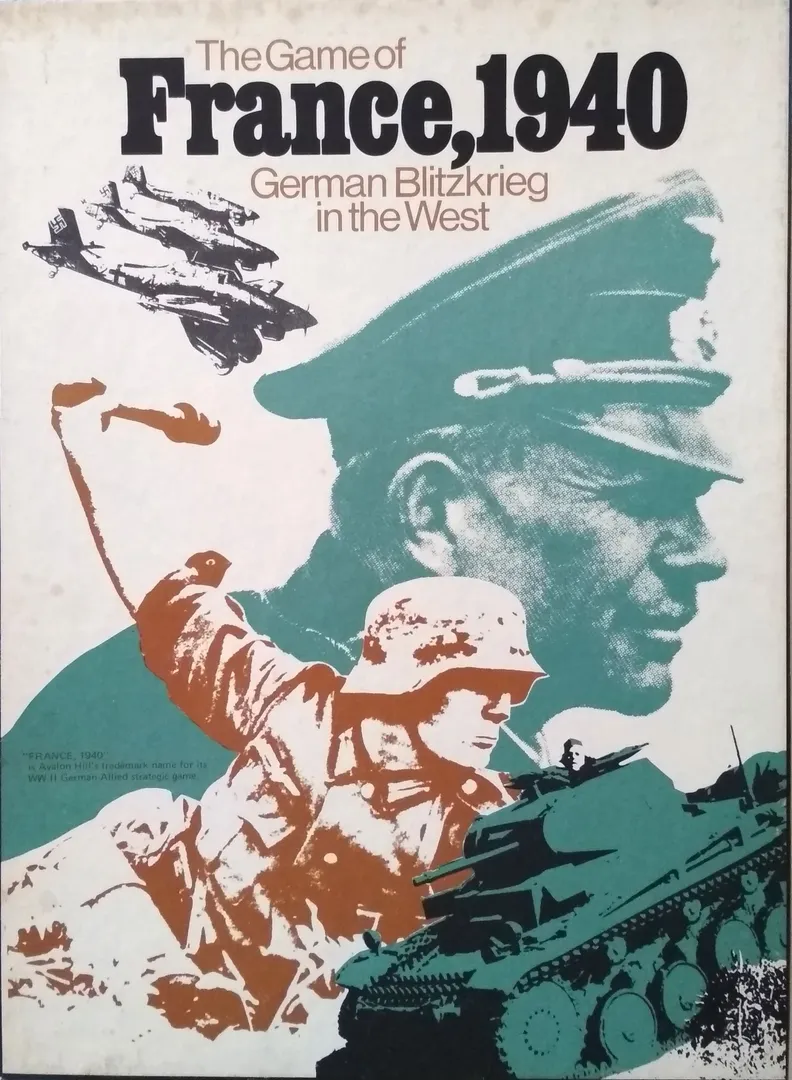
The Game of France, 1940: German Blitzkrieg in the West
- 2 Spieler
- 180 Min.
- Komplexität 2,7/5
- 1971
1972
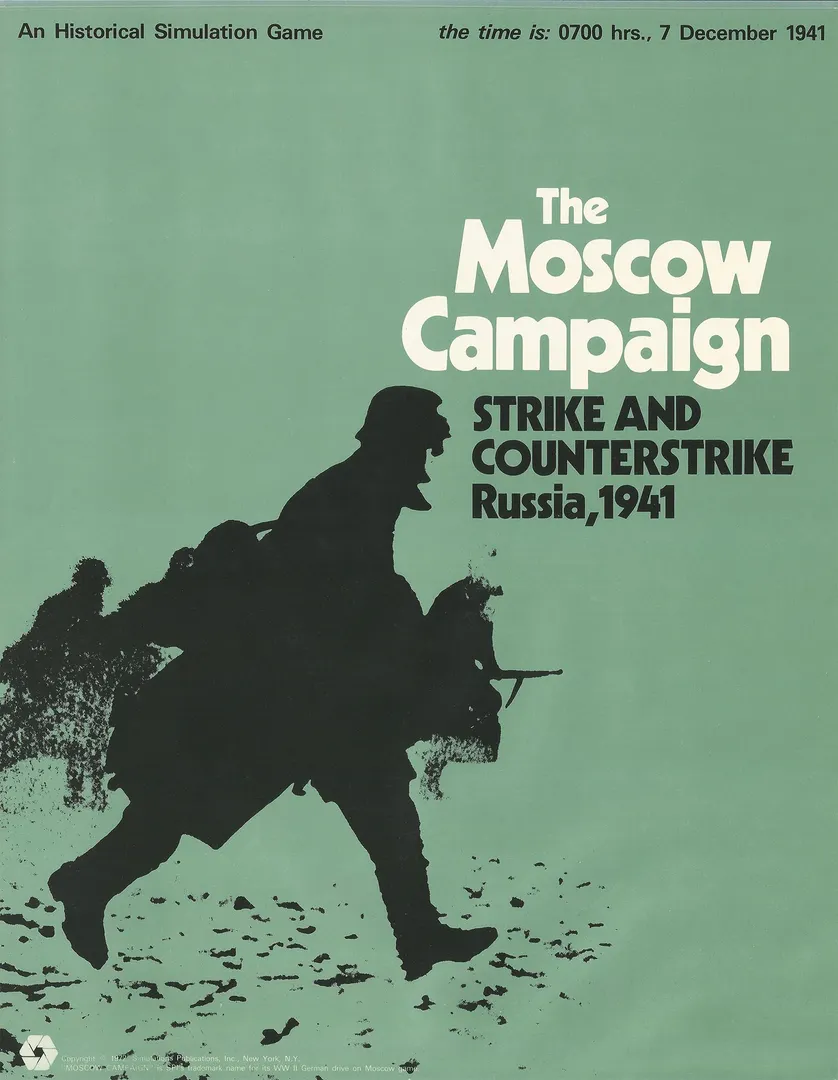
Regelhilfe für The Moscow Campaign: Strike and Counterstrike Russia, 1941
Verständliche Erklärungen zu Spielzügen, Karteneffekten und strittigen Situationen mit Verweisen auf offizielle Quellen und gespeichertem Fragenverlauf.
Für 2 Personen
Was möchtest du wissen?
Antworten stammen aus dem offiziellen Regelheft, mit Seitenangabe zum Nachprüfen.
The Moscow Campaign: Strike and Counterstrike Russia, 1941 ist ein Brettspiel aus dem Jahr 1972 für 2 Personen, mit 120 Minuten pro Partie und ab 12 Jahren. Entwickelt wurde es von Jim Dunnigan; die wichtigsten Mechaniken sind Dice Rolling, Grid Movement und Hexagon Grid.



Auf Englisch
The Moscow Campaign; Strike and Counterstrike Russia, 1941, is the successor to SPI's earlier treatment of roughly the same events, The Battle of Moscow (originally published in Strategy & Tactics magazine #24). The Moscow Campaign covers the final German drives on the Russian capital and the first Soviet counteroffensive. The scale is 6 miles per hex and three days per turn. Units (blue Germans and brown Soviets) are predominantly divisions. The Soviets have a few corps, and some German mechanized divisions are replaced by kampfgruppen if eliminated in combat. Though they have "historical" designations, the formations are pretty generic. They display combat factors, movement allowances and NATO symbols. Most formidable are the German 6-8 panzer divisions; most common are the lowly Soviet 1-4 infantry. Games can begin as early as September 30, 1941, and end as late as December 31st. A variety of starting points, ending points and German orders of battle produce 24 scenarios, four lasting all 31 turns, the rest - centered on the German offensives in early October and late November and the Soviet riposte at the end of the year - 8 turns each. The four-color map is functional though not an aesthetic gem. It shows cities, rivers, railroads, forests, swamps, lakes, Soviet fortifications and scenario start lines. Players alternate turns, each having a movement phase, combat phase and second movement phase for mechanized units. Zones of control are "semi-active" (requiring extra movement points to enter or leave but not mandating combat between adjacent enemies). The stacking limit is three units of any size per hex. The Combat Results Table has the classic Eliminate, Exchange, Retreat outcomes. Overruns during movement are also possible, though they require 11 to 1 odds. Germans must trace supply lines to railroads that have been converted by Eisenbahn Bautruppen, Soviets to unconverted rail lines that run to the north, south or east of the map. Lack of supply halves movement and combat factors but doesn't, by itself, result in elimination. Weather changes historically. Rain, mud and full winter successively erode movement allowances and combat strengths. There are no air or command rules. Victory points are awarded for destroying enemy units and for geographical objectives (possession of Moscow for either side, proximity to Moscow for the Germans, pushing units west of the start line for the Soviets). When published, this was one of SPI's largest and most sophisticated games. Game Scale: Game Turn: 2 days Hex: 6 miles / 9.6 kilometers Units: Brigade to Corps Game Inventory: One 22 x 34" four-color mapsheet One single-side printed countersheet (400 1/2" counters) One 10-page foldout Moscow Campaign folder One 6-sided die Solitaire Suitability: Medium Complexity Level: Medium Players: 2 or more Playing Time: 2-4 hours
Laut Katalog unterstützt The Moscow Campaign: Strike and Counterstrike Russia, 1941 2 Personen. Das ist die vom Verlag angegebene Spielerzahl, das Spiel ist also genau für diese Anzahl von Mitspielenden ausgelegt. Varianten für andere Gruppengrößen sind, sofern vorhanden, in der Anleitung deiner Ausgabe beschrieben; prüfe sie, bevor du eine andere Konfiguration aufbaust.
Die angegebene Spieldauer für The Moscow Campaign: Strike and Counterstrike Russia, 1941 beträgt 120 Minuten. Das ist die Schätzung des Verlags für eine vollständige Partie. Die tatsächliche Dauer hängt von der Gruppe, der Personenzahl und der Regelkenntnis ab: Erste Partien dauern meist länger, erfahrene Gruppen sind oft schneller fertig. Aufbau und Regelerklärung sind in dieser Schätzung nicht enthalten.
Im Katalog wird The Moscow Campaign: Strike and Counterstrike Russia, 1941 ab 12 Jahren empfohlen. Das ist die Empfehlung des Verlags und berücksichtigt Leseanforderungen, Regelkomplexität und Kleinteile, nicht nur das Thema. Jüngere Kinder können oft mit Hilfe eines Erwachsenen mitspielen; beachte die Altersangabe deiner Ausgabe und die Brettspielerfahrung deiner Gruppe.
The Moscow Campaign: Strike and Counterstrike Russia, 1941 hat bei BoardGameGeek eine Komplexitätswertung von 2,1 von 5 und gilt damit als eher leichtes Spiel. Die Wertung zeigt, wie viel Regelwissen, Planung und Entscheidungen eine typische Partie verlangt. Schwerere Spiele brauchen bei der ersten Erklärung mehr Zeit, daher hilft vor dem Spieleabend eine Vorbereitungsanleitung.
The Moscow Campaign: Strike and Counterstrike Russia, 1941 gehört zu diesen Kategorien: Wargame und World War II. Die wichtigsten Mechaniken sind Dice Rolling, Grid Movement und Hexagon Grid. Kategorien beschreiben Thema und Setting eines Spiels, Mechaniken dagegen, was die Spielenden in ihrem Zug tatsächlich tun. Jede Mechanik führt zu einer Katalogseite mit ähnlichen Spielen, falls du etwas Vergleichbares suchst.
Als Autoren von The Moscow Campaign: Strike and Counterstrike Russia, 1941 sind angegeben: Jim Dunnigan. Diese Angaben stammen aus den veröffentlichten Spieldaten und nennen die für das Spieldesign verantwortlichen Personen, nicht die Illustratoren oder Verlage. Die Autorenseiten auf MeepleRules sammeln weitere Titel derselben Autoren – praktisch, wenn dir ein Spiel gefällt und du ähnliche Spiele suchst.
Im Katalog ist The Moscow Campaign: Strike and Counterstrike Russia, 1941 als Grundspiel aufgeführt. Es lässt sich eigenständig mit dem Material aus der Schachtel spielen und benötigt keinen weiteren Titel. Erweiterungen, sofern es welche gibt, ergänzen neues Material oder neue Regeln und sind im Katalog separat mit einem Verweis auf dieses Grundspiel aufgeführt.