
- BGG-Rang
- BGG #20.832
- BGG-Bewertung
- 6,6
Gates of Vienna: 1683
- 2 Spieler
- 240–360 Min.
- Komplexität 2,5/5
- 2015
1993
Regelhilfe für The Seven Years War
Verständliche Erklärungen zu Spielzügen, Karteneffekten und strittigen Situationen mit Verweisen auf offizielle Quellen und gespeichertem Fragenverlauf.
Was möchtest du wissen?
Antworten stammen aus dem offiziellen Regelheft, mit Seitenangabe zum Nachprüfen.
The Seven Years War ist ein Brettspiel aus dem Jahr 1993 für 2–6 Personen, mit 240 Minuten pro Partie und ab 12 Jahren. Entwickelt wurde es von Joseph Miranda; die wichtigsten Mechaniken sind Dice Rolling und Hexagon Grid.


Auf Englisch
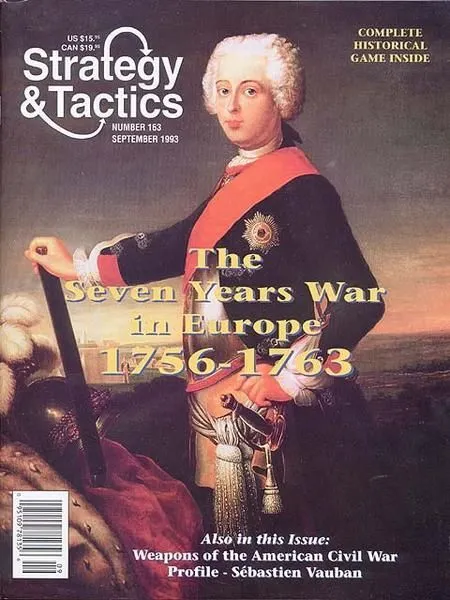
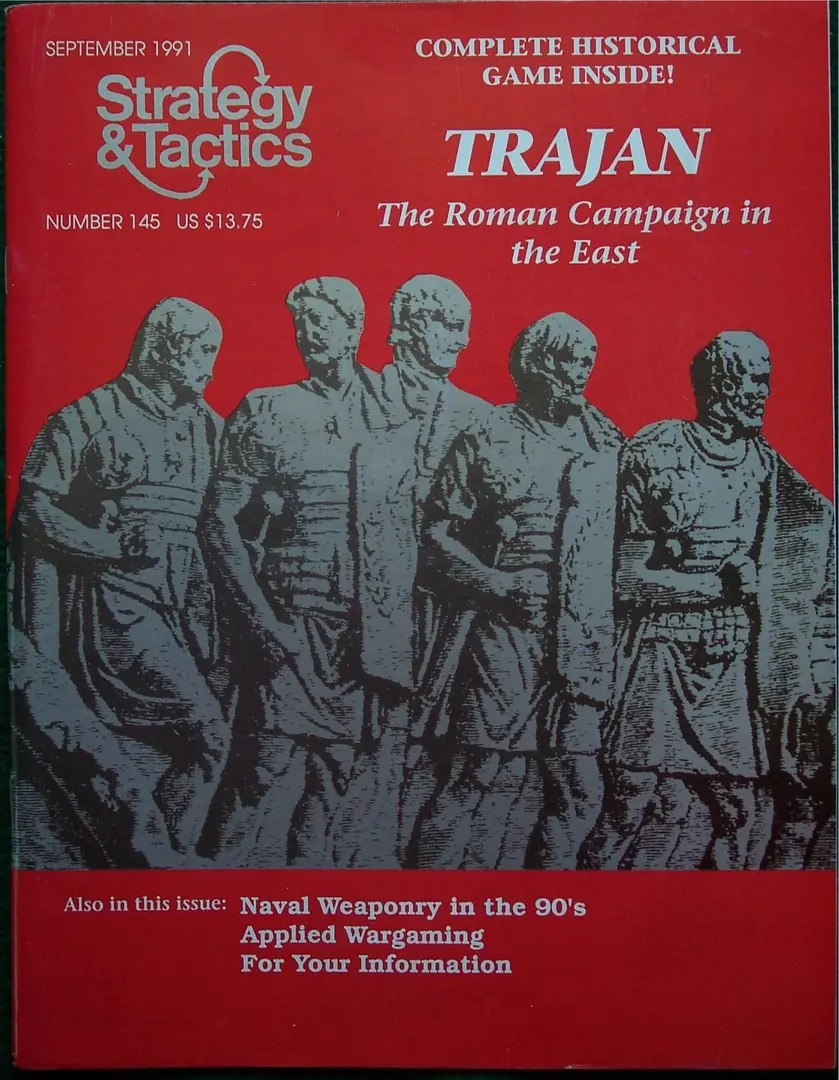
Seven Years War is a simulation of the war between Prussia and a Coalition of European states, 1756-1764, published in Strategy & Tactics #163 (Sep 1993). While militarily a stalemate, the war consolidated Prussia's dominance of central Europe until its defeat at Jena and Auerstadt in 1806. The game is designed for two players or two teams. The Prussian Allied side, opposes the Coalition side. The objective is to gain control of as many central european fortress cities as possible without losing control of your own. The rules consist of a Standard Game that gives a relatively simple but historically valid game, and an Advanced Game providing a more complete historical simulation. Play centers around the operational activity of moving armies, fighting battles and besieging fortresses. However, this operational activity is heavily influenced by, and is intertwined with, the ever changing strategic choices and actions the players take as the game proceeds. This game is falling through the cracks in recent years. There is a reasonably good Cyberboard gamebox but it would be nice if someone would create a Vassal module as well. Operational aspects include leaders, a variable movement table, discipline classes for units, logistics with supply wagons and foraging, and limited intelligence. Forces are comprised of infantry, cavalry, light troops, pioneers and artillery. Combat is modified by battleplan chits, selected before the die is rolled, that allow a player to emphasize line infantry, or more elite units, or cavalry achieving strength bonuses or die roll modifiers. The combat table produces percentage loss and moral checks for one or both sides. One learns that strength is not always the deciding factor. Leadership, high discipline, moral and making use of unit specialization play a big roll. Fortresses can also be captured by siege combat. Strategically, the game makes use of random events, diplomacy, (the various European states get pushed in and out of neutrality and switch sides). Winning battles can give a player diplomatic options. As the game proceeds the progress of both sides is recorded on the Balance of Power track which can also modify victory. It is possible for both sides to achieve a victory. The two are then compared to give a final victory. Also, both sides can lose if the Balance of Power track moves too far toward one of the players. Restraint is part of a player's strategic considerations. The game is complete by magazine game standards. The errata is light. It is not a simple game and it requires players to be willing to roleplay the point of view of the leaders from that period. There is a four turn short scenario covering the first year of the conflict. A full campaign game can last as long as 28 turns if things are drawn out. It is a highly replayable game. Errata and Q&A for 7YW were published in Strategy & Tactics #s 165, 166, 167, and 169. Additional counters for 7YW were included in Strategy & Tactics #s 170 and 171. 7YW also received extensive coverage in Moves #79.
Laut Katalog unterstützt The Seven Years War 2–6 Personen. Diese Spanne entspricht der vom Verlag angegebenen Spielerzahl, das Spiel lässt sich also für jede Gruppengröße innerhalb dieser Spanne aufbauen. Aufbau, einzelne Regeln und Wertungsdetails können je nach Personenzahl trotzdem abweichen; prüfe daher die genaue Konfiguration in der Anleitung deiner Ausgabe.
Die angegebene Spieldauer für The Seven Years War beträgt 240 Minuten. Das ist die Schätzung des Verlags für eine vollständige Partie. Die tatsächliche Dauer hängt von der Gruppe, der Personenzahl und der Regelkenntnis ab: Erste Partien dauern meist länger, erfahrene Gruppen sind oft schneller fertig. Aufbau und Regelerklärung sind in dieser Schätzung nicht enthalten.
Im Katalog wird The Seven Years War ab 12 Jahren empfohlen. Das ist die Empfehlung des Verlags und berücksichtigt Leseanforderungen, Regelkomplexität und Kleinteile, nicht nur das Thema. Jüngere Kinder können oft mit Hilfe eines Erwachsenen mitspielen; beachte die Altersangabe deiner Ausgabe und die Brettspielerfahrung deiner Gruppe.
The Seven Years War hat bei BoardGameGeek eine Komplexitätswertung von 2,9 von 5 und gilt damit als eher leichtes Spiel. Die Wertung zeigt, wie viel Regelwissen, Planung und Entscheidungen eine typische Partie verlangt. Schwerere Spiele brauchen bei der ersten Erklärung mehr Zeit, daher hilft vor dem Spieleabend eine Vorbereitungsanleitung.
The Seven Years War gehört zu diesen Kategorien: Wargame und Age of Reason. Die wichtigsten Mechaniken sind Dice Rolling und Hexagon Grid. Kategorien beschreiben Thema und Setting eines Spiels, Mechaniken dagegen, was die Spielenden in ihrem Zug tatsächlich tun. Jede Mechanik führt zu einer Katalogseite mit ähnlichen Spielen, falls du etwas Vergleichbares suchst.
Als Autoren von The Seven Years War sind angegeben: Joseph Miranda. Diese Angaben stammen aus den veröffentlichten Spieldaten und nennen die für das Spieldesign verantwortlichen Personen, nicht die Illustratoren oder Verlage. Die Autorenseiten auf MeepleRules sammeln weitere Titel derselben Autoren – praktisch, wenn dir ein Spiel gefällt und du ähnliche Spiele suchst.
Im Katalog ist The Seven Years War als Grundspiel aufgeführt. Es lässt sich eigenständig mit dem Material aus der Schachtel spielen und benötigt keinen weiteren Titel. Erweiterungen, sofern es welche gibt, ergänzen neues Material oder neue Regeln und sind im Katalog separat mit einem Verweis auf dieses Grundspiel aufgeführt.