

- BGG-Rang
- BGG #1.423
- BGG-Bewertung
- 7,5
Ambush!
- 1 Spieler
- 180–240 Min.
- Komplexität 3,3/5
- 1983
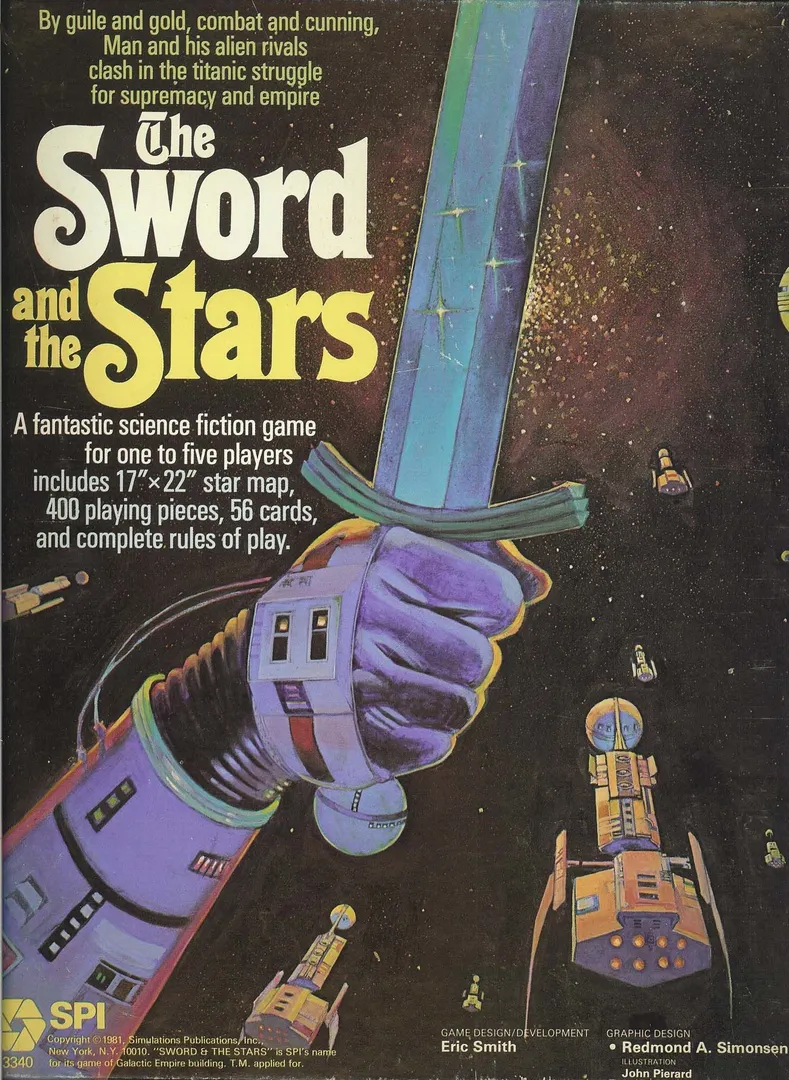
1981
Regelhilfe für The Sword and the Stars
Verständliche Erklärungen zu Spielzügen, Karteneffekten und strittigen Situationen mit Verweisen auf offizielle Quellen und gespeichertem Fragenverlauf.
Was möchtest du wissen?
Antworten stammen aus dem offiziellen Regelheft, mit Seitenangabe zum Nachprüfen.
The Sword and the Stars ist ein Brettspiel aus dem Jahr 1981 für 1–5 Personen, mit 240 Minuten pro Partie und ab 12 Jahren. Entwickelt wurde es von Eric Lee Smith; die wichtigsten Mechaniken sind Voting und Action Points.




Auf Englisch
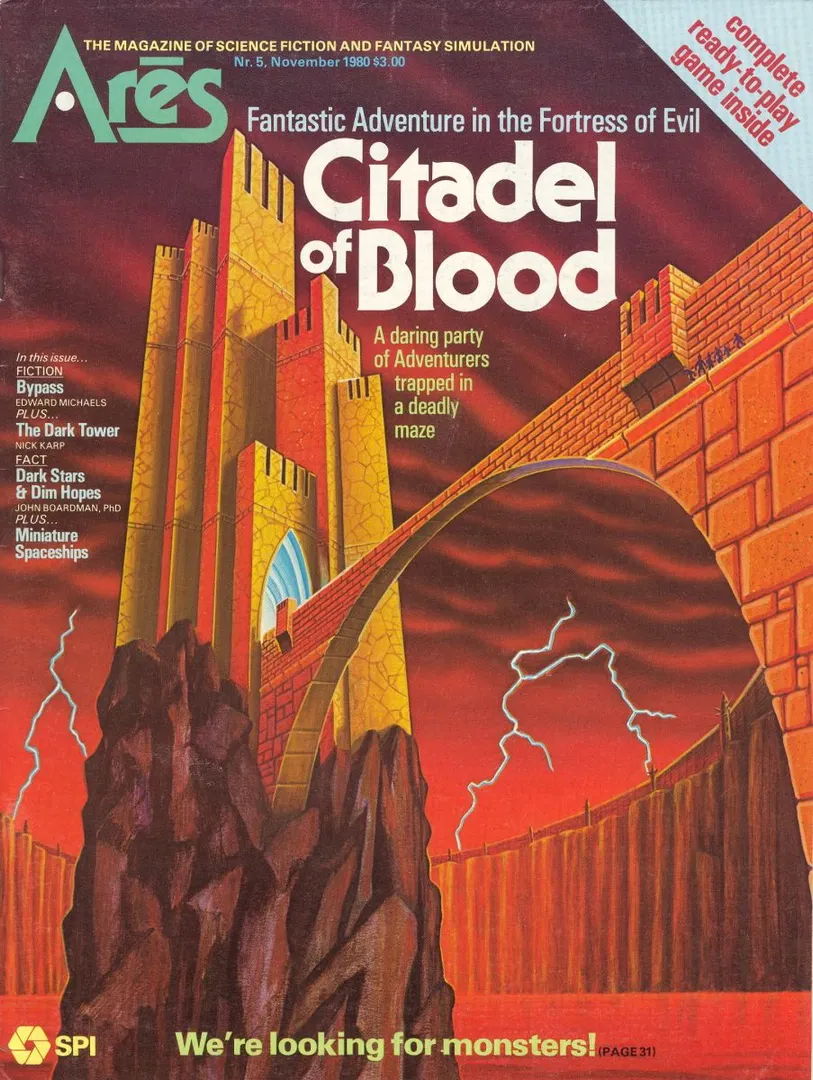
Sword and the Stars sets the stage for interstellar conflict between vying empires on such a scale (the map depicts about 1/4 of a spiral galaxy) that individual ships and even fleets become insignificant. You pay for and resolve entire interstellar campaigns with cards representing massive scale investment of manpower and resources over 4 Earth years of operations, each player round representing the passage of 20 years. Players direct the fate of interstellar empires through expansion or consolidation by means of conquests, raids, governing, building planetary defenses, commerce, and diplomacy. The game was derived from two existing popular SPI titles. While adding many subtle changes in its own right, it combines the highly successful system used in Empires of the Middle Ages with the graphic layout used for Freedom in the Galaxy. Technology and economics are abstracted, but both play a large role in just about every aspect of the game. Stargates allow players to conduct interstellar operations against any star system, free of range constraints. This means that in an interstellar war, nowhere is safe from your enemies. Includes a mechanism for a sort of Galactic Security Council, where players can scheme all sorts of mischief against each other. Ten scenarios (including the "Galactic Cycle" campaign game) are supplied. A "short" game will depict a period lasting about 200 years, while for the long "grand campaign" scenario it is recommended to play "at least" 1000 years. The Sword and the Stars is more compact than Empires. Includes 400 counters, 56 year cards, a 17 x 22" map depicting a total of 42 star systems. Maximum 5 players (3-4 recommended). Historical Note: Writing about SPI's Empires of the Middle Ages (q.v.), editor Kula included a sidebar quote from Redmond Simonsen to the effect that "a good number of people...would really enjoy the game if they'd just imagine that it's a science fictional or fantastic continent instead of Europe". Well, in 1981, the year after Empires of the Middle Ages was released, SPI produced another game using the same system and the missing science fiction premise, and The Sword and the Stars was born.
Laut Katalog unterstützt The Sword and the Stars 1–5 Personen. Diese Spanne entspricht der vom Verlag angegebenen Spielerzahl, das Spiel lässt sich also für jede Gruppengröße innerhalb dieser Spanne aufbauen. Aufbau, einzelne Regeln und Wertungsdetails können je nach Personenzahl trotzdem abweichen; prüfe daher die genaue Konfiguration in der Anleitung deiner Ausgabe.
Die angegebene Spieldauer für The Sword and the Stars beträgt 240 Minuten. Das ist die Schätzung des Verlags für eine vollständige Partie. Die tatsächliche Dauer hängt von der Gruppe, der Personenzahl und der Regelkenntnis ab: Erste Partien dauern meist länger, erfahrene Gruppen sind oft schneller fertig. Aufbau und Regelerklärung sind in dieser Schätzung nicht enthalten.
Im Katalog wird The Sword and the Stars ab 12 Jahren empfohlen. Das ist die Empfehlung des Verlags und berücksichtigt Leseanforderungen, Regelkomplexität und Kleinteile, nicht nur das Thema. Jüngere Kinder können oft mit Hilfe eines Erwachsenen mitspielen; beachte die Altersangabe deiner Ausgabe und die Brettspielerfahrung deiner Gruppe.
The Sword and the Stars hat bei BoardGameGeek eine Komplexitätswertung von 2,9 von 5 und gilt damit als eher leichtes Spiel. Die Wertung zeigt, wie viel Regelwissen, Planung und Entscheidungen eine typische Partie verlangt. Schwerere Spiele brauchen bei der ersten Erklärung mehr Zeit, daher hilft vor dem Spieleabend eine Vorbereitungsanleitung.
The Sword and the Stars gehört zu diesen Kategorien: Economic, Wargame und Political. Die wichtigsten Mechaniken sind Voting und Action Points. Kategorien beschreiben Thema und Setting eines Spiels, Mechaniken dagegen, was die Spielenden in ihrem Zug tatsächlich tun. Jede Mechanik führt zu einer Katalogseite mit ähnlichen Spielen, falls du etwas Vergleichbares suchst.
Als Autoren von The Sword and the Stars sind angegeben: Eric Lee Smith. Diese Angaben stammen aus den veröffentlichten Spieldaten und nennen die für das Spieldesign verantwortlichen Personen, nicht die Illustratoren oder Verlage. Die Autorenseiten auf MeepleRules sammeln weitere Titel derselben Autoren – praktisch, wenn dir ein Spiel gefällt und du ähnliche Spiele suchst.
Im Katalog ist The Sword and the Stars als Grundspiel aufgeführt. Es lässt sich eigenständig mit dem Material aus der Schachtel spielen und benötigt keinen weiteren Titel. Erweiterungen, sofern es welche gibt, ergänzen neues Material oder neue Regeln und sind im Katalog separat mit einem Verweis auf dieses Grundspiel aufgeführt.