
- BGG-Rang
- BGG #8.815
- BGG-Bewertung
- 8,1
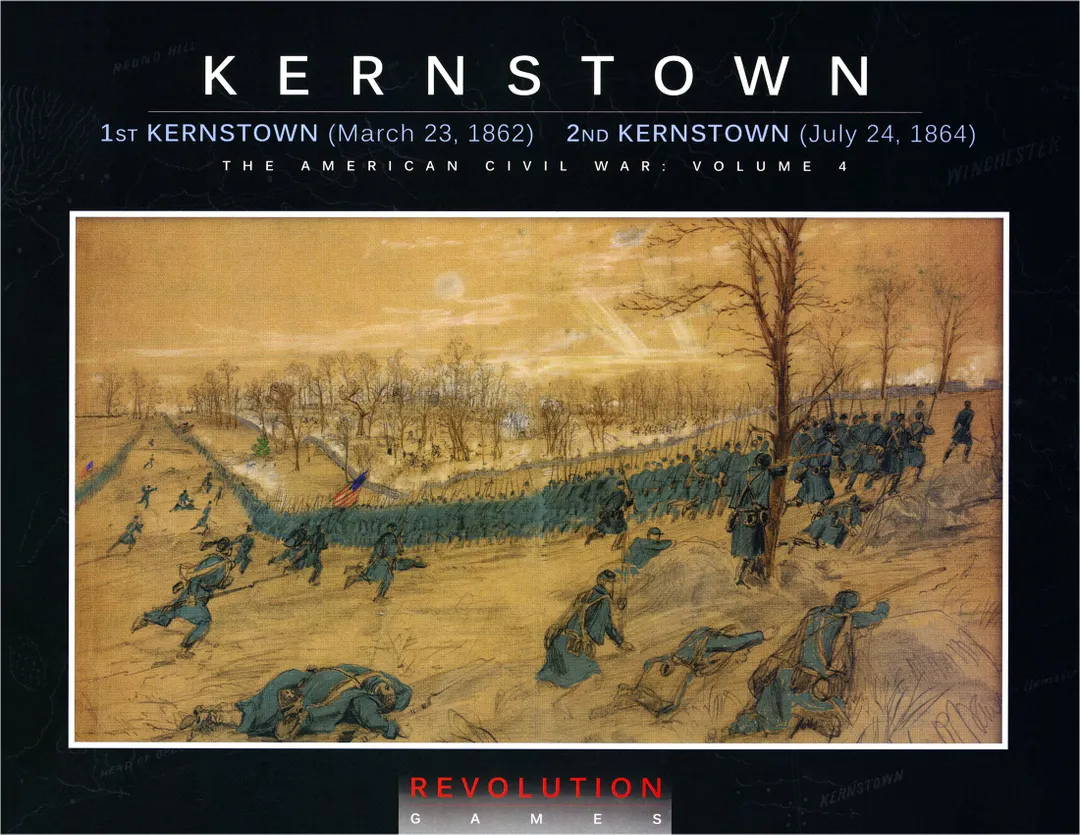
Kernstown
- 1–2 Spieler
- 120–480 Min.
- Komplexität 3,3/5
- 2019
2021
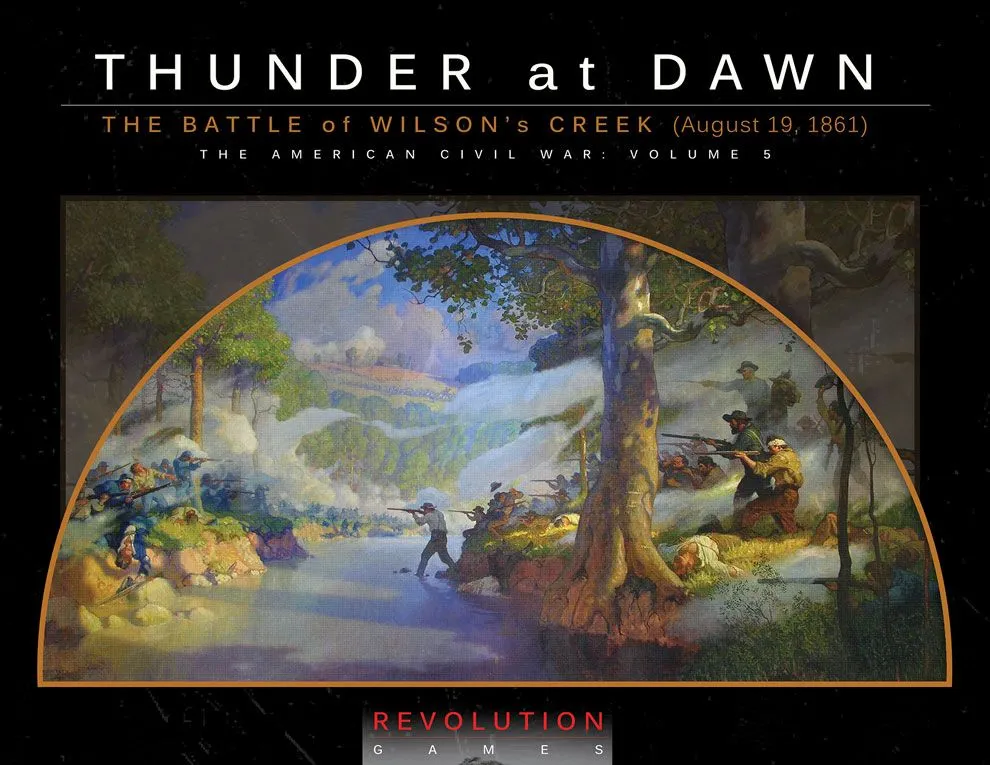
Regelhilfe für Thunder At Dawn: The Battle of Wilson's Creek (August 10, 1861)
Verständliche Erklärungen zu Spielzügen, Karteneffekten und strittigen Situationen mit Verweisen auf offizielle Quellen und gespeichertem Fragenverlauf.
Für 1 Person
Was möchtest du wissen?
Antworten stammen aus dem offiziellen Regelheft, mit Seitenangabe zum Nachprüfen.
Thunder At Dawn: The Battle of Wilson's Creek (August 10, 1861) ist ein Brettspiel aus dem Jahr 2021 für 1–2 Personen, mit 240–480 Minuten pro Partie und ab 11 Jahren. Entwickelt wurde es von Claude Whalen; die wichtigsten Mechaniken sind Hexagon Grid, Simulation und Chit-Pull System.




Auf Englisch
Thunder At Dawn: The Battle of Wilson's Creek (August 10, 1861) is the 5th title of the Revolution Games American Civil War Series using the Blind Swords Tactical level system. On August 10th, 1861 the first major battle of the Trans-Mississippi theater, and the second major battle of the American Civil War, was fought near Springfield, Missouri. Three rather green forces (one Union army and two Rebel forces) met at Wilson’s Creek and clashed on “Bloody Hill". Little did they know how bloody the war would be. The commanders were also new to this level of fighting and two novice errors shaped the historic battle. The Union commander, General Lyon, detailed his battle plan to his commanders and then was talked into dividing his smaller force in two at the last minute. The Rebels had dissention amongst Generals McCulloch and Price over whether they should attack immediately or not. After cancelling an advance to attack the next morning (August 10th), they forgot to repost pickets when they returned to their camps. This mistake left them open to the Union surprise attack the next morning. After great initial success, the Union forces ran low on ammunition, lost General Lyon and ended up leaving the field. It didn’t have to be that way as the Union forces had a very good chance of conducting a successful “spoiling” attack. The “What If” scenario gives the Union player a chance to adjust his strategy and win the battle. The game is specifically designed to be a playable regimental-scale simulation of the battle that can be completed in a long evening. It allows the players the immersive experience of tactical combat without the heavy rules normally found in such games, while also delivering a comprehensive experience of limited intelligence and unexpected events. The game features the Blind Swords chit-pull system, which emphasizes the three “FOWs” of military conflict: fog-of-war, friction-of-war and fortunes-of-war. With each chit pull, players will be challenged to make tough decisions based on their assessment of the situation at that moment. This yields an environment of tense action and constant surprises – an environment that will challenge each player. —user summary Components: -22 x 34 inch Map -176 x 5/8 inch Counters -Full Color Exclusive Rulebook -Series Rulebook (Black and White) -5 Player Aids -Box or ziploc bag -2 Dice (Boxed Version)
Laut Katalog unterstützt Thunder At Dawn: The Battle of Wilson's Creek (August 10, 1861) 1–2 Personen. Diese Spanne entspricht der vom Verlag angegebenen Spielerzahl, das Spiel lässt sich also für jede Gruppengröße innerhalb dieser Spanne aufbauen. Aufbau, einzelne Regeln und Wertungsdetails können je nach Personenzahl trotzdem abweichen; prüfe daher die genaue Konfiguration in der Anleitung deiner Ausgabe.
Die angegebene Spieldauer für Thunder At Dawn: The Battle of Wilson's Creek (August 10, 1861) beträgt 240–480 Minuten. Das ist die Schätzung des Verlags für eine vollständige Partie. Die tatsächliche Dauer hängt von der Gruppe, der Personenzahl und der Regelkenntnis ab: Erste Partien dauern meist länger, erfahrene Gruppen sind oft schneller fertig. Aufbau und Regelerklärung sind in dieser Schätzung nicht enthalten.
Im Katalog wird Thunder At Dawn: The Battle of Wilson's Creek (August 10, 1861) ab 11 Jahren empfohlen. Das ist die Empfehlung des Verlags und berücksichtigt Leseanforderungen, Regelkomplexität und Kleinteile, nicht nur das Thema. Jüngere Kinder können oft mit Hilfe eines Erwachsenen mitspielen; beachte die Altersangabe deiner Ausgabe und die Brettspielerfahrung deiner Gruppe.
Thunder At Dawn: The Battle of Wilson's Creek (August 10, 1861) hat bei BoardGameGeek eine Komplexitätswertung von 2,8 von 5 und gilt damit als eher leichtes Spiel. Die Wertung zeigt, wie viel Regelwissen, Planung und Entscheidungen eine typische Partie verlangt. Schwerere Spiele brauchen bei der ersten Erklärung mehr Zeit, daher hilft vor dem Spieleabend eine Vorbereitungsanleitung.
Thunder At Dawn: The Battle of Wilson's Creek (August 10, 1861) gehört zu diesen Kategorien: Wargame, Civil War und American Civil War. Die wichtigsten Mechaniken sind Hexagon Grid, Simulation und Chit-Pull System. Kategorien beschreiben Thema und Setting eines Spiels, Mechaniken dagegen, was die Spielenden in ihrem Zug tatsächlich tun. Jede Mechanik führt zu einer Katalogseite mit ähnlichen Spielen, falls du etwas Vergleichbares suchst.
Als Autoren von Thunder At Dawn: The Battle of Wilson's Creek (August 10, 1861) sind angegeben: Claude Whalen. Diese Angaben stammen aus den veröffentlichten Spieldaten und nennen die für das Spieldesign verantwortlichen Personen, nicht die Illustratoren oder Verlage. Die Autorenseiten auf MeepleRules sammeln weitere Titel derselben Autoren – praktisch, wenn dir ein Spiel gefällt und du ähnliche Spiele suchst.
Im Katalog ist Thunder At Dawn: The Battle of Wilson's Creek (August 10, 1861) als Grundspiel aufgeführt. Es lässt sich eigenständig mit dem Material aus der Schachtel spielen und benötigt keinen weiteren Titel. Erweiterungen, sofern es welche gibt, ergänzen neues Material oder neue Regeln und sind im Katalog separat mit einem Verweis auf dieses Grundspiel aufgeführt.