
- BGG-Rang
- BGG #391
- BGG-Bewertung
- 7,3
Tikal
- 2–4 Spieler
- 90 Min.
- Komplexität 2,8/5
- 1999
2010
Regelhilfe für Tikal II: The Lost Temple
Verständliche Erklärungen zu Spielzügen, Karteneffekten und strittigen Situationen mit Verweisen auf offizielle Quellen und gespeichertem Fragenverlauf.
Für 2 Personen
Was möchtest du wissen?
Antworten stammen aus dem offiziellen Regelheft, mit Seitenangabe zum Nachprüfen.
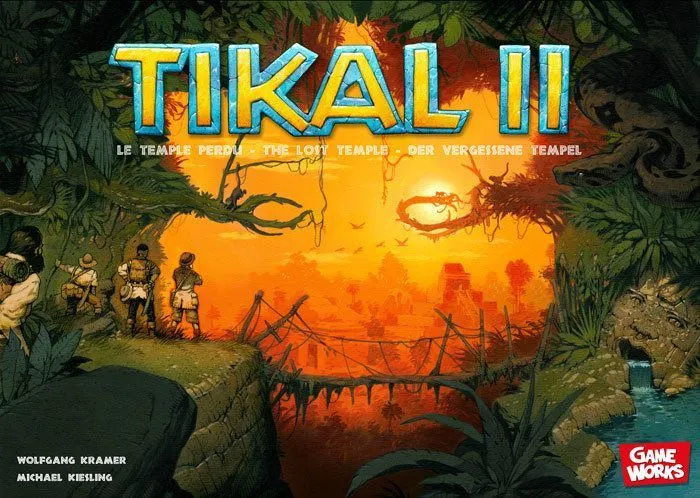
Tikal II: The Lost Temple ist ein Brettspiel aus dem Jahr 2010 für 2–4 Personen, mit 60–120 Minuten pro Partie und ab 12 Jahren. Entwickelt wurde es von Wolfgang Kramer und Michael Kiesling; die wichtigsten Mechaniken sind Hand Management, Set Collection und Modular Board.



Auf Englisch
From the Publisher: Tikal was discovered and explored during a very successful expedition led by Profs. Kramer and Kiesling. A decade later, a scroll is found that hints of a lost temple near the first site. This rumor rekindles their passion for Tikal and the two scientists start to discuss the prospect of another expedition to Central America. In the midst of their planning they encounter Profs. Braff and Pauchon at an international archaeology conference in Geneva, who want to know the truth about the enticing rumour. Later that day, sitting in front of a roaring fire after a fine meal finished off with Cuban cigars and a few brandies, the two Swiss scientists listen enthralled by the unfolding plans of their German colleagues. To a man they clamour their unanimous assent and it is decided to join forces and go back to Tikal. Appointments are made, patrons are found, equipment is assembled, notes are compared, and then they are off. An uneventful journey takes them to Guatemala, and then on to the old site. Not too long after, they discover that there is indeed an undisturbed temple in an adjacent valley. As it belonged to a long-forgotten king, the temple promises many surprises and much, much gold. And so the adventure begins... Tikal II: The Lost Temple is a sequel to 1999 Spiel des Jahres winner Tikal, from world-famous duo Kramer-Kiesling. Actions points have given way to two actions per turn : 1) move part of your expedition around the board to choose an action tile, and then 2) move your head scientist within the temple to explore new rooms and find gold. There are many ways to score. Collecting and delivering treasures is one, and having the majority in some rooms or exploring the main temple as well as an outer secret chamber, are others. Tikal II calls for careful planning, as your scientist can't move freely within the temple without specific items, and tension, as the actions around the board grow scarce. A game consists of two rounds, each concluded by a scoring. In the end, the player with the most gold is declared winner.
Laut Katalog unterstützt Tikal II: The Lost Temple 2–4 Personen. Diese Spanne entspricht der vom Verlag angegebenen Spielerzahl, das Spiel lässt sich also für jede Gruppengröße innerhalb dieser Spanne aufbauen. Aufbau, einzelne Regeln und Wertungsdetails können je nach Personenzahl trotzdem abweichen; prüfe daher die genaue Konfiguration in der Anleitung deiner Ausgabe.
Die angegebene Spieldauer für Tikal II: The Lost Temple beträgt 60–120 Minuten. Das ist die Schätzung des Verlags für eine vollständige Partie. Die tatsächliche Dauer hängt von der Gruppe, der Personenzahl und der Regelkenntnis ab: Erste Partien dauern meist länger, erfahrene Gruppen sind oft schneller fertig. Aufbau und Regelerklärung sind in dieser Schätzung nicht enthalten.
Im Katalog wird Tikal II: The Lost Temple ab 12 Jahren empfohlen. Das ist die Empfehlung des Verlags und berücksichtigt Leseanforderungen, Regelkomplexität und Kleinteile, nicht nur das Thema. Jüngere Kinder können oft mit Hilfe eines Erwachsenen mitspielen; beachte die Altersangabe deiner Ausgabe und die Brettspielerfahrung deiner Gruppe.
Tikal II: The Lost Temple hat bei BoardGameGeek eine Komplexitätswertung von 2,6 von 5 und gilt damit als eher leichtes Spiel. Die Wertung zeigt, wie viel Regelwissen, Planung und Entscheidungen eine typische Partie verlangt. Schwerere Spiele brauchen bei der ersten Erklärung mehr Zeit, daher hilft vor dem Spieleabend eine Vorbereitungsanleitung.
Tikal II: The Lost Temple gehört zu diesen Kategorien: Exploration und Adventure. Die wichtigsten Mechaniken sind Hand Management, Set Collection und Modular Board. Kategorien beschreiben Thema und Setting eines Spiels, Mechaniken dagegen, was die Spielenden in ihrem Zug tatsächlich tun. Jede Mechanik führt zu einer Katalogseite mit ähnlichen Spielen, falls du etwas Vergleichbares suchst.
Als Autoren von Tikal II: The Lost Temple sind angegeben: Wolfgang Kramer und Michael Kiesling. Diese Angaben stammen aus den veröffentlichten Spieldaten und nennen die für das Spieldesign verantwortlichen Personen, nicht die Illustratoren oder Verlage. Die Autorenseiten auf MeepleRules sammeln weitere Titel derselben Autoren – praktisch, wenn dir ein Spiel gefällt und du ähnliche Spiele suchst.
Im Katalog ist Tikal II: The Lost Temple als Grundspiel aufgeführt. Es lässt sich eigenständig mit dem Material aus der Schachtel spielen und benötigt keinen weiteren Titel. Erweiterungen, sofern es welche gibt, ergänzen neues Material oder neue Regeln und sind im Katalog separat mit einem Verweis auf dieses Grundspiel aufgeführt.