

- BGG-Rang
- BGG #2.333
- BGG-Bewertung
- 6,9
Historia
- 1–6 Spieler
- 120 Min.
- Komplexität 3,1/5
- 2014
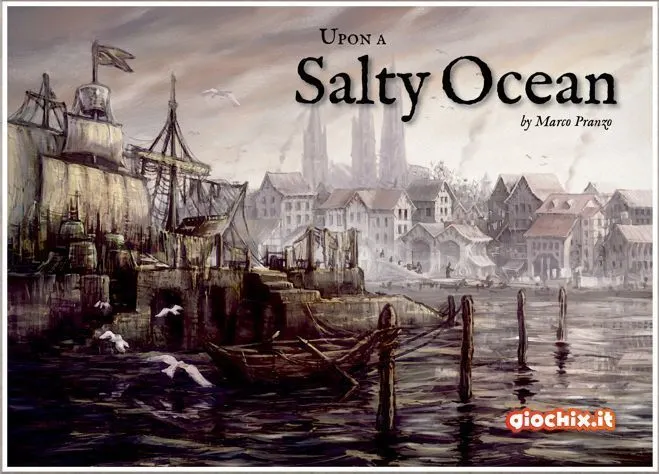
2011
Regelhilfe für Upon a Salty Ocean
Verständliche Erklärungen zu Spielzügen, Karteneffekten und strittigen Situationen mit Verweisen auf offizielle Quellen und gespeichertem Fragenverlauf.
Für 2 Personen
Was möchtest du wissen?
Antworten stammen aus dem offiziellen Regelheft, mit Seitenangabe zum Nachprüfen.
Upon a Salty Ocean ist ein Brettspiel aus dem Jahr 2011 für 2–4 Personen, mit 120 Minuten pro Partie und ab 13 Jahren. Entwickelt wurde es von Marco Pranzo; die wichtigsten Mechaniken sind Action Points und Variable Phase Order.



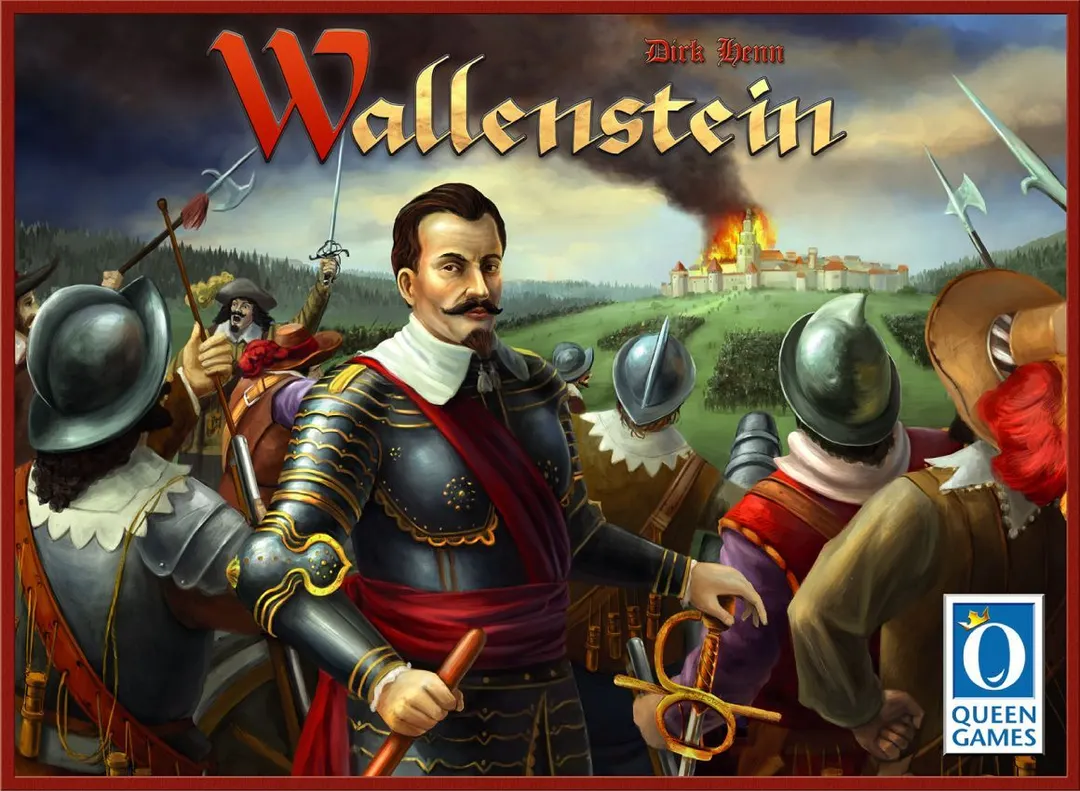



Auf Englisch
At the beginning of the 16th century, the city of Rouen is the main French port. The city's wealth depends on fishing and the trading of salted fish. Salt produced in the mines has to be loaded onto ships and used to preserve herring and cod fished in the Atlantic Ocean. Every week ships full of salt barrels leave Rouen for the fishing grounds of the Atlantic Ocean, and once back, the goods are sold in the city markets. The players represent city merchants, and they invest in ships and city buildings to try to get rich. Who will be the richest merchant of Rouen, when Francis I, King of France, comes to visit the City? In Upon a Salty Ocean, players start the game with one caravel loaded with three salt barrels, a salt mine and 10-16 money. From this, they must build a shipping empire! The game lasts five turns, with each turn being divided into three phases. In the event phase, players adjust prices on the market based on the current event tile, take into the account the weather and environmental conditions that will affect them the remainder of the round, and reveal the event tile for the subsequent round. The action phase lasts a variable number of rounds depending on how many actions players want to take and can afford. Eight actions are available and they're divided into four types: City: (1) buy a saline and (2) buy a building Navigation: (1) travel to the ocean and fish and (2) travel to Rouen Harbor: (1) build a ship and (2) move goods Market: (1) sell to the market and (2) buy from the market On a player's turn, he can take any one of the either actions or pass; the cost of an action is the number of times this type of action has been performed previously during this round. For example, the first use of a City action costs 0, while the next use (whether to buy a saline or a building) costs 1. A player who passes can take an action later in the same phase. The action phase ends once all players pass. A player can go into debt during a turn, paying one coin in interest when doing so; as long as the player is in the black once the action round ends (by selling to the market), no further payment is due. In the turn end phase, players produce salt, may use special buildings, pay interest (if needed), reset the cost of the actions to zero, and so on. A player can have no more than 40 coins at the end of a turn unless he owns a banque, and the limit is 80 coins without owning Salle des Coffres. This limit is important as the player with the most coins after five rounds wins. Some buildings provide endgame bonuses to which the coin limit doesn't apply.
Laut Katalog unterstützt Upon a Salty Ocean 2–4 Personen. Diese Spanne entspricht der vom Verlag angegebenen Spielerzahl, das Spiel lässt sich also für jede Gruppengröße innerhalb dieser Spanne aufbauen. Aufbau, einzelne Regeln und Wertungsdetails können je nach Personenzahl trotzdem abweichen; prüfe daher die genaue Konfiguration in der Anleitung deiner Ausgabe.
Die angegebene Spieldauer für Upon a Salty Ocean beträgt 120 Minuten. Das ist die Schätzung des Verlags für eine vollständige Partie. Die tatsächliche Dauer hängt von der Gruppe, der Personenzahl und der Regelkenntnis ab: Erste Partien dauern meist länger, erfahrene Gruppen sind oft schneller fertig. Aufbau und Regelerklärung sind in dieser Schätzung nicht enthalten.
Im Katalog wird Upon a Salty Ocean ab 13 Jahren empfohlen. Das ist die Empfehlung des Verlags und berücksichtigt Leseanforderungen, Regelkomplexität und Kleinteile, nicht nur das Thema. Jüngere Kinder können oft mit Hilfe eines Erwachsenen mitspielen; beachte die Altersangabe deiner Ausgabe und die Brettspielerfahrung deiner Gruppe.
Upon a Salty Ocean hat bei BoardGameGeek eine Komplexitätswertung von 2,9 von 5 und gilt damit als eher leichtes Spiel. Die Wertung zeigt, wie viel Regelwissen, Planung und Entscheidungen eine typische Partie verlangt. Schwerere Spiele brauchen bei der ersten Erklärung mehr Zeit, daher hilft vor dem Spieleabend eine Vorbereitungsanleitung.
Upon a Salty Ocean gehört zu diesen Kategorien: Economic, Nautical und Renaissance. Die wichtigsten Mechaniken sind Action Points und Variable Phase Order. Kategorien beschreiben Thema und Setting eines Spiels, Mechaniken dagegen, was die Spielenden in ihrem Zug tatsächlich tun. Jede Mechanik führt zu einer Katalogseite mit ähnlichen Spielen, falls du etwas Vergleichbares suchst.
Als Autoren von Upon a Salty Ocean sind angegeben: Marco Pranzo. Diese Angaben stammen aus den veröffentlichten Spieldaten und nennen die für das Spieldesign verantwortlichen Personen, nicht die Illustratoren oder Verlage. Die Autorenseiten auf MeepleRules sammeln weitere Titel derselben Autoren – praktisch, wenn dir ein Spiel gefällt und du ähnliche Spiele suchst.
Im Katalog ist Upon a Salty Ocean als Grundspiel aufgeführt. Es lässt sich eigenständig mit dem Material aus der Schachtel spielen und benötigt keinen weiteren Titel. Erweiterungen, sofern es welche gibt, ergänzen neues Material oder neue Regeln und sind im Katalog separat mit einem Verweis auf dieses Grundspiel aufgeführt.