
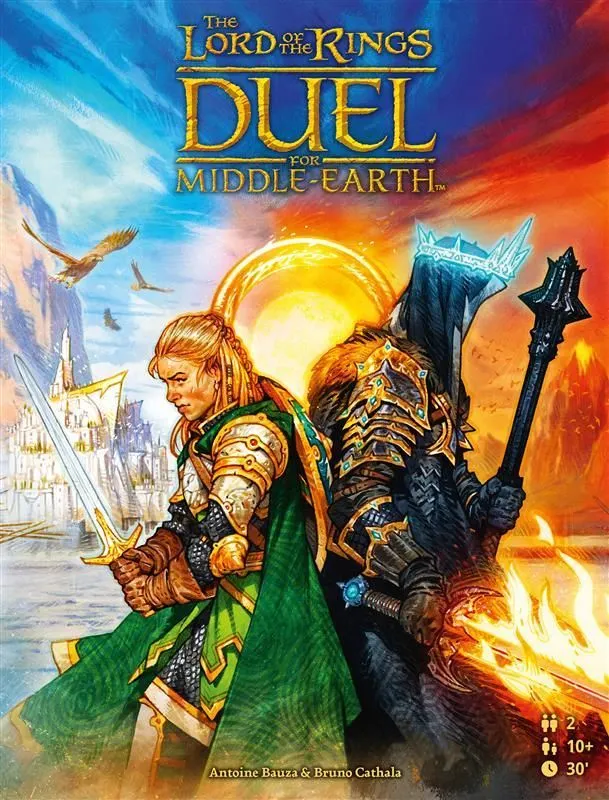
- BGG rank
- BGG #18
- BGG rating
- 8.4
The Lord of the Rings: Duel for Middle-earth
- 2 players
- 30 min
- Complexity 2.1/5
- 2024

Rules assistance for 7 Wonders Duel: Pantheon
Plain-language explanations of turns, card effects and disputed situations, with official source references and saved question history.
What would you like to know?
Answers come from the official rulebook, with the page to check.
7 Wonders Duel: Pantheon is an expansion for 7 Wonders Duel released in 2016 for 2 players, 30 minutes per game, and ages 10 and up. It was designed by Antoine Bauza and Bruno Cathala and its main mechanics are Set Collection and Open Drafting.
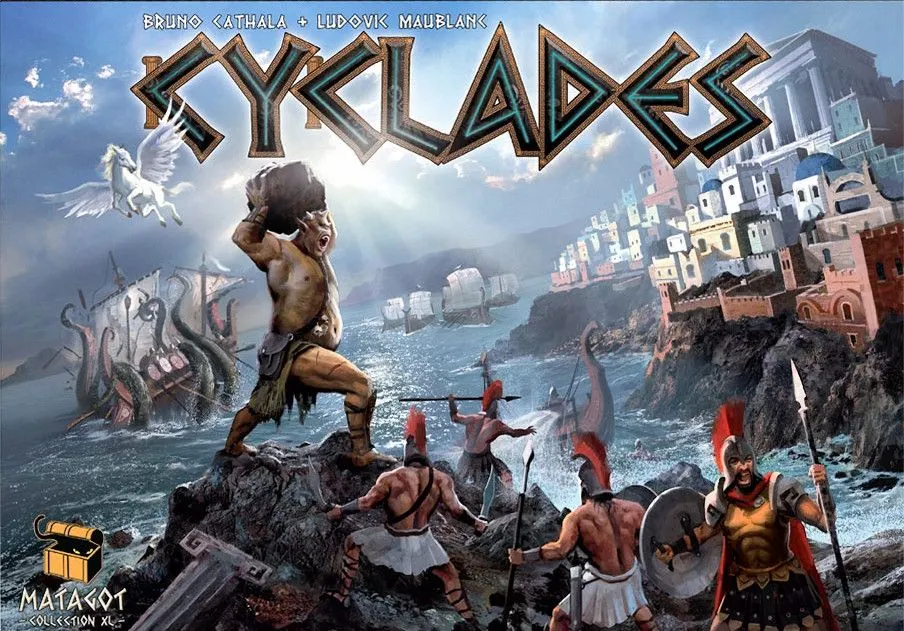


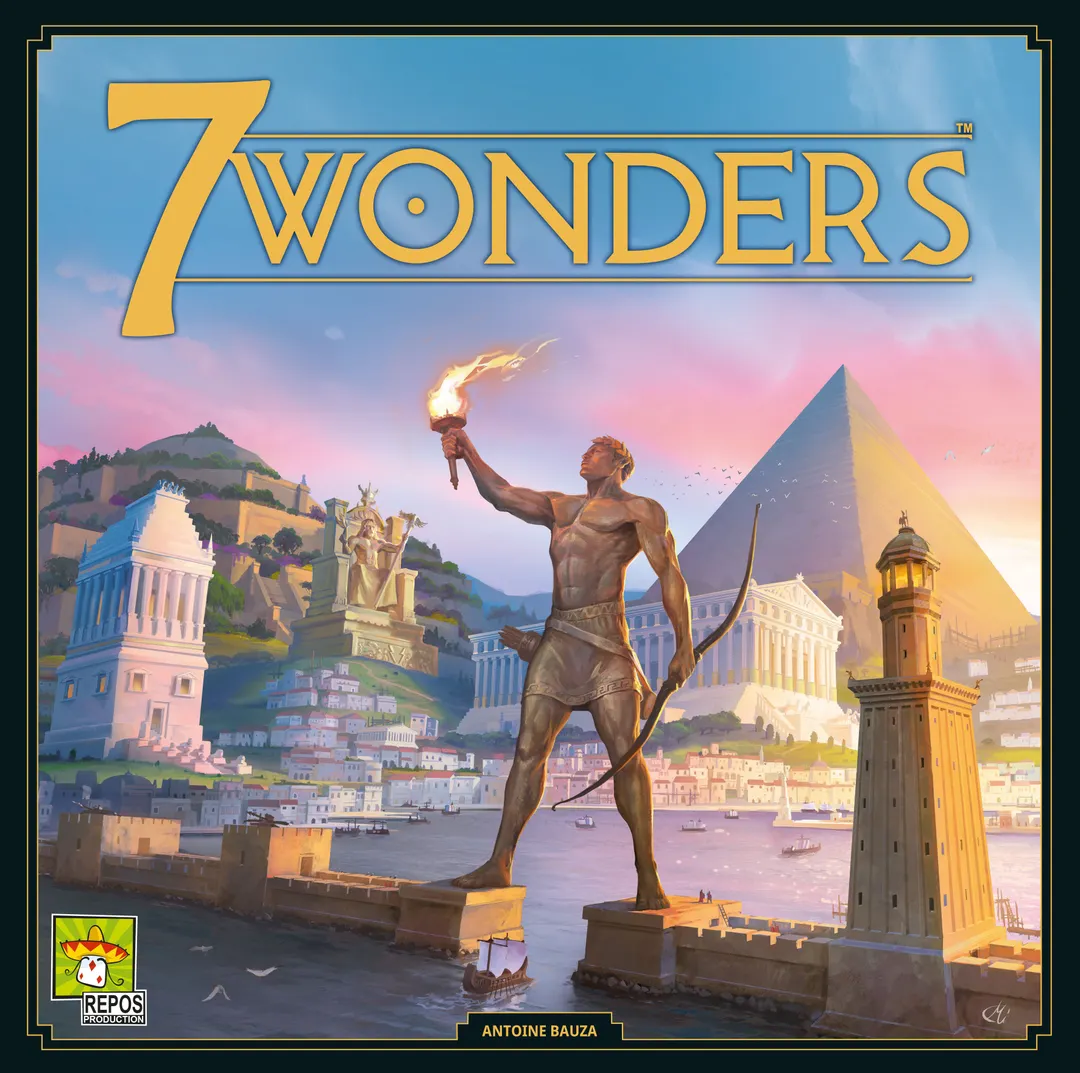
A pantheon from several civilizations — including Greek, Egyptian, and Middle-Eastern — gets added to 7 Wonders Duel in 7 Wonders Duel: Pantheon, with each god having its own power to help you or hinder your opponent. During Age I you collect mythology tokens — which allow you to choose which deities have a place in the Pantheon — and during Age II you collect offering tokens, which help you court those deities. Then, during Ages II and III, you can activate a god or goddess in the Pantheon instead of taking a card from the pyramid. To do so, you pay whatever that god or goddess demands from you in offerings, then place it next to your city. With Isis on your side, you can use a card from the discard pile to construct one of your Wonders for free. Zeus, whose nod determines what happens and what does not, enables you to discard any single card from the card structure that you want, as well as any mythology or offering token that may be on it. The Phoenician goddess Tanit, whose people were renowned for trade, fills your coffers with twelve pieces of gold. Enki, the Sumerian god of crafts, technology, and creation, lets you choose one of two progress tokens. Minerva's ability to stop the conflict pawn from moving toward you can assist with a military victory or save you from military defeat. What's more, instead of adding three guild cards to the deck for Age III, you add three of five Grand Temples. Each Grand Temple belongs to a different Mediterranean culture, and if you possess a mythology token from that culture, you can build the temple for free. These temples are worth a total of 5, 12, or 21 points, depending on how many you build. 7 Wonders Duel: Pantheon also includes two new Wonders: the Sanctuary (which gives you an additional turn and allows you to invoke deities at a reduced price) and the Divine Theater (which grants points and access to additional gods).
7 Wonders Duel: Pantheon supports 2 players according to the catalogue. This is the publisher’s listed player count, so the game is designed for exactly that number of participants. Variants for other group sizes, if any, are described in the rulebook of your edition, so check it before setting up a different configuration.
The listed playing time for 7 Wonders Duel: Pantheon is 30 minutes. This is the publisher’s estimate for a full game. The actual duration depends on the group, the player count and familiarity with the rules: first sessions usually run longer, while experienced groups often finish faster. Setup and teaching time are not included in this estimate.
The catalogue lists 7 Wonders Duel: Pantheon for ages 10 and up. This is the publisher’s recommendation and reflects reading demands, rule complexity and small components rather than theme alone. Younger players can often join with help from an adult, so check the age guidance on your edition and consider your group’s experience with board games.
7 Wonders Duel: Pantheon has a complexity rating of 2.3 out of 5 from BoardGameGeek players, which makes it a medium-light game. The rating reflects how much rules knowledge, planning and decision-making a typical game demands. Expect a longer first teach for heavier games, and use a preparation guide before game night.
7 Wonders Duel: Pantheon belongs to these categories: Card Game, Ancient, and City Building. Its main mechanics are Set Collection and Open Drafting. Categories describe the theme and setting of a game, while mechanics describe what players actually do on their turns. Each mechanic links to a catalogue hub with similar games, which helps when you want something comparable.
The credited designers of 7 Wonders Duel: Pantheon are: Antoine Bauza and Bruno Cathala. These credits come from the published game data and name the people responsible for the game’s design, not its illustrators or publishers. Designer pages on MeepleRules collect other titles by the same designers, which helps when you enjoy a game and want to find similar ones.
The catalogue lists 7 Wonders Duel: Pantheon as an expansion for 7 Wonders Duel. Expansions add new content, rules or scenarios to the base game and usually cannot be played on their own, so you need 7 Wonders Duel to use it. Check that your edition of 7 Wonders Duel is compatible, as some expansions were revised between editions.


