
- BGG rank
- BGG #4,877
- BGG rating
- 6.9
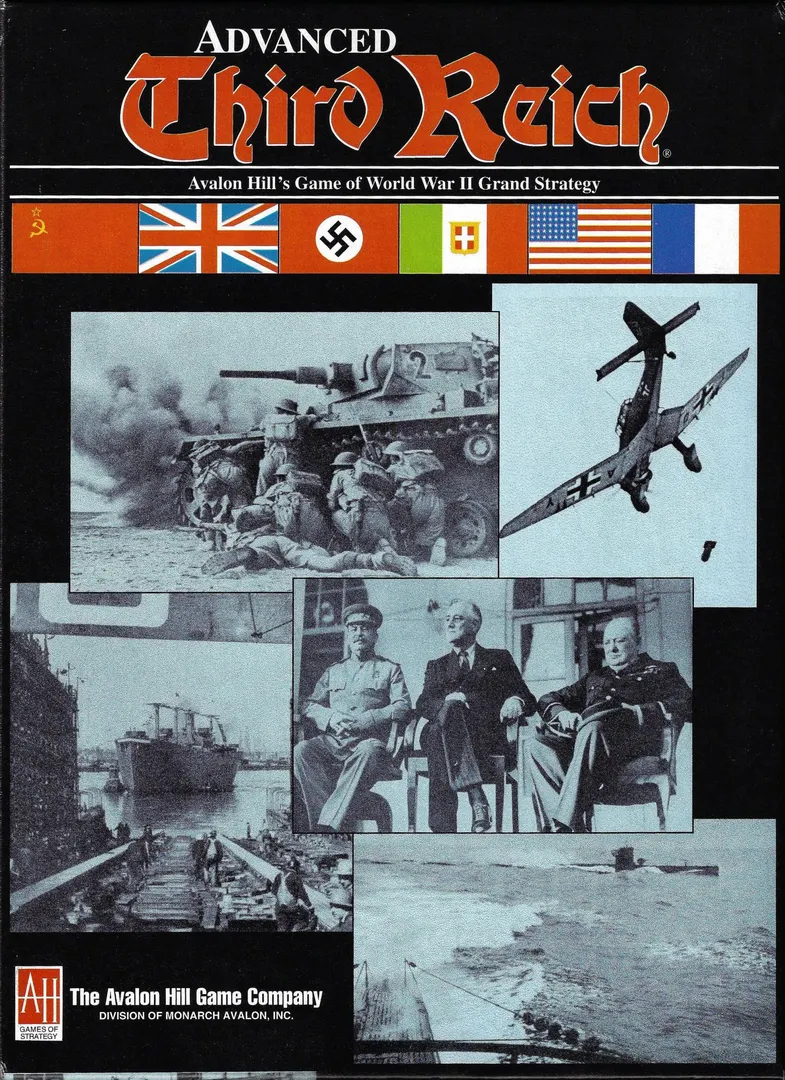
Advanced Third Reich
- 1–6 players
- 180–1200 min
- Complexity 4.5/5
- 1992
2003
Rules assistance for A World at War: Second World War in Europe and the Pacific
Plain-language explanations of turns, card effects and disputed situations, with official source references and saved question history.
For 1 player
What would you like to know?
Answers come from the official rulebook, with the page to check.
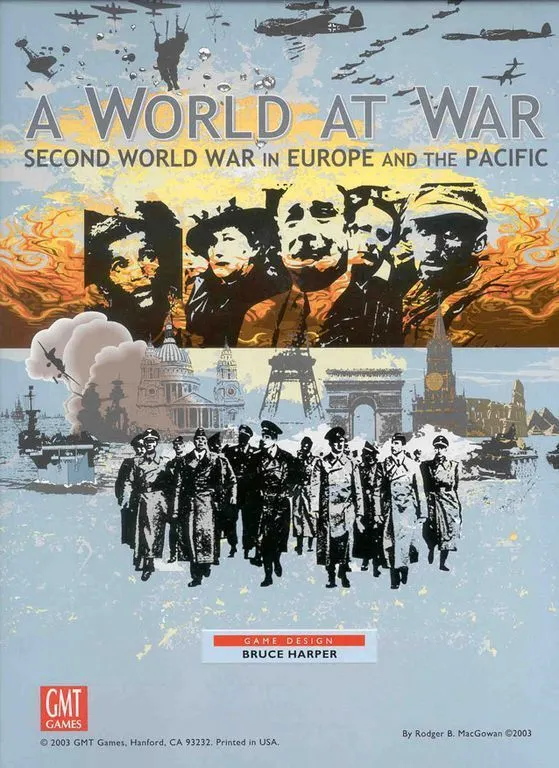
A World at War: Second World War in Europe and the Pacific is a board game released in 2003 for 1–6 players, 1440–2880 minutes per game, and ages 14 and up. It was designed by Bruce Harper and its main mechanics are Dice Rolling, Grid Movement, and Hexagon Grid.
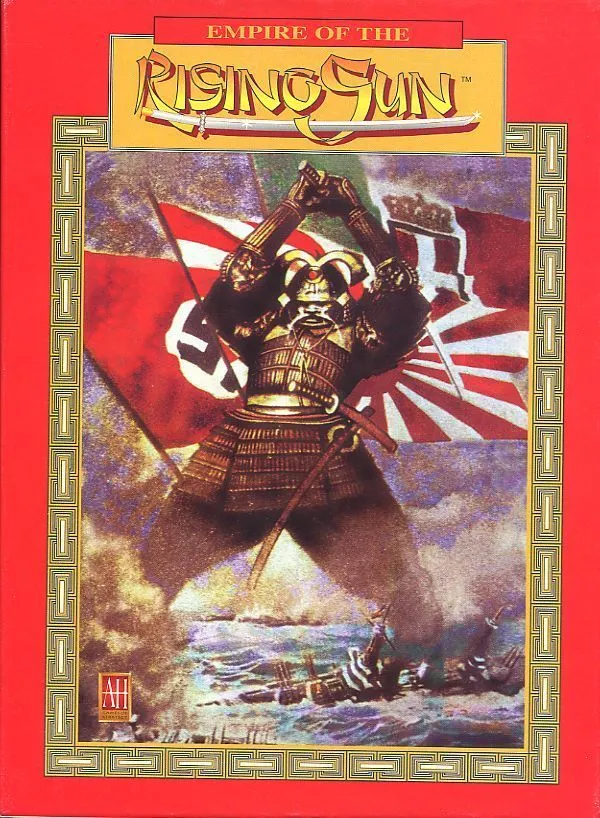








A World at War is an immersive exploration of the grand strategies of the Second World War. With roots tracing back to the classic Rise and Decline of the Third Reich, and its eventual successors--Advanced Third Reich and Empire of the Rising Sun--A World at War pushes this gaming system even further, expanding on the detail and choices. A World at War brings you everything in one box. A far-ranging battlefield where marines and paratroopers slog it out with infantry and armor; where carriers and submarines spar with cruisers and battlewagons; where army planes and carrier planes crisscross the skies with bombers and interceptors and ultra-fast jets. In A World at War, you decide what to build and where to deploy it. Choose carefully, the deployment of troops is crucial. But don't go thinking armaments comprise the only battlefield. The struggle extends deep into other arenas, like into foreign parliaments, through diplomacy, and into your skunk works, through research, and behind enemy lines, through partisans. So seize every advantage you can get. Will you gamble and research the atomic bomb? Or will you take the less glitzy and risky strategy of barricading your beaches and erecting flak near your factories? Whatever you decide, decide carefully. With so many elements in play, anything can be a winning strategy.
A World at War: Second World War in Europe and the Pacific supports 1–6 players according to the catalogue. This range comes from the publisher’s listed player count, so the game can be set up for any group size within it. Some setups, rules and scoring details may still vary by player count, so check your edition’s rulebook for the exact configuration.
The listed playing time for A World at War: Second World War in Europe and the Pacific is 1440–2880 minutes. This is the publisher’s estimate for a full game. The actual duration depends on the group, the player count and familiarity with the rules: first sessions usually run longer, while experienced groups often finish faster. Setup and teaching time are not included in this estimate.
The catalogue lists A World at War: Second World War in Europe and the Pacific for ages 14 and up. This is the publisher’s recommendation and reflects reading demands, rule complexity and small components rather than theme alone. Younger players can often join with help from an adult, so check the age guidance on your edition and consider your group’s experience with board games.
A World at War: Second World War in Europe and the Pacific has a complexity rating of 4.8 out of 5 from BoardGameGeek players, which makes it a heavy game. The rating reflects how much rules knowledge, planning and decision-making a typical game demands. Expect a longer first teach for heavier games, and use a preparation guide before game night.
A World at War: Second World War in Europe and the Pacific belongs to these categories: Wargame and World War II. Its main mechanics are Dice Rolling, Grid Movement, and Hexagon Grid. Categories describe the theme and setting of a game, while mechanics describe what players actually do on their turns. Each mechanic links to a catalogue hub with similar games, which helps when you want something comparable.
The credited designers of A World at War: Second World War in Europe and the Pacific are: Bruce Harper. These credits come from the published game data and name the people responsible for the game’s design, not its illustrators or publishers. Designer pages on MeepleRules collect other titles by the same designers, which helps when you enjoy a game and want to find similar ones.
The catalogue lists A World at War: Second World War in Europe and the Pacific as a base game. It can be played on its own with the components in the box and does not require any other title. Expansions, if any exist, add new content or rules on top of it and are listed separately in the catalogue with a link back to this base game.