
- BGG rank
- BGG #9,915
- BGG rating
- 7.9
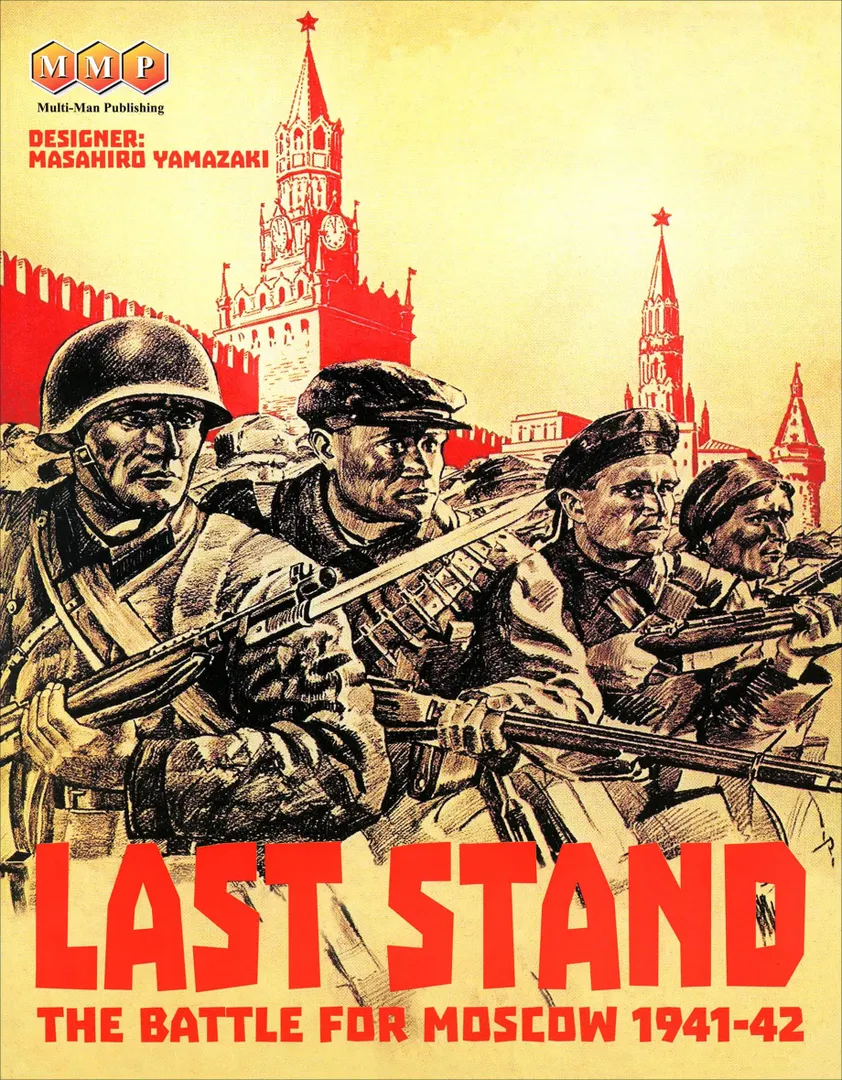
Last Stand: The Battle for Moscow 1941-42
- 1–2 players
- 180–600 min
- Complexity 2.8/5
- 2008
1993
Rules assistance for Army Group Center: June 22-28, 1941
Plain-language explanations of turns, card effects and disputed situations, with official source references and saved question history.
What would you like to know?
Answers come from the official rulebook, with the page to check.
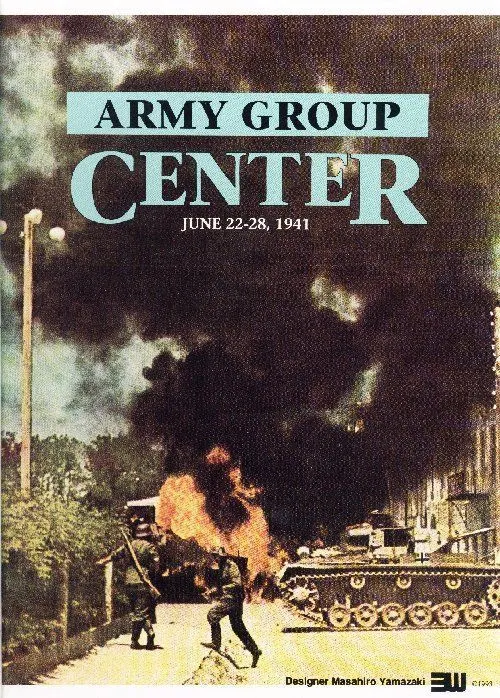
Army Group Center: June 22-28, 1941 is a board game released in 1993 for 1–2 players, 300 minutes per game, and ages 12 and up. It was designed by Masahiro Yamazaki and its main mechanics are Dice Rolling, Hexagon Grid, and Simulation.



Army Group Center: The Opening Blitz on Minsk, June 22-28, 1941 is an operational level game of the German Blitzkrieg Campaign of June 22, 1941 against the Soviet Union. Specifically, the game covers the attempt by German Army Group Center to encircle the Soviet Forces deployed on the front ar Belorussia, centered on the city of Minsk. The surprise attack was executed as planning by two Panzer groups, commanded by Colonel Generals Hoth and Guderian. The Soviet commander of the Western Front forces, General Pavlov, was taken completely by surprise, and, by order of the Soviet Supreme Command, dispatched his mobile forces directly into the German pincers. Most of the Soviet forces, including the mobile reserves, were thrown into disarray by the German first strike and were eliminated piecemeal. On June 28 the Germans closed their first major pocket of the war in the east. It extended from Belostok (Bialystok) to Minsk. 287,000 Soviet troops surrendered in this pocket, and in addition 2585 tanks and 1449 guns were captured. By July 3 the German forces had swept Belorussia of Soviet resistance with the single exception of the garrison at the fortress at Brest. From there they drove on to their next objectives of Smolensk and the Dnieper River, and from there towards Moscow. Army Group Center is a two player game in which one player controls the German forces, the other the Soviet. The game is presented in three separate scenarios, the first historical, the second and third hypothetical. The historical scenario is largely a one-sided affair and should be played by those wishing to glean the historical lessons of the German blitzkrieg campaign. For those wishing more balanced play, the second and third scenarios are recommended in which a hypothetical situation is postulated where the Soviets were aware of the German invasion plans and had prepared accordingly. Army Group Center was published by 3W in 1993. The Japanese edition is published by Masahiro Yamazaki with improved components; both of counters and game-map. The English edition for the revised edition is provided and may be downloaded. Game Scale: Game Turn: 12 hours Hex: 6.25 miles / 10 kilometers Units: Regiment to Division Game Inventory (3W): One 20-page Army Group Center rulebook One 22 x 34" full color mapsheet Three dual-side printed countersheets (500 1/2" counters) Four Player Aid charts One 10-sided die Solitaire Playability: High Complexity Level: Medium-High Players: 2 or more Playing Time: 5 hours Components (Six Angles edition) One magazine booklet One 22" x 34" game map Four counter sheets (528 counters) Two charts and tables
Army Group Center: June 22-28, 1941 supports 1–2 players according to the catalogue. This range comes from the publisher’s listed player count, so the game can be set up for any group size within it. Some setups, rules and scoring details may still vary by player count, so check your edition’s rulebook for the exact configuration.
The listed playing time for Army Group Center: June 22-28, 1941 is 300 minutes. This is the publisher’s estimate for a full game. The actual duration depends on the group, the player count and familiarity with the rules: first sessions usually run longer, while experienced groups often finish faster. Setup and teaching time are not included in this estimate.
The catalogue lists Army Group Center: June 22-28, 1941 for ages 12 and up. This is the publisher’s recommendation and reflects reading demands, rule complexity and small components rather than theme alone. Younger players can often join with help from an adult, so check the age guidance on your edition and consider your group’s experience with board games.
Army Group Center: June 22-28, 1941 has a complexity rating of 3.1 out of 5 from BoardGameGeek players, which makes it a medium-weight game. The rating reflects how much rules knowledge, planning and decision-making a typical game demands. Expect a longer first teach for heavier games, and use a preparation guide before game night.
Army Group Center: June 22-28, 1941 belongs to these categories: Wargame and World War II. Its main mechanics are Dice Rolling, Hexagon Grid, and Simulation. Categories describe the theme and setting of a game, while mechanics describe what players actually do on their turns. Each mechanic links to a catalogue hub with similar games, which helps when you want something comparable.
The credited designers of Army Group Center: June 22-28, 1941 are: Masahiro Yamazaki. These credits come from the published game data and name the people responsible for the game’s design, not its illustrators or publishers. Designer pages on MeepleRules collect other titles by the same designers, which helps when you enjoy a game and want to find similar ones.
The catalogue lists Army Group Center: June 22-28, 1941 as a base game. It can be played on its own with the components in the box and does not require any other title. Expansions, if any exist, add new content or rules on top of it and are listed separately in the catalogue with a link back to this base game.