

- BGG rank
- BGG #26,852
- BGG rating
- 5.4
Bop It!: Star Wars R2-D2 Edition
- 1–99 players
- Complexity 1.0/5
- 2015
2005
Rules assistance for Attacktix Battle Figure Game: Star Wars
Plain-language explanations of turns, card effects and disputed situations, with official source references and saved question history.
For 2 players
What would you like to know?
Answers come from the official rulebook, with the page to check.
Attacktix Battle Figure Game: Star Wars is a board game released in 2005 for 2 players, 10 minutes per game, and ages 8 and up. It was designed by Brian Wilk and Brett M. Seymour.





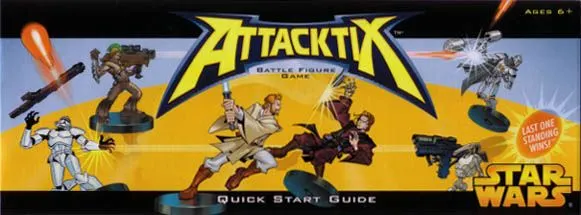
One of the most innovative additions to the boys action aisle is ATTACKTIX. Launching with Star Wars: Episode III toys, ATTACKTIX is a battle figure game that combines great action figures with kinetic battling features. Each figure comes on a base that contains all of the information that a trading card might include, such as speed, defense, point value and special powers unique to that character. The goal of the game is simple: be the last one standing; but beyond that there are nearly unlimited strategies. To begin, kids select how many points each squad should start out with, pick their squads and put them into formation. On each turn, kids will move their figures across the table (counting distance using a patented clicking wheel in the base), and then attack with features like slashing light sabers, firing projectiles and others. When the figures are knocked over, their special powers come into play and influence the game. For example, granting another one of your figures an attack or bringing back a figure who may have been previously defeated. This version is based on characters in the Star Wars Universe. There are multiple themes in the Attacktix series of games.
Attacktix Battle Figure Game: Star Wars supports 2 players according to the catalogue. This is the publisher’s listed player count, so the game is designed for exactly that number of participants. Variants for other group sizes, if any, are described in the rulebook of your edition, so check it before setting up a different configuration.
The listed playing time for Attacktix Battle Figure Game: Star Wars is 10 minutes. This is the publisher’s estimate for a full game. The actual duration depends on the group, the player count and familiarity with the rules: first sessions usually run longer, while experienced groups often finish faster. Setup and teaching time are not included in this estimate.
The catalogue lists Attacktix Battle Figure Game: Star Wars for ages 8 and up. This is the publisher’s recommendation and reflects reading demands, rule complexity and small components rather than theme alone. Younger players can often join with help from an adult, so check the age guidance on your edition and consider your group’s experience with board games.
Attacktix Battle Figure Game: Star Wars has a complexity rating of 1.3 out of 5 from BoardGameGeek players, which makes it a light game. The rating reflects how much rules knowledge, planning and decision-making a typical game demands. Expect a longer first teach for heavier games, and use a preparation guide before game night.
Attacktix Battle Figure Game: Star Wars belongs to these categories: Children's Game, Movies / TV / Radio theme, and Action / Dexterity. Categories describe the theme, setting and style of a game rather than its rules. Filter the catalogue by the same category to find similar games when you enjoyed Attacktix Battle Figure Game: Star Wars and want something comparable for your next game night.
The credited designers of Attacktix Battle Figure Game: Star Wars are: Brian Wilk and Brett M. Seymour. These credits come from the published game data and name the people responsible for the game’s design, not its illustrators or publishers. Designer pages on MeepleRules collect other titles by the same designers, which helps when you enjoy a game and want to find similar ones.
The catalogue lists Attacktix Battle Figure Game: Star Wars as a base game. It can be played on its own with the components in the box and does not require any other title. Expansions, if any exist, add new content or rules on top of it and are listed separately in the catalogue with a link back to this base game.