Backgammon: Zombie Rush
- 2 players
- 20 min
- 2012

Rules assistance for Backgammon
Plain-language explanations of turns, card effects and disputed situations, with official source references and saved question history.
For 2 players
What would you like to know?
Answers come from the official rulebook, with the page to check.
Backgammon is a board game for 2 players, 30 minutes per game, and ages 8 and up. Its main mechanics are Race, Roll / Spin and Move, and Lose a Turn.
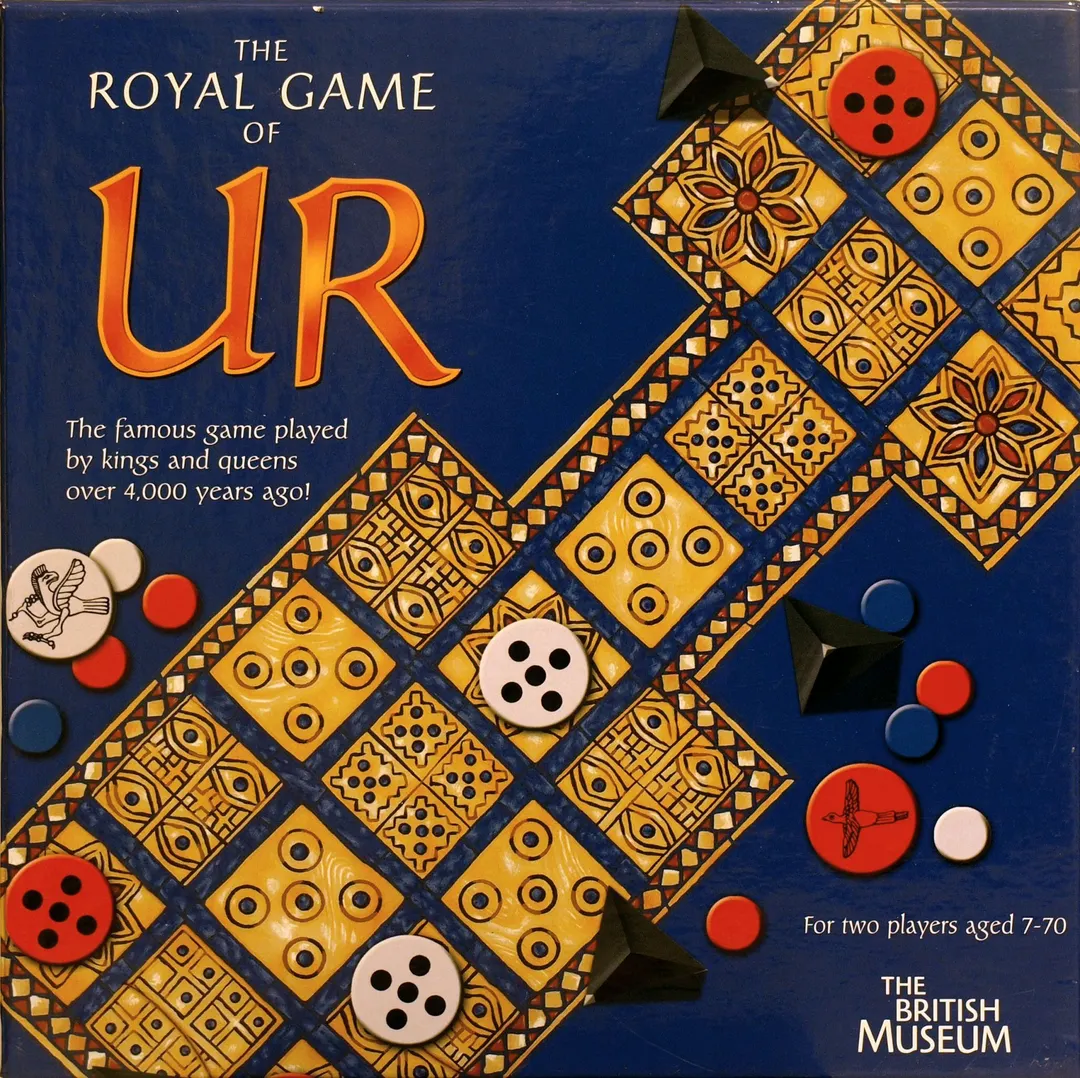



Backgammon is a classic abstract strategy game dating back hundreds of years. Each player has a set of 15 checkers (or stones) that must be moved from their starting positions, around, and then off the board. Dice are thrown each turn, and each player must decide which of their checkers to move based on the outcome of the roll. Players can capture each other's checkers, forcing the captured checkers to restart their journey around the board. The winner is the first player to get all 15 checkers off the board. A more recent addition to the game is the "doubling cube", which allows players to up the stakes of the game. Although the game relies on dice to determine movement, there is a large degree of strategy in deciding how to make the most effective moves given each dice roll and measuring the risk in terms of possible rolls the opponent may get. An ancestor of Backgammon may be the first game to be mentioned in written history, going back 5,000 years to the Sumerians of ancient Mesopotamia. During the 1920s, archaeologists unearthed five boards of The Royal Game of Ur from a cemetery in the ancient town of Ur. At another location, pieces and dice were also found along with the board. Boards from ancient Egypt, apparently of other related games, have also been recovered from the tomb of Tutankhamun, including a mechanical dice box, no doubt intended to stop cheaters. The ancestors of the game were many. In Persia, Takhteh Nard which means "Battle on Wood". In Egypt, Tau, which may be the ancestor of Senat. In Rome, Ludus Duodecim Scriptorum ("game of twelve marks"), later, Tabula ("table"), and by the sixth century, Alea ("dice"). In ancient China, T-shu-p-u and later in Japan, Sugoroko. The English name may derive from "Bac gamen" meaning "Back Game", referring to re-entry of taken stones back to the board. It was often enjoyed by the upper classes and is sometimes called "The Aristocratic Game". The Roman Emperor Claudius was known to be such a fan of Tabula that he had a set built into his coach so he could play as he traveled (the world's first travel edition?). The rules in English were standardized in 1743 by Edmond Hoyle. These remained popular until the American innovations of the 1930s.
Backgammon supports 2 players according to the catalogue. This is the publisher’s listed player count, so the game is designed for exactly that number of participants. Variants for other group sizes, if any, are described in the rulebook of your edition, so check it before setting up a different configuration.
The listed playing time for Backgammon is 30 minutes. This is the publisher’s estimate for a full game. The actual duration depends on the group, the player count and familiarity with the rules: first sessions usually run longer, while experienced groups often finish faster. Setup and teaching time are not included in this estimate.
The catalogue lists Backgammon for ages 8 and up. This is the publisher’s recommendation and reflects reading demands, rule complexity and small components rather than theme alone. Younger players can often join with help from an adult, so check the age guidance on your edition and consider your group’s experience with board games.
Backgammon has a complexity rating of 2.0 out of 5 from BoardGameGeek players, which makes it a medium-light game. The rating reflects how much rules knowledge, planning and decision-making a typical game demands. Expect a longer first teach for heavier games, and use a preparation guide before game night.
Backgammon belongs to these categories: Dice and Abstract Strategy. Its main mechanics are Race, Roll / Spin and Move, and Lose a Turn. Categories describe the theme and setting of a game, while mechanics describe what players actually do on their turns. Each mechanic links to a catalogue hub with similar games, which helps when you want something comparable.
The catalogue lists Backgammon as a base game. It can be played on its own with the components in the box and does not require any other title. Expansions, if any exist, add new content or rules on top of it and are listed separately in the catalogue with a link back to this base game.