
- BGG rank
- BGG #6,968
- BGG rating
- 7.8
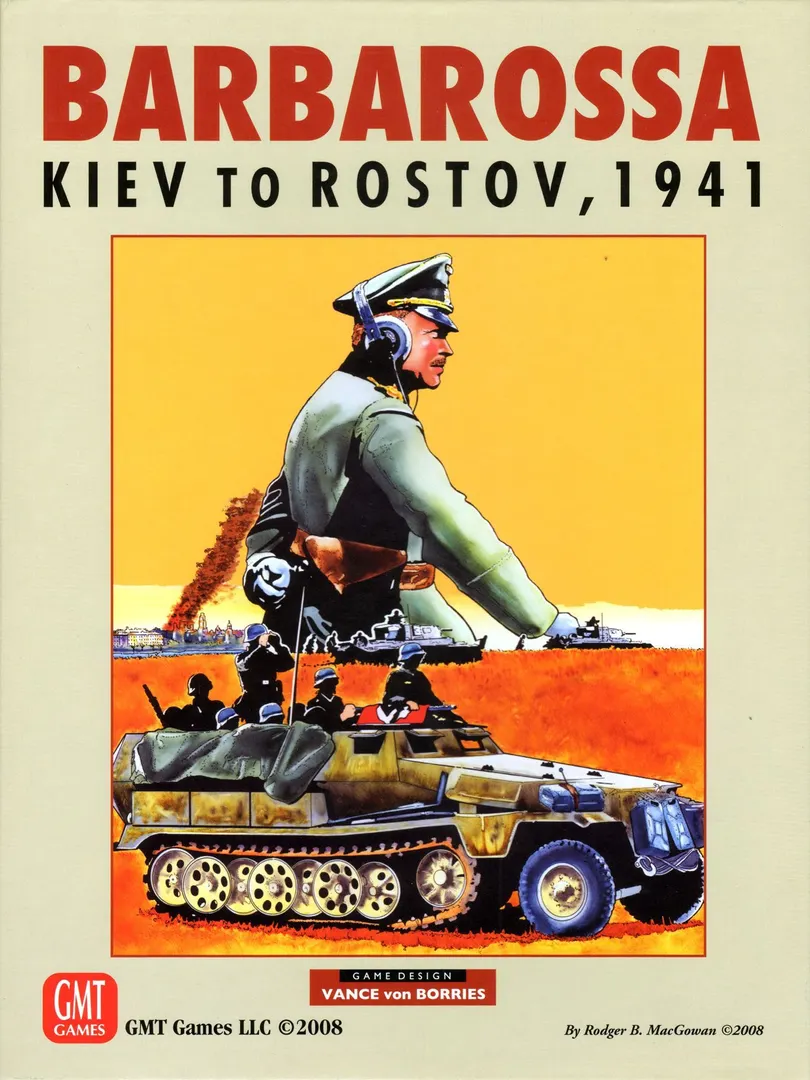
Barbarossa: Kiev to Rostov, 1941
- 1–4 players
- 240 min
- Complexity 4.2/5
- 2008
1996
Rules assistance for Barbarossa: Army Group South, 1941
Plain-language explanations of turns, card effects and disputed situations, with official source references and saved question history.
For 1 player
What would you like to know?
Answers come from the official rulebook, with the page to check.
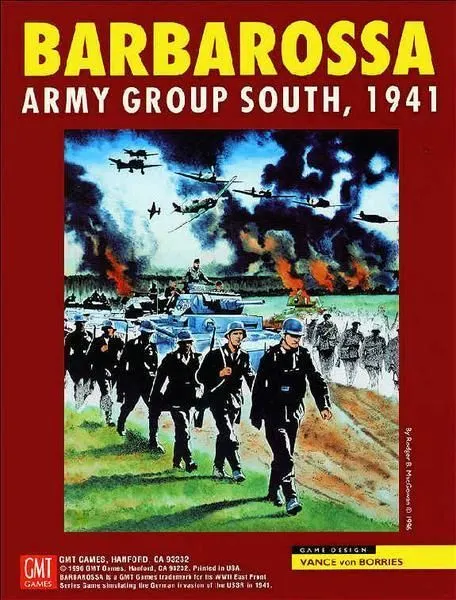
Barbarossa: Army Group South, 1941 is a board game released in 1996 for 1–4 players, 240 minutes per game, and ages 12 and up. It was designed by Vance von Borries and its main mechanics are Dice Rolling and Hexagon Grid.
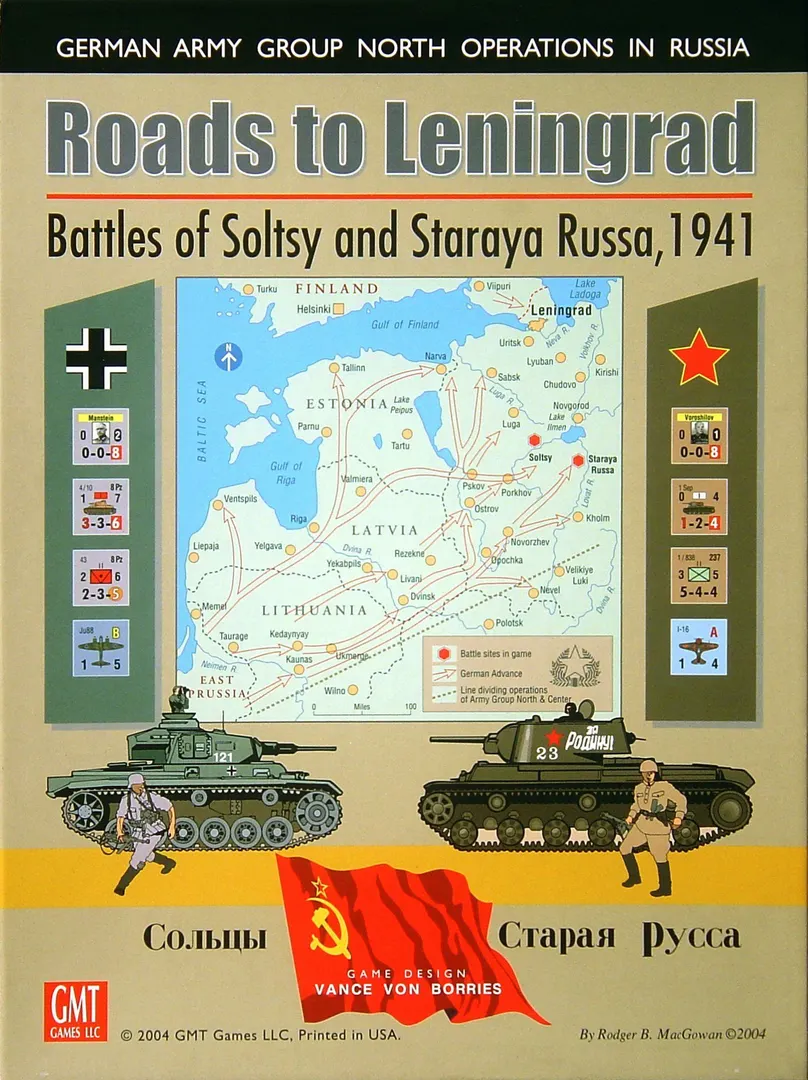
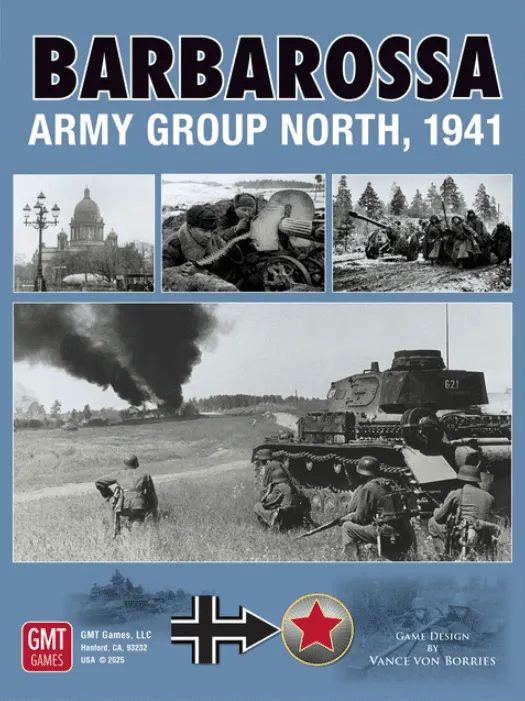
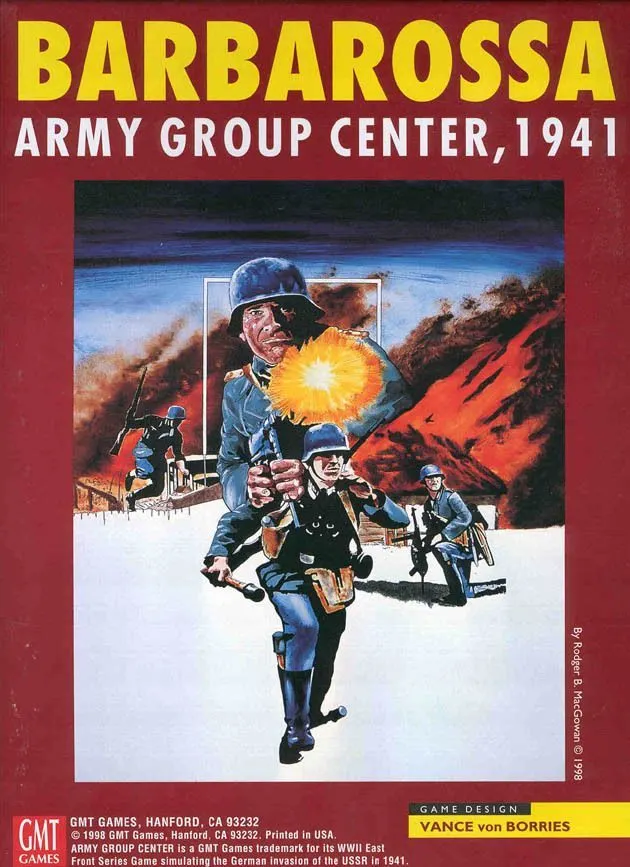






June 1941 -- the German juggernaut rolls over the Soviet Army. As the tally of encirclements and surrenders mounts, the German advance appears unstoppable to Hitler and many others. However, the officers and men at the front are beginning to have serious misgivings -- not in themselves, but in the pre-war intelligence estimates that they had received. They had not been prepared to encounter hundreds of KV-1's and T-34's, tanks far superior to anything they possessed. For the moment, German tactics provided the margin of victory over better material, but the Russians were proving to be quick learners. Worse yet, by western European standards, Russian losses had been so staggering that there should have been no army left to fight. Not so. There seemed to be no end to these tenacious Russian defenders. As the German forces continued their eastward advance, more and more soldiers began asking, "What have we gotten ourselves into?" Kiev, the first major German objective in the south, did not fall on schedule. In fact, Soviet resistance was so fierce that it required diverting Guderian's Panzer Group away from the advance on Moscow. Kiev fell in one of the greatest encirclements of the Second World War, but the German advance on Moscow was delayed for several critical weeks. Quite possibly the delay at Kiev might have cost the German forces victory in the battle for Moscow. 840 full-color two-sided counters. MAPS Three 22x34" and one 17x22" full-color mapsheets OTHER One 10-sided die 36-page Rule Book 36-page Play Book Player Aid Cards: four two-sided Soviet Set-Up cards, four two-sided Axis Set-Up cards, Soviet Status card, Axis Status card, two 11x17 two-sided game chart cards, two cards of additional scenario charts. Eight scenarios allow players to vary their level of involvement, complexity, and starting point, from introductory to full campaign An asymmetrical sequence of play that highlights Axis armored breakthroughs and Soviet difficulties in combined arms warfare Detailed air rules that integrate with land combat and weather rules Incredibly detailed orders of battle, including special coverage of artillery, rocket artillery, engineers, bridge units, armored trains, and much more Modifications to the proven Typhoon system include revised overrun and Soviet surrender procedures, as well as a new non-op Soviet HQ system to simulate the rigid yet fragile Soviet Command structure Extensive bibliography and design/historical notes Scenarios include; Scenario #1 "Assault on Kiev" which uses a portion of map G. GT#21 to GT#28 Scenario #2 "Odessa" which uses a portion of Map F. GT#26 to GT#40 Scenario #3 "Rundstedt Attacks" which uses most of Map E. GT#1 to GT#6 Scenario #4 "Operation Munich" which uses portions of maps E and F, an optional rule allows map E to be omitted. GT#6 to GT#17 Scenario #5 "Campaign Game" which uses all of maps E,F, and G. GT#1 to GT#28 Scenario #6 "Uman Pocket" which uses maps F and G. GT#9 to GT#28 Scenario #7 "Rostov" which uses small map R. GT#T19 to GT#T33 (note Typhoon style game turn code). Scenario #8 "Counterattack" which uses small map R. GT#T30 to GT#T32
Barbarossa: Army Group South, 1941 supports 1–4 players according to the catalogue. This range comes from the publisher’s listed player count, so the game can be set up for any group size within it. Some setups, rules and scoring details may still vary by player count, so check your edition’s rulebook for the exact configuration.
The listed playing time for Barbarossa: Army Group South, 1941 is 240 minutes. This is the publisher’s estimate for a full game. The actual duration depends on the group, the player count and familiarity with the rules: first sessions usually run longer, while experienced groups often finish faster. Setup and teaching time are not included in this estimate.
The catalogue lists Barbarossa: Army Group South, 1941 for ages 12 and up. This is the publisher’s recommendation and reflects reading demands, rule complexity and small components rather than theme alone. Younger players can often join with help from an adult, so check the age guidance on your edition and consider your group’s experience with board games.
Barbarossa: Army Group South, 1941 has a complexity rating of 4.2 out of 5 from BoardGameGeek players, which makes it a heavy game. The rating reflects how much rules knowledge, planning and decision-making a typical game demands. Expect a longer first teach for heavier games, and use a preparation guide before game night.
Barbarossa: Army Group South, 1941 belongs to these categories: Wargame and World War II. Its main mechanics are Dice Rolling and Hexagon Grid. Categories describe the theme and setting of a game, while mechanics describe what players actually do on their turns. Each mechanic links to a catalogue hub with similar games, which helps when you want something comparable.
The credited designers of Barbarossa: Army Group South, 1941 are: Vance von Borries. These credits come from the published game data and name the people responsible for the game’s design, not its illustrators or publishers. Designer pages on MeepleRules collect other titles by the same designers, which helps when you enjoy a game and want to find similar ones.
The catalogue lists Barbarossa: Army Group South, 1941 as a base game. It can be played on its own with the components in the box and does not require any other title. Expansions, if any exist, add new content or rules on top of it and are listed separately in the catalogue with a link back to this base game.