

- BGG rating
- 6.5
Basilica: Festum Fatuorum
- 2 players
- 45 min
- Complexity 2.3/5
- 2012
2010
Rules assistance for Basilica
Plain-language explanations of turns, card effects and disputed situations, with official source references and saved question history.
For 2 players
What would you like to know?
Answers come from the official rulebook, with the page to check.
Basilica is a board game released in 2010 for 2 players, 45 minutes per game, and ages 10 and up. It was designed by Łukasz M. Pogoda and its main mechanics are Area Majority / Influence, Tile Placement, and Modular Board.








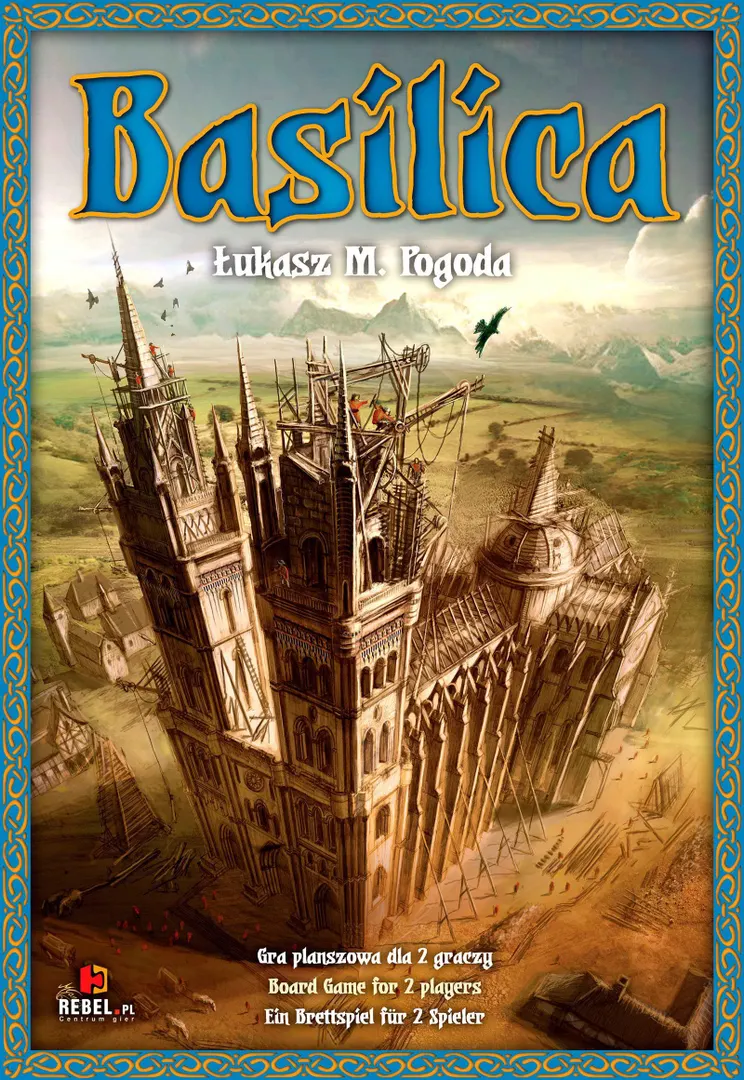
Basilica, a game for 2 players, presents the duel of two medieval master masons who are ordered to build a medieval cathedral together. Players are planning cathedral layout and overseeing work at the construction site in tandem, in the same time trying to gain advantage over the opposite player. The temple is built by laying square tiles adjacent to the board or already built tiles. Tiles form the plan of the cathedral. These tiles, distinguished by four colors, represent different elements of the cathedral. The pool of tiles available to players is random. Later, the players place pawns on the tiles – these pawns are the teams of builders: foremen, masons and carpenters, who will make the design a reality. The players strive to achieve two goals: to lay their cathedral tiles so as to create the largest possible areas representing a single color, and to have more pawns in these areas than their opponent. Every tile bears also one special action that could be played instead of adding a tile to the cathedral. Using these actions player may move pawns from tile to tile, promote them (increasing their value) or manipulate the tiles. Execution of specific order excludes the tile from being used as part of cathedral, so choice between expanding the edifice and making some action is strategic. Planning and optimal use of available resources is important, as both participants share the same selection of tiles. Thus, tiles and actions shown on them not used by the player in her or his turn become immediately available to his opponent. Some tiles trigger movement of a special King pawn, which moves along the scoring track. Every few moves, the King pawn comes to a space indicating a royal visit to the cathedral. During each royal visit, the progress of work is assessed and Victory Points are assigned to the players. The number of VPs each player is awarded depends on the size and number of the areas controlled by their pawns at the moment of scoring. The more areas the player controls, and the bigger these are, the greater the reward for the player. At the end of the game, the winner is the player who has claimed more Victory Points. Basilica was reissued in 2022 in a new version that includes the expansion.
Basilica supports 2 players according to the catalogue. This is the publisher’s listed player count, so the game is designed for exactly that number of participants. Variants for other group sizes, if any, are described in the rulebook of your edition, so check it before setting up a different configuration.
The listed playing time for Basilica is 45 minutes. This is the publisher’s estimate for a full game. The actual duration depends on the group, the player count and familiarity with the rules: first sessions usually run longer, while experienced groups often finish faster. Setup and teaching time are not included in this estimate.
The catalogue lists Basilica for ages 10 and up. This is the publisher’s recommendation and reflects reading demands, rule complexity and small components rather than theme alone. Younger players can often join with help from an adult, so check the age guidance on your edition and consider your group’s experience with board games.
Basilica has a complexity rating of 2.3 out of 5 from BoardGameGeek players, which makes it a medium-light game. The rating reflects how much rules knowledge, planning and decision-making a typical game demands. Expect a longer first teach for heavier games, and use a preparation guide before game night.
Basilica belongs to these categories: Medieval and Religious. Its main mechanics are Area Majority / Influence, Tile Placement, and Modular Board. Categories describe the theme and setting of a game, while mechanics describe what players actually do on their turns. Each mechanic links to a catalogue hub with similar games, which helps when you want something comparable.
The credited designers of Basilica are: Łukasz M. Pogoda. These credits come from the published game data and name the people responsible for the game’s design, not its illustrators or publishers. Designer pages on MeepleRules collect other titles by the same designers, which helps when you enjoy a game and want to find similar ones.
The catalogue lists Basilica as a base game. It can be played on its own with the components in the box and does not require any other title. Expansions, if any exist, add new content or rules on top of it and are listed separately in the catalogue with a link back to this base game.