
- BGG rank
- BGG #9,260
- BGG rating
- 6.2
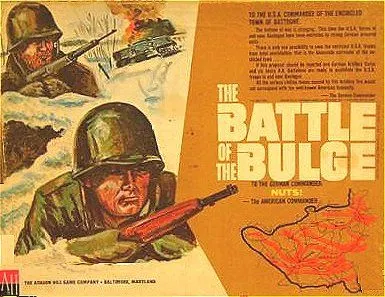
The Battle of the Bulge
- 2 players
- 120 min
- Complexity 2.2/5
- 1965
2010
Rules assistance for Bastogne: A Desperate Defense
Plain-language explanations of turns, card effects and disputed situations, with official source references and saved question history.
What would you like to know?
Answers come from the official rulebook, with the page to check.
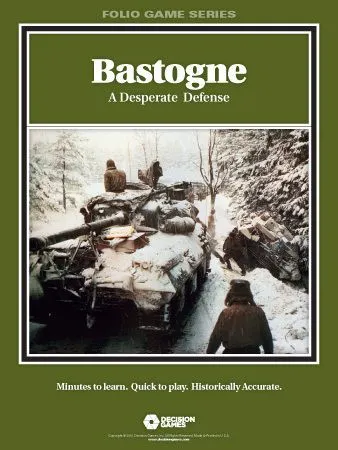
Bastogne: A Desperate Defense is a board game released in 2010 for 1–2 players, 60 minutes per game, and ages 12 and up. It was designed by Larry Pinsky and Eric R. Harvey and its main mechanics are Dice Rolling, Hexagon Grid, and Simulation.
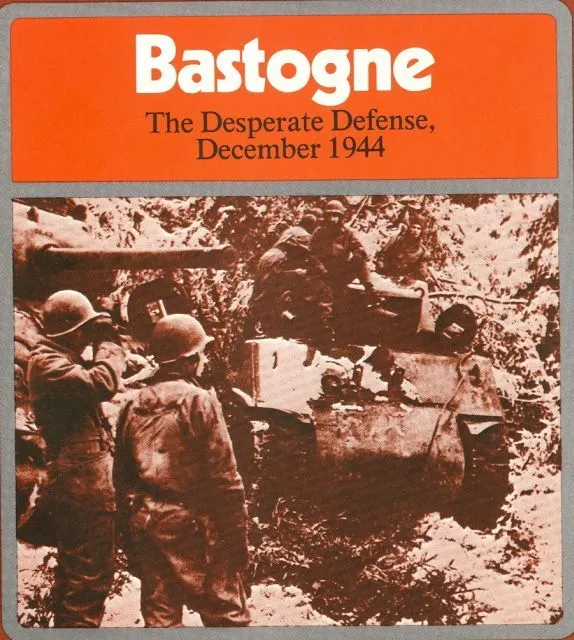
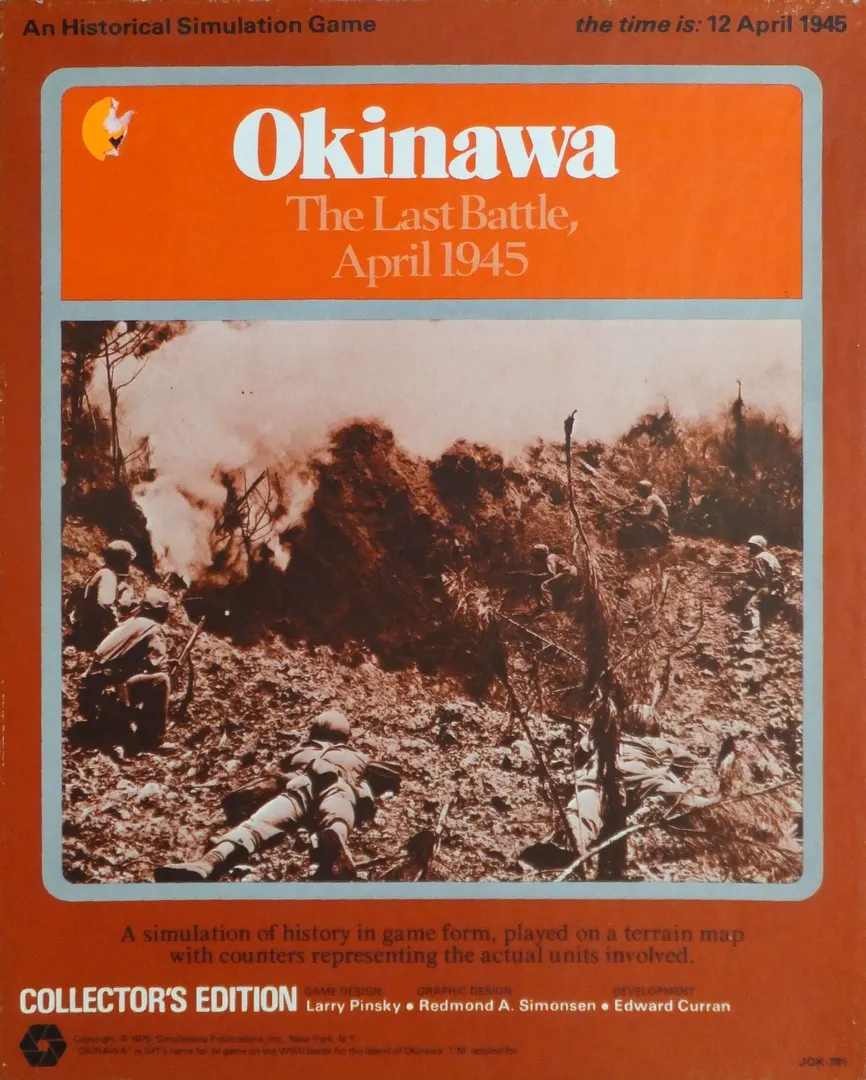






From the Decision Games' website: The initial onslaught of the Germans' Ardennes offensive, in December 1944, overran numerous US positions all along the front line, though the Germans simply bypassed other stubbornly defended locations so as to maintain their momentum. The small town of Bastogne, however, with its strategically critical road junctions, became the lynchpin of the entire campaign. The Germans soon realized Bastogne had to be captured; so they set out to assault the outnumbered and surrounded American units there. The desperate defense of Bastogne therefore came to typify the entire Battle of the Bulge. Bastogne utilizes the new Fire & Movement combat system that's designed so players can augment their units with "support fire" during the course of the battle. From anti-tank units to mortars, units can receive support assets to engage enemy positions and formations, allowing combat to develop at all levels. A single recon battalion, for example — perhaps supported by artillery — could be tasked to assault a lone enemy battalion of paratroopers defending a hamlet. As that attack gets underway, the recon battalion may find itself under the guns of enemy artillery. So more support fire will be necessary to take the hamlet, but assets are limited. In Bastogne, the attritional design of the new Combat Results Table simulates the true nature of battles in Europe. Units are typically two-sided formations that can incur casualties, accurately replicating the realities of combat and the high losses sustained by both sides during the actual fighting for Bastogne. Winning the battle is thus a matter of maneuver, firepower and asset management. Re-implements: Bastogne: The Desperate Defense, December 1944
Bastogne: A Desperate Defense supports 1–2 players according to the catalogue. This range comes from the publisher’s listed player count, so the game can be set up for any group size within it. Some setups, rules and scoring details may still vary by player count, so check your edition’s rulebook for the exact configuration.
The listed playing time for Bastogne: A Desperate Defense is 60 minutes. This is the publisher’s estimate for a full game. The actual duration depends on the group, the player count and familiarity with the rules: first sessions usually run longer, while experienced groups often finish faster. Setup and teaching time are not included in this estimate.
The catalogue lists Bastogne: A Desperate Defense for ages 12 and up. This is the publisher’s recommendation and reflects reading demands, rule complexity and small components rather than theme alone. Younger players can often join with help from an adult, so check the age guidance on your edition and consider your group’s experience with board games.
Bastogne: A Desperate Defense has a complexity rating of 1.9 out of 5 from BoardGameGeek players, which makes it a light game. The rating reflects how much rules knowledge, planning and decision-making a typical game demands. Expect a longer first teach for heavier games, and use a preparation guide before game night.
Bastogne: A Desperate Defense belongs to these categories: Wargame and World War II. Its main mechanics are Dice Rolling, Hexagon Grid, and Simulation. Categories describe the theme and setting of a game, while mechanics describe what players actually do on their turns. Each mechanic links to a catalogue hub with similar games, which helps when you want something comparable.
The credited designers of Bastogne: A Desperate Defense are: Larry Pinsky and Eric R. Harvey. These credits come from the published game data and name the people responsible for the game’s design, not its illustrators or publishers. Designer pages on MeepleRules collect other titles by the same designers, which helps when you enjoy a game and want to find similar ones.
The catalogue lists Bastogne: A Desperate Defense as a base game. It can be played on its own with the components in the box and does not require any other title. Expansions, if any exist, add new content or rules on top of it and are listed separately in the catalogue with a link back to this base game.