
- BGG rank
- BGG #9,003
- BGG rating
- 7.4
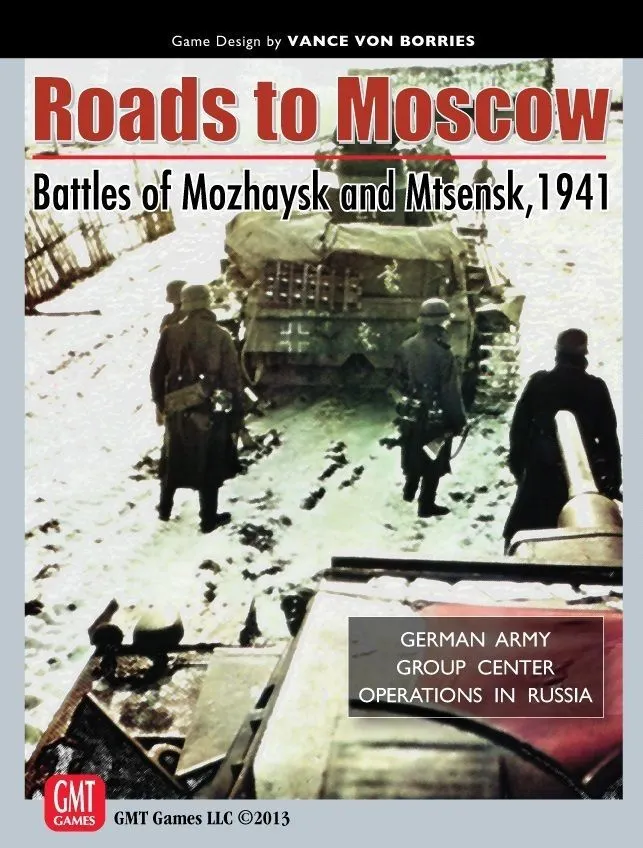
Roads to Moscow: Battles of Mozhaysk and Mtsensk, 1941
- 2 players
- 180 min
- Complexity 3.4/5
- 2013
2010
Rules assistance for Bataan!
Plain-language explanations of turns, card effects and disputed situations, with official source references and saved question history.
For 1 player
What would you like to know?
Answers come from the official rulebook, with the page to check.
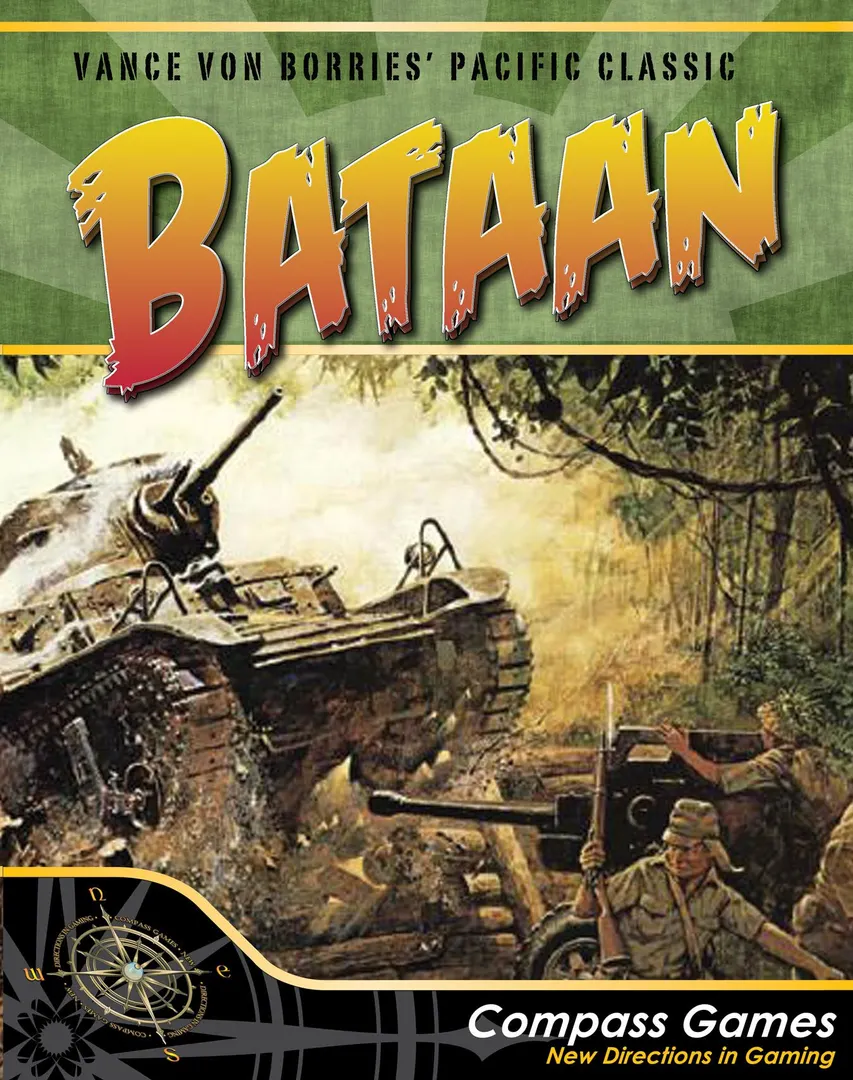
Bataan! is a board game released in 2010 for 1–2 players, 120–1200 minutes per game, and ages 12 and up. It was designed by Vance von Borries and its main mechanics are Dice Rolling, Hexagon Grid, and Chit-Pull System.
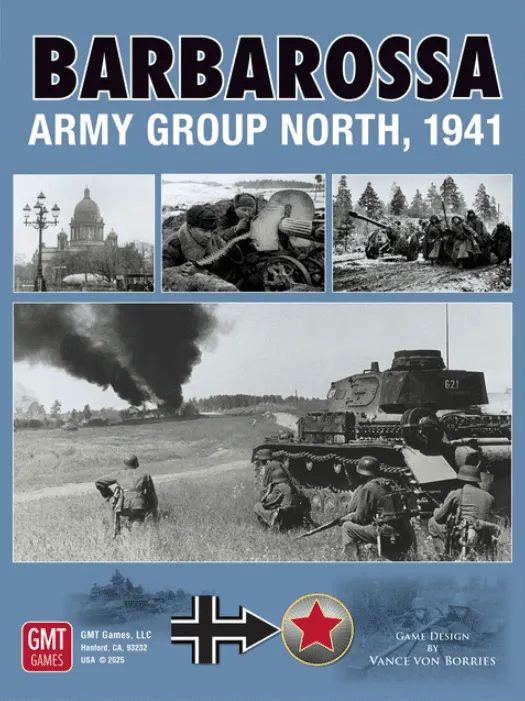
(from Compass Games website:) After failing to defeat the invading Japanese forces on the beaches of Luzon, General MacArthur, commander of United States Army Forces in the Far East (USAFFE), retreated the Philippine Army to the Bataan peninsula and Corregidor, according to War Plan Orange. Holding fortified positions and bolstered by the crack Philippine Scouts, the Allied forces would hold for months against the well equipped and trained Japanese invaders. Bataan! is a two-player game, recreating the battle for the peninsula. Vance von Borries has drawn from his game design experience to create a game engine capable of portraying the tense jungle-fighting which took place on Bataan. While the system is based on a previous success, the changes needed to simulate the fighting on Bataan make this a unique gaming experience. Japanese forces will move quickly to out-flank and pry the US/Filipino units from their fortifications. Yet the Americans can successfully launch attacks out of these strong points, particularly when the crack Philippine Scouts are in the lead. From time to time a player may lead with his armor and this was the one battle of the war where the lowly US Stuart tank was the superior tank! A chit-pull system is used to randomly determine activations for the various formations on each side. In general, formation size is based on a division. Each formation activates individually for movement and combat. Players alternate activations based on the random chit-pull until all formations have played. Most Japanese formations receive two activations per turn, thereby demonstrating their combat capabilities, preparedness and motivation in taking an offensive role. Individual unit counters represent battalions or half battalions, and include efficiency ratings for combat comparisons and other functions. Bataan! features five scenarios. The three early scenarios, which include a learning scenario, all play to a conclusion in one sitting. They feature a surprising amount of movement for a mostly jungle warfare game and rely on sound military tactics. Only the fourth scenario, the last battle, is a true set-piece action. The Japanese planned it that way and yet even the outcome of that battle was not pre-ordained. All scenarios are tied together by a campaign scenario where both players contend with supply and disease to field the best force possible for the final offensive. Components: 1 map – 22” x 34” - [scale of 1.2 km to the hex] 2 full sheets of 0.6” counters [or 408 5/8 inch counters] 11 full-color set-up and player aid cards 1 rules booklet [with historical notes] 1 10-sided dice 1 full color box and lid set Designer: Vance von Borries Developer: Mark Guttag Artist: Tim Schleif (BGG user description:) Bataan! is a two-player operational level game of this WW II Pacific theater campaign, January through April 1942. It presents a fascinating contest of two mismatched armies on a subject our hobby has not gamed often. The US/Filipino defense, embattled, isolated and led initially by Gen. Douglas MacArthur, for three months held off a numerically inferior but well-equipped and very aggressive Japanese force led by General Masaharu Homma. While the US and Filipino forces can be said to have won most of the first contests: the Abucay Line, the Battle of the Points and the Battle of the Pockets, it would be the final contest that decided the issue. Only because of continued complete isolation would the US lose that final battle in April 1942. And yet it was that heroic defense of sublime courage that helped motivate the US to endure the reverses of the war and persevere to a complete victory. It was "Why We Fight."
Bataan! supports 1–2 players according to the catalogue. This range comes from the publisher’s listed player count, so the game can be set up for any group size within it. Some setups, rules and scoring details may still vary by player count, so check your edition’s rulebook for the exact configuration.
The listed playing time for Bataan! is 120–1200 minutes. This is the publisher’s estimate for a full game. The actual duration depends on the group, the player count and familiarity with the rules: first sessions usually run longer, while experienced groups often finish faster. Setup and teaching time are not included in this estimate.
The catalogue lists Bataan! for ages 12 and up. This is the publisher’s recommendation and reflects reading demands, rule complexity and small components rather than theme alone. Younger players can often join with help from an adult, so check the age guidance on your edition and consider your group’s experience with board games.
Bataan! has a complexity rating of 3.9 out of 5 from BoardGameGeek players, which makes it a heavy game. The rating reflects how much rules knowledge, planning and decision-making a typical game demands. Expect a longer first teach for heavier games, and use a preparation guide before game night.
Bataan! belongs to these categories: Wargame and World War II. Its main mechanics are Dice Rolling, Hexagon Grid, and Chit-Pull System. Categories describe the theme and setting of a game, while mechanics describe what players actually do on their turns. Each mechanic links to a catalogue hub with similar games, which helps when you want something comparable.
The credited designers of Bataan! are: Vance von Borries. These credits come from the published game data and name the people responsible for the game’s design, not its illustrators or publishers. Designer pages on MeepleRules collect other titles by the same designers, which helps when you enjoy a game and want to find similar ones.
The catalogue lists Bataan! as a base game. It can be played on its own with the components in the box and does not require any other title. Expansions, if any exist, add new content or rules on top of it and are listed separately in the catalogue with a link back to this base game.