
- BGG rank
- BGG #9,877
- BGG rating
- 6.0
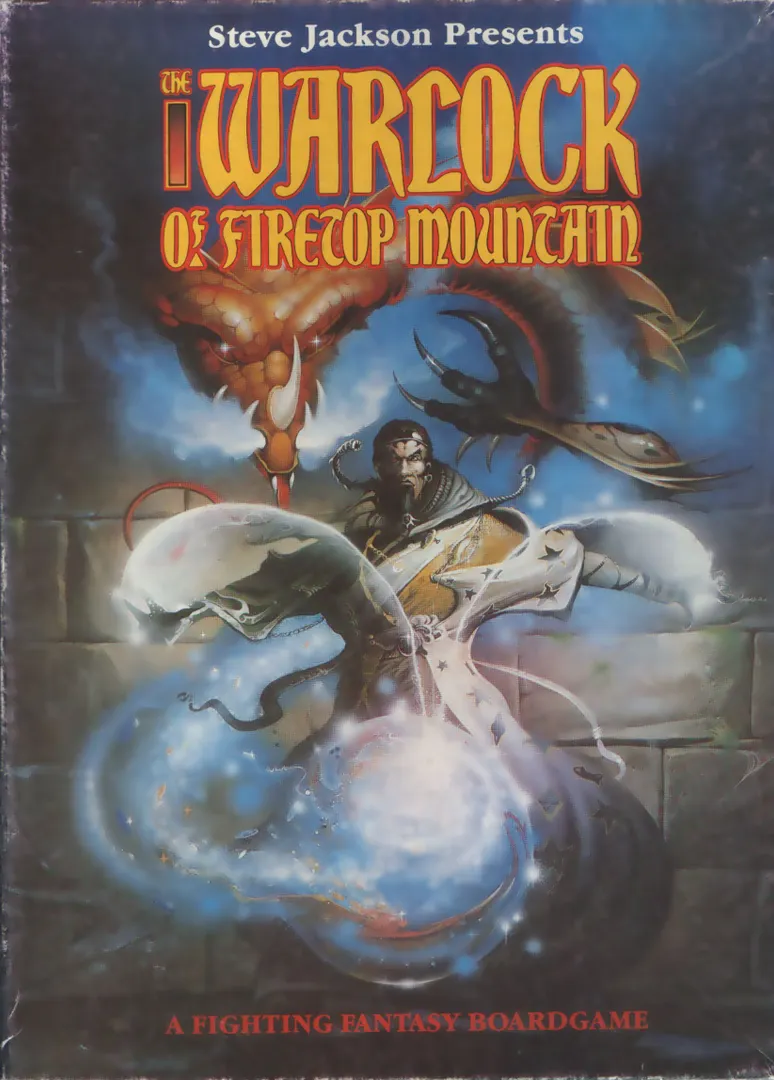
The Warlock of Firetop Mountain
- 2–6 players
- 120 min
- Complexity 1.9/5
- 1986
1993
Rules assistance for Battle Cards
Plain-language explanations of turns, card effects and disputed situations, with official source references and saved question history.
For 2 players
What would you like to know?
Answers come from the official rulebook, with the page to check.
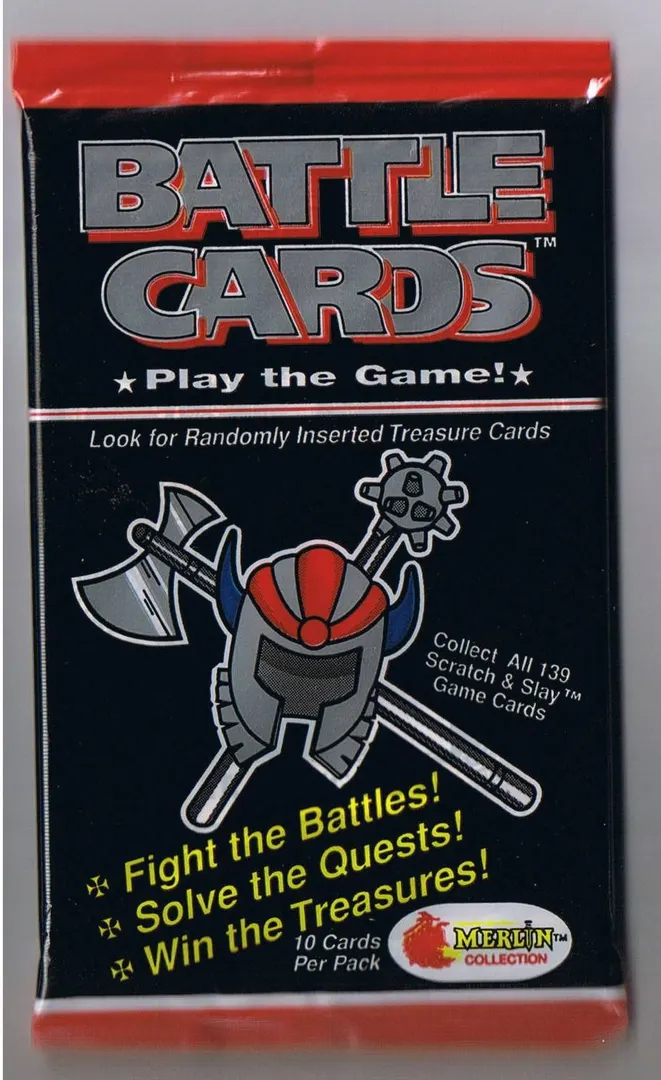
Battle Cards is a board game released in 1993 for 2 players, 10 minutes per game, and ages 10 and up. It was designed by Steve Jackson (II) and its main mechanics are Variable Player Powers, Simultaneous Action Selection, and Role Playing.
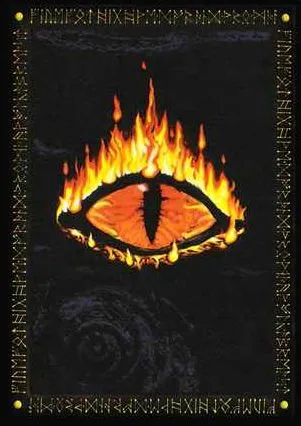
Battlecards are best decribed as a "scratch-and-slay trading card game" that preceded the popular Magic: The Gathering, and Pokémon Trading Card Game craze. There were a great variety of cards arranged into types which included artist profiles, quests, tactics, advanced game rules, checklists, spells, and shields, but the main cards were Fighters. Each Fighter card had a series of 25 silver scratch panels around its main central illustration to represent locations of the body. For the basic game, players take turns to make an attack by scratching away a panel of their rival to reveal the symbol underneath. When enough wound symbols were found, one of the fighter's 'life' panels would be uncovered and a skull symbol signified his defeat. The dead fighter card would then be given to the winning player who could use the card's 'purse' (an amount of gold listed in the corner) to purchase 'Wondrous Treasure' cards by mailing Merlin with gold equal to the price agreed on a Trading Post card. These are the rarer "Gold" and "Silver" edition of the 'Wondrous Treasure' cards. Quest cards normally required collectors to study their cards carefully then send the correct ones to Merlin so they could claim a reward of gold. For example, to claim a token worth 100 gold, St. Charity's Quest required you to collect five men with no gold in their purses, which obviously required you to defeat them first. Lord Magnoble's quest was worth 200 gold if you identified the artists of the five unsigned pieces in his collection. Two different series exist: the UK version and the US version. The US series had 139 cards in the basic series plus eight chase treasure cards (T1-T8). US #140 was the Emperor of Vangoria, not available in packs but redeemed by mailing in all 8 treasure cards (and effectively "winning" the game). The #140 card was available in "Gold" and "Silver" chased versions like the 'Wondrous Treasure' cards by completing the Emperor quest using Gold and Silver 'Wondrous Treasure' cards. US cards were standard US trading card sized with gold scratch-offs and an eggshell finish. The UK series had 149 basic cards as the 8 treasure cards were numbered within the basic set, plus there were two additional strategy cards not included in the US set. The UK Emperor was #150, again only acquired by redeeming all 8 treasure cards. UK cards are larger than the US cards, have a gloss finish and silver scratch-offs. There are also extra rules to cater for using shields in the UK version. Buy Microbadge
Battle Cards supports 2 players according to the catalogue. This is the publisher’s listed player count, so the game is designed for exactly that number of participants. Variants for other group sizes, if any, are described in the rulebook of your edition, so check it before setting up a different configuration.
The listed playing time for Battle Cards is 10 minutes. This is the publisher’s estimate for a full game. The actual duration depends on the group, the player count and familiarity with the rules: first sessions usually run longer, while experienced groups often finish faster. Setup and teaching time are not included in this estimate.
The catalogue lists Battle Cards for ages 10 and up. This is the publisher’s recommendation and reflects reading demands, rule complexity and small components rather than theme alone. Younger players can often join with help from an adult, so check the age guidance on your edition and consider your group’s experience with board games.
Battle Cards has a complexity rating of 2.3 out of 5 from BoardGameGeek players, which makes it a medium-light game. The rating reflects how much rules knowledge, planning and decision-making a typical game demands. Expect a longer first teach for heavier games, and use a preparation guide before game night.
Battle Cards belongs to these categories: Card Game, Fantasy, and Fighting. Its main mechanics are Variable Player Powers, Simultaneous Action Selection, and Role Playing. Categories describe the theme and setting of a game, while mechanics describe what players actually do on their turns. Each mechanic links to a catalogue hub with similar games, which helps when you want something comparable.
The credited designers of Battle Cards are: Steve Jackson (II). These credits come from the published game data and name the people responsible for the game’s design, not its illustrators or publishers. Designer pages on MeepleRules collect other titles by the same designers, which helps when you enjoy a game and want to find similar ones.
The catalogue lists Battle Cards as a base game. It can be played on its own with the components in the box and does not require any other title. Expansions, if any exist, add new content or rules on top of it and are listed separately in the catalogue with a link back to this base game.