- BGG rating
- 8.3
Battlestations: Second Edition – Advanced Rule Book
- 1–9 players
- 60–180 min
- Complexity 3.3/5
- 2017
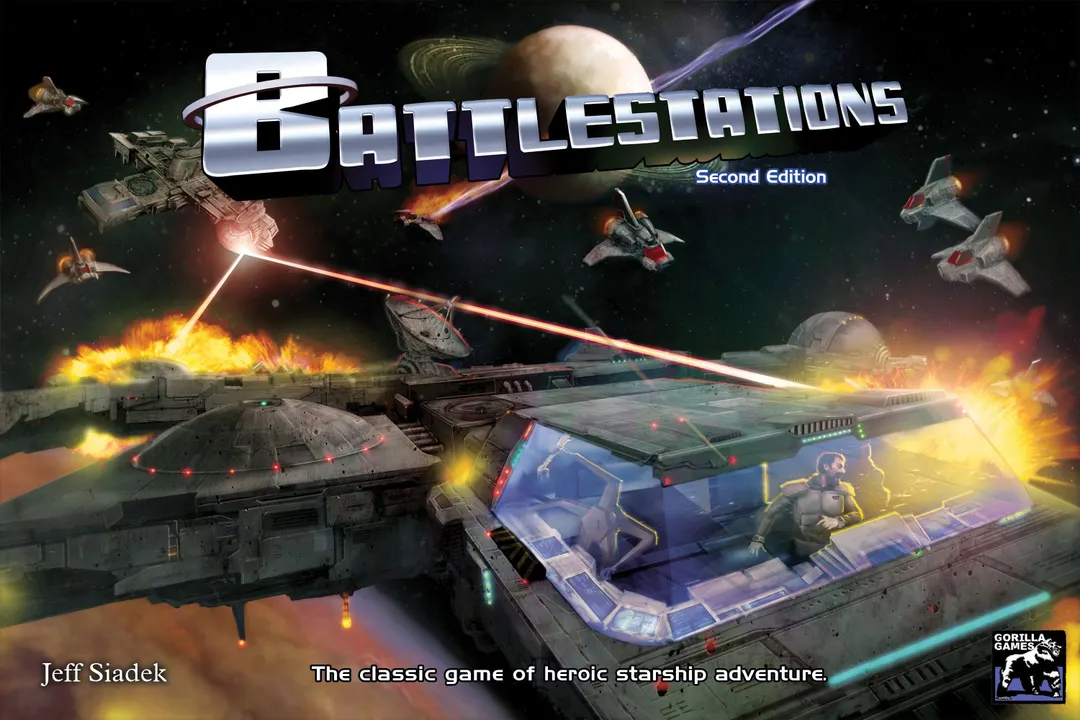
2017
Rules assistance for Battlestations: Second Edition
Plain-language explanations of turns, card effects and disputed situations, with official source references and saved question history.
For 2 players
What would you like to know?
Answers come from the official rulebook, with the page to check.
Battlestations: Second Edition is a board game released in 2017 for 2–9 players, 60–180 minutes per game, and ages 13 and up. It was designed by Jeff Siadek and its main mechanics are Dice Rolling, Grid Movement, and Storytelling.



Two obstacles to interstellar flight were solved in the 22nd Century: Hyperdrives to actually get us to other planets, and cloning technology to replace our bodies and brains from backups in the inevitable situation something goes wrong on the trip. Peacetime advancements released the vast resources of a sea of stars like a cosmic piñata. We need capable explorers. The more dangers that present themselves, the more opportunities for lowly travelers to ascend to become true heroes. There're a lot of emergencies happening on board your starship. Will you be a hero when the time arises? Battlestations is a tabletop starship simulator – a multi-map board game that simultaneously features ship-action in space AND the events on board the ships involved in the conflicts. It is also a roleplaying game in which your characters grow throughout campaigns, picking up experience points, upgrades, and new abilities. The game rules are very simple but they allow for complex RPG-like imaginative choices like teleporting to an enemy ship, hacking their helm controls and steering their ship towards a black hole before ejecting yourself out the air lock. Inside the box is an infinity of alien worlds to explore, rickety spacecrafts to upgrade, and a rowdy crew of lifelong comrades to adventure with. One player takes on the role of "the enemy", and works against the other players who are cooperating with each other.
Battlestations: Second Edition supports 2–9 players according to the catalogue. This range comes from the publisher’s listed player count, so the game can be set up for any group size within it. Some setups, rules and scoring details may still vary by player count, so check your edition’s rulebook for the exact configuration.
The listed playing time for Battlestations: Second Edition is 60–180 minutes. This is the publisher’s estimate for a full game. The actual duration depends on the group, the player count and familiarity with the rules: first sessions usually run longer, while experienced groups often finish faster. Setup and teaching time are not included in this estimate.
The catalogue lists Battlestations: Second Edition for ages 13 and up. This is the publisher’s recommendation and reflects reading demands, rule complexity and small components rather than theme alone. Younger players can often join with help from an adult, so check the age guidance on your edition and consider your group’s experience with board games.
Battlestations: Second Edition has a complexity rating of 3.6 out of 5 from BoardGameGeek players, which makes it a medium-weight game. The rating reflects how much rules knowledge, planning and decision-making a typical game demands. Expect a longer first teach for heavier games, and use a preparation guide before game night.
Battlestations: Second Edition belongs to these categories: Wargame, Miniatures, and Science Fiction. Its main mechanics are Dice Rolling, Grid Movement, and Storytelling. Categories describe the theme and setting of a game, while mechanics describe what players actually do on their turns. Each mechanic links to a catalogue hub with similar games, which helps when you want something comparable.
The credited designers of Battlestations: Second Edition are: Jeff Siadek. These credits come from the published game data and name the people responsible for the game’s design, not its illustrators or publishers. Designer pages on MeepleRules collect other titles by the same designers, which helps when you enjoy a game and want to find similar ones.
The catalogue lists Battlestations: Second Edition as a base game. It can be played on its own with the components in the box and does not require any other title. Expansions, if any exist, add new content or rules on top of it and are listed separately in the catalogue with a link back to this base game.