
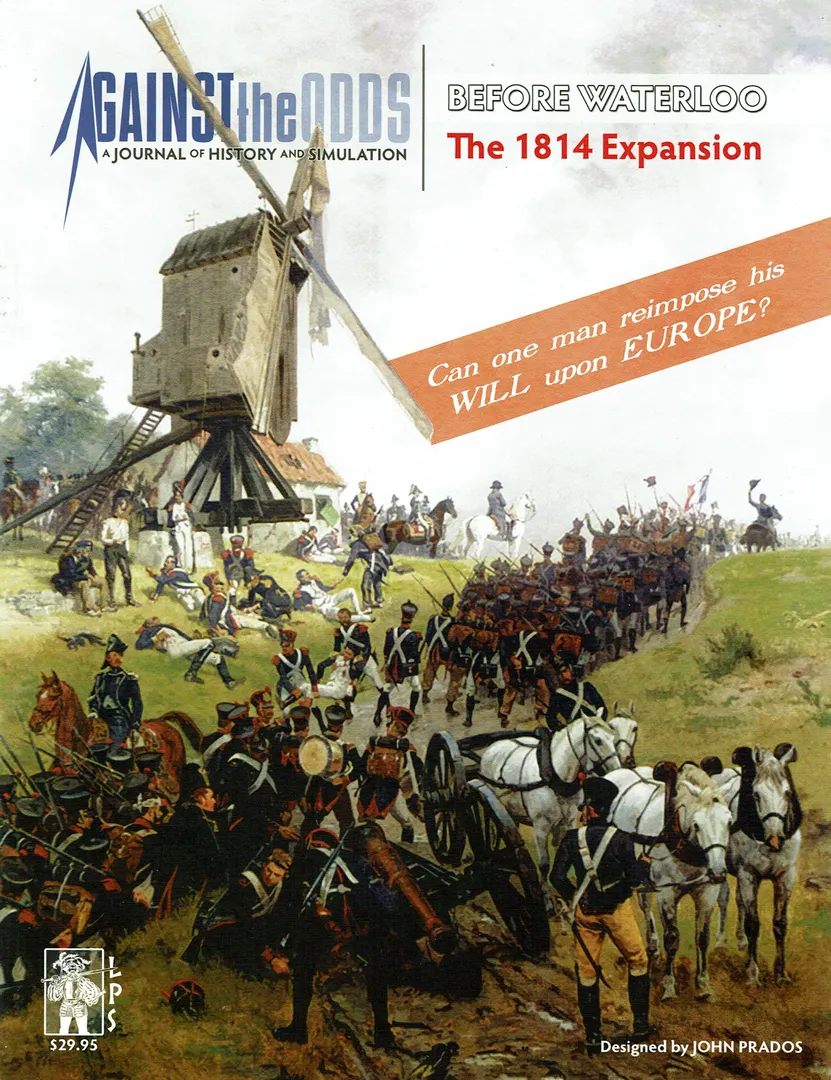
- BGG rating
- 7.4
Before Waterloo: The 1814 Expansion
- 2 players
- Complexity 2.0/5
- 2022
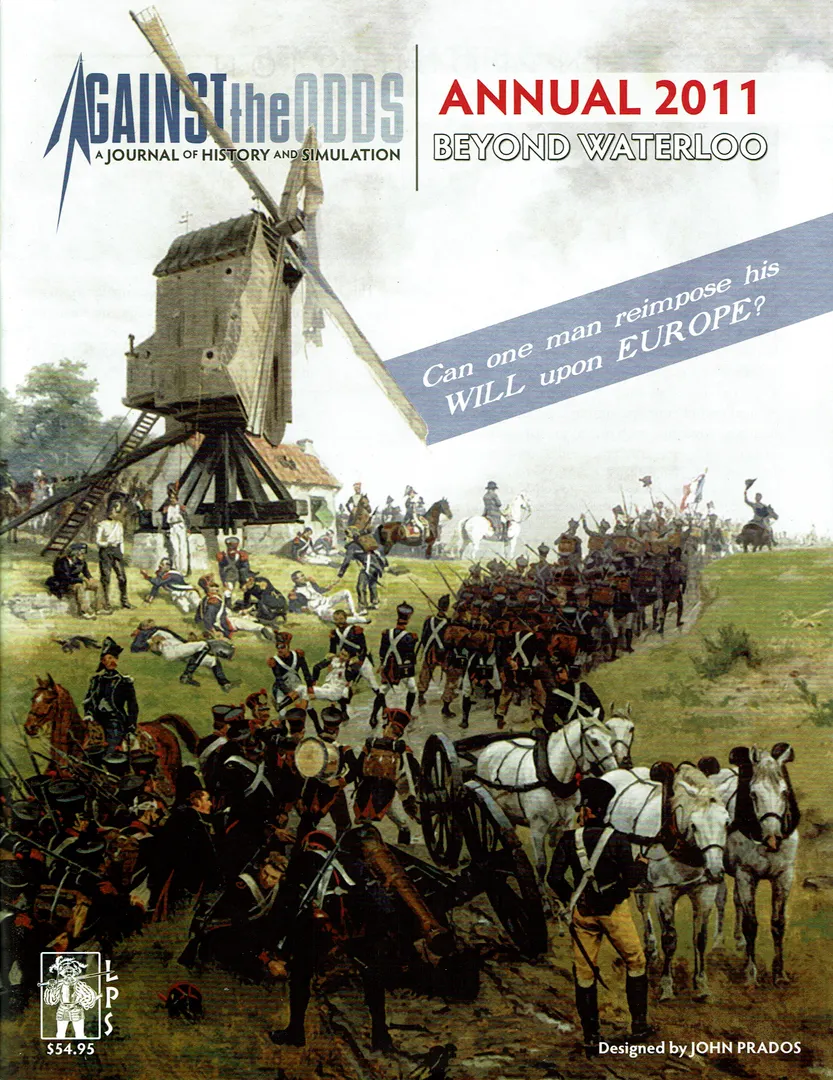
2012
Rules assistance for Beyond Waterloo
Plain-language explanations of turns, card effects and disputed situations, with official source references and saved question history.
For 2 players
What would you like to know?
Answers come from the official rulebook, with the page to check.
Beyond Waterloo is a board game released in 2012 for 2 players and 960 minutes per game. It was designed by John Prados and Lembit Tohver and its main mechanics are Area Movement and Minimap Resolution.
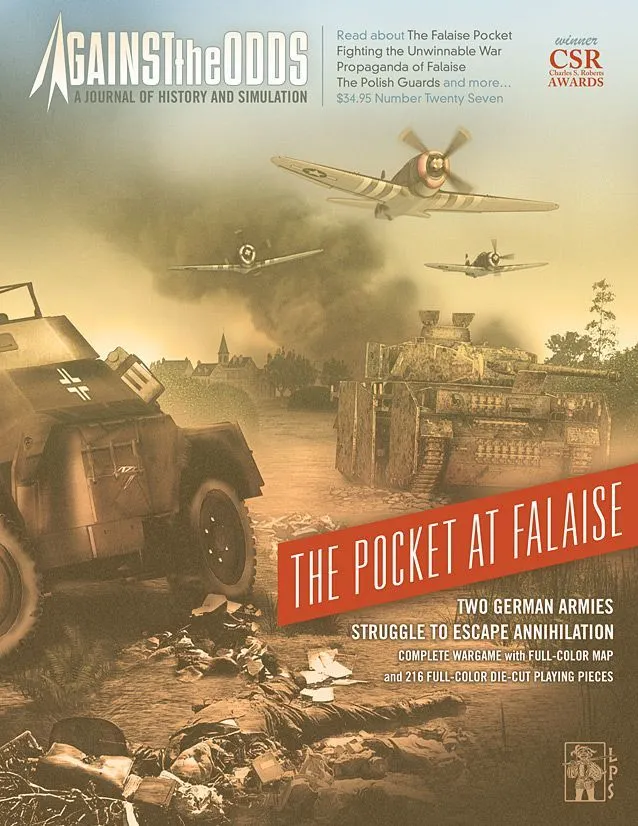


Annual 2011 Issue BEYOND WATERLOO is a two-player strategic level game of the Napoleonic Campaign of 1815. Players take the sides of France or the coalition of Allies. The game opens with Napoleon’s arrival at Paris following his return from Elba, and includes his efforts to restore France to a war footing, the Allies’ struggle to revive their anti-French coalition, and the military operations that ensue. BEYOND WATERLOO is played on a mapboard that includes France plus relevant portions of the Low Countries, Germany, Switzerland, and Italy. Where most games on this period focus in on the famous Battle of Waterloo, BEYOND WATERLOO takes in the full scope of the politico-military possibilities inherent in the 1815 situation. The Allies must re-defeat Napoleon. The French must avoid that outcome. BEYOND WATERLOO is a full strategic simulation encompassing military, economic, and diplomatic developments. It also introduces new design concepts for a game of this nature. Because of the complexities involved, these rules adopt a layered approach. Initially, the Combat Game introduces only the Battle Development Sequence, which affords a way to conduct combat in a strategic game that is nuanced for the Napoleonic era. This level of rules enables the player to learn the combat system using a scenario that covers only the Battle of Waterloo itself. At the next level, the Basic Game, rules introduce the full movement and administrative systems for a Napoleonic campaign. The scenario involves the military action, economic factors, and force mobilization in this last Napoleonic War. The Advanced Game adds diplomacy, strategy, political action, and emphasizes the mobilization for war. In this long-form, the game begins with Napoleon’s return to Paris and the sides must prepare for war before conducting it. BEYOND WATERLOO is played on a mapboard divided into areas that regulate the movement of game forces. Pieces represent prominent Commanders on all sides, and armies, corps, and divisions. The players accumulate Resource Points (RPs) and Victory Points (VPs) as the game progresses. RPs procure fresh forces. The VPs influence events in the Campaign of 1815, as well as determining the winner of the game. In the Advanced Game, players also engage in diplomatic and political activity intended either to prepare for war or shape the conditions that will affect the campaign.
Beyond Waterloo supports 2 players according to the catalogue. This is the publisher’s listed player count, so the game is designed for exactly that number of participants. Variants for other group sizes, if any, are described in the rulebook of your edition, so check it before setting up a different configuration.
The listed playing time for Beyond Waterloo is 960 minutes. This is the publisher’s estimate for a full game. The actual duration depends on the group, the player count and familiarity with the rules: first sessions usually run longer, while experienced groups often finish faster. Setup and teaching time are not included in this estimate.
Beyond Waterloo has a complexity rating of 3.3 out of 5 from BoardGameGeek players, which makes it a medium-weight game. The rating reflects how much rules knowledge, planning and decision-making a typical game demands. Expect a longer first teach for heavier games, and use a preparation guide before game night.
Beyond Waterloo belongs to these categories: Economic, Wargame, and Napoleonic. Its main mechanics are Area Movement and Minimap Resolution. Categories describe the theme and setting of a game, while mechanics describe what players actually do on their turns. Each mechanic links to a catalogue hub with similar games, which helps when you want something comparable.
The credited designers of Beyond Waterloo are: John Prados and Lembit Tohver. These credits come from the published game data and name the people responsible for the game’s design, not its illustrators or publishers. Designer pages on MeepleRules collect other titles by the same designers, which helps when you enjoy a game and want to find similar ones.
The catalogue lists Beyond Waterloo as a base game. It can be played on its own with the components in the box and does not require any other title. Expansions, if any exist, add new content or rules on top of it and are listed separately in the catalogue with a link back to this base game.