
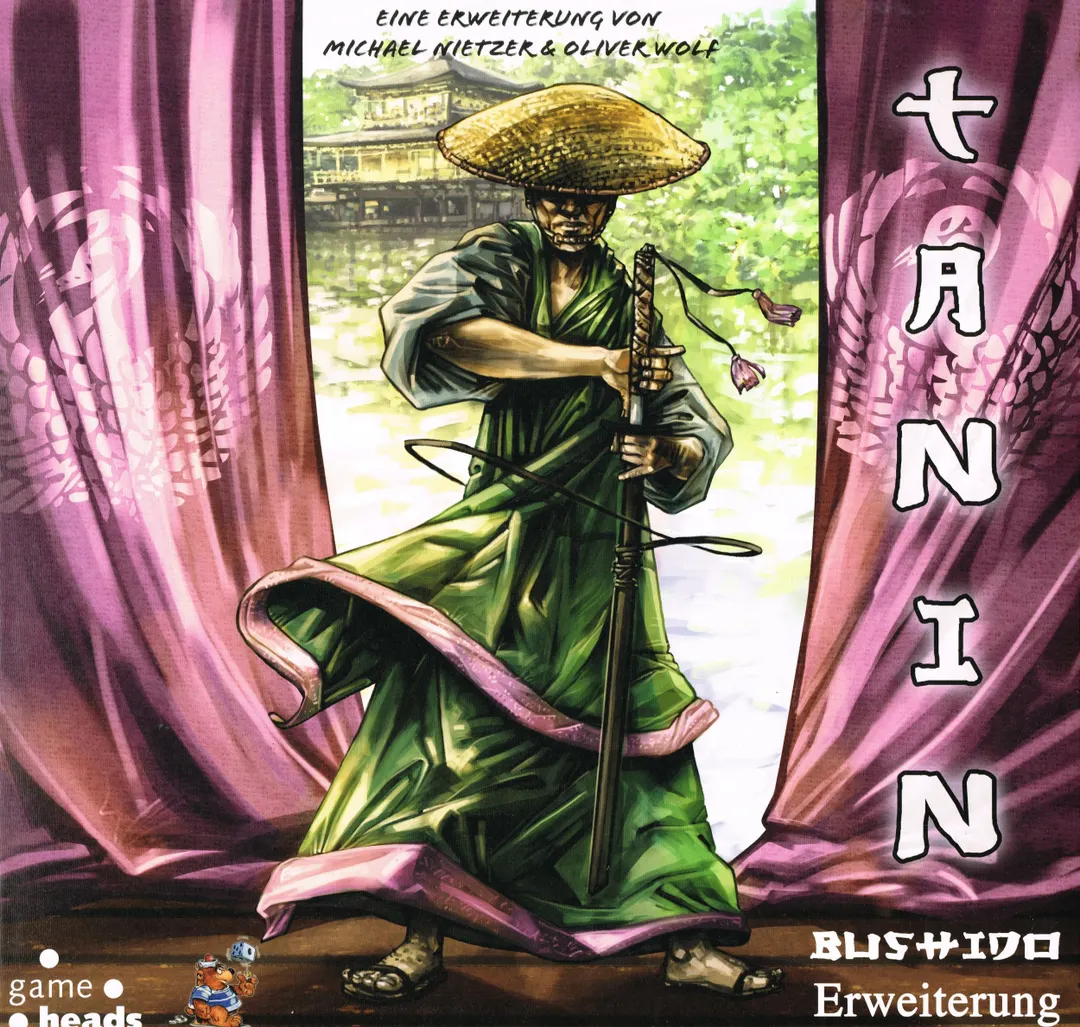
- BGG rating
- 7.2
Bushido: Tanin the Stranger
- 3–6 players
- 120 min
- Complexity 3.4/5
- 2009
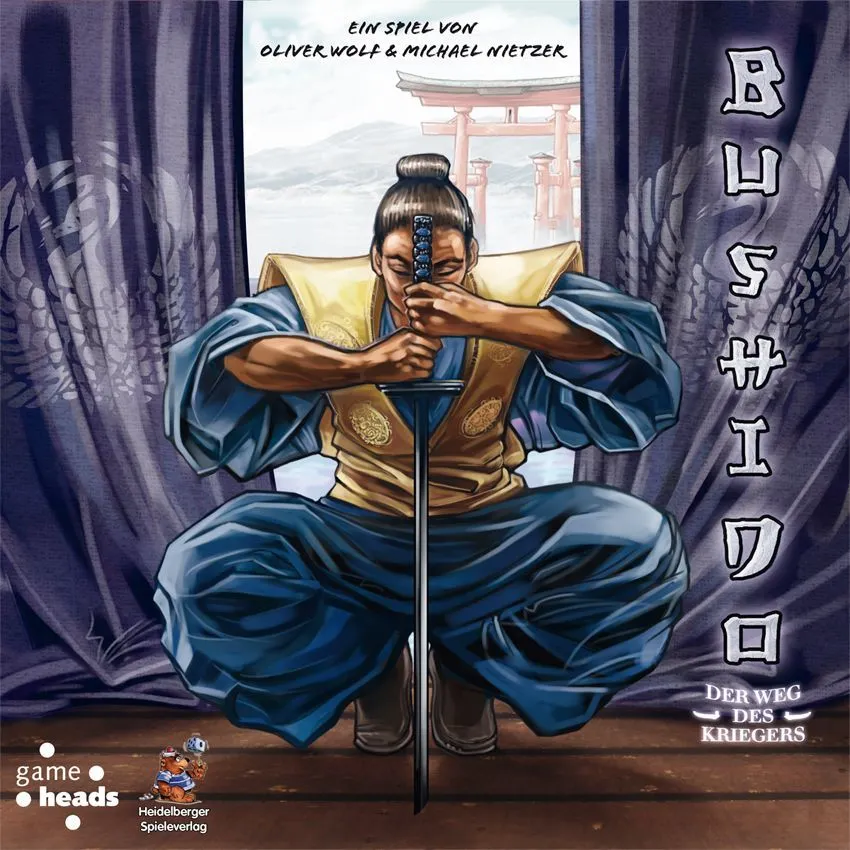
2008
Rules assistance for Bushido: Der Weg des Kriegers
Plain-language explanations of turns, card effects and disputed situations, with official source references and saved question history.
For 3 players
What would you like to know?
Answers come from the official rulebook, with the page to check.
Bushido: Der Weg des Kriegers is a board game released in 2008 for 3–5 players, 90 minutes per game, and ages 12 and up. It was designed by Michael Nietzer and Oliver Wolf and its main mechanics are Variable Player Powers, Hand Management, and Simultaneous Action Selection.
In Bushido: Der Weg des Kriegers (the subtitle means "Way of the Warrior") players take on the roles of Daimyo, feudal lords in medieval Japan, and compete to become the next shogun of the empire, who gets appointed by the emperor. And this truly has to be an honorable man. Basically this game is all about resource management and conflict, but unlike other games in this category you won't necessarily win, if you conquer the most areas. Your main goal is to earn enough honor, which can be achieved in different ways. There are two kinds of honor. 'Daimyo-Honor' is the victory condition and can be directly gained by holding provinces, and indirectly by transforming 'Samurai-Honor' at a set rate. 'Samurai-Honor' is gained by winning a defensive or offensive battle. It can be transformed into 'Daimyo-Honor' with a tea ceremony. The first Daimyo who earns 50 points of honor wins the game. If this goal is not reached within 12 turns, the Daimyo with the most honor at that point wins the game. What needs special mentioning is the turn mechanism of the game, which is really cleverly-devised: depending on the number of players, different 'offices' are in the game that get assigned to the players. In a 4-player game these offices are: Daimyo: The active player. For clarification: in game terms, every player is a Daimyo, but only the active player acts as Daimyo. The Daimyo, as active player can restock his resources, attack a province and play special tiles. Most importantly, he assigns the other offices to his opponents. Samurai: The general. He will lead the attack in the Daimyo's name. He can earn 'Samurai-honor' with a successful attack. Bushi: the poor guy who is attacked by the Daimyo. He can earn 'Samurai-honor' with a successful defense. Sensei: He gives council to the Daimyo. Tricky position, because his council can do the Daimyo harm or good. He can cancel an attack, spy on other players, use Ronin to destabilize a province, and suggest to the Daimyo how hard to punish his Samurai when he loses a battle. The battles are resolved by a system that depends on the number of troops and a rock-paper-scissors element. The opponents have the possibility to improve their odds by investing some of their resources. The tricky part of the game is that most of your actions depend at least partly on the goodwill of one of your opponents. For instance the Daimyo depends on the Samurai to win, but the Samurai will only do this, if he sees enough gain for himself. This makes the game very interactive, with much discussion and haggling at the table.
Bushido: Der Weg des Kriegers supports 3–5 players according to the catalogue. This range comes from the publisher’s listed player count, so the game can be set up for any group size within it. Some setups, rules and scoring details may still vary by player count, so check your edition’s rulebook for the exact configuration.
The listed playing time for Bushido: Der Weg des Kriegers is 90 minutes. This is the publisher’s estimate for a full game. The actual duration depends on the group, the player count and familiarity with the rules: first sessions usually run longer, while experienced groups often finish faster. Setup and teaching time are not included in this estimate.
The catalogue lists Bushido: Der Weg des Kriegers for ages 12 and up. This is the publisher’s recommendation and reflects reading demands, rule complexity and small components rather than theme alone. Younger players can often join with help from an adult, so check the age guidance on your edition and consider your group’s experience with board games.
Bushido: Der Weg des Kriegers has a complexity rating of 3.6 out of 5 from BoardGameGeek players, which makes it a medium-weight game. The rating reflects how much rules knowledge, planning and decision-making a typical game demands. Expect a longer first teach for heavier games, and use a preparation guide before game night.
Bushido: Der Weg des Kriegers belongs to these categories: Fighting, Bluffing, and Medieval. Its main mechanics are Variable Player Powers, Hand Management, and Simultaneous Action Selection. Categories describe the theme and setting of a game, while mechanics describe what players actually do on their turns. Each mechanic links to a catalogue hub with similar games, which helps when you want something comparable.
The credited designers of Bushido: Der Weg des Kriegers are: Michael Nietzer and Oliver Wolf. These credits come from the published game data and name the people responsible for the game’s design, not its illustrators or publishers. Designer pages on MeepleRules collect other titles by the same designers, which helps when you enjoy a game and want to find similar ones.
The catalogue lists Bushido: Der Weg des Kriegers as a base game. It can be played on its own with the components in the box and does not require any other title. Expansions, if any exist, add new content or rules on top of it and are listed separately in the catalogue with a link back to this base game.