

- BGG rank
- BGG #529
- BGG rating
- 7.2
Through the Desert
- 2–5 players
- 45 min
- Complexity 2.2/5
- 1998
2024
Rules assistance for Cascadero
Plain-language explanations of turns, card effects and disputed situations, with official source references and saved question history.
For 2 players
What would you like to know?
Answers come from the official rulebook, with the page to check.
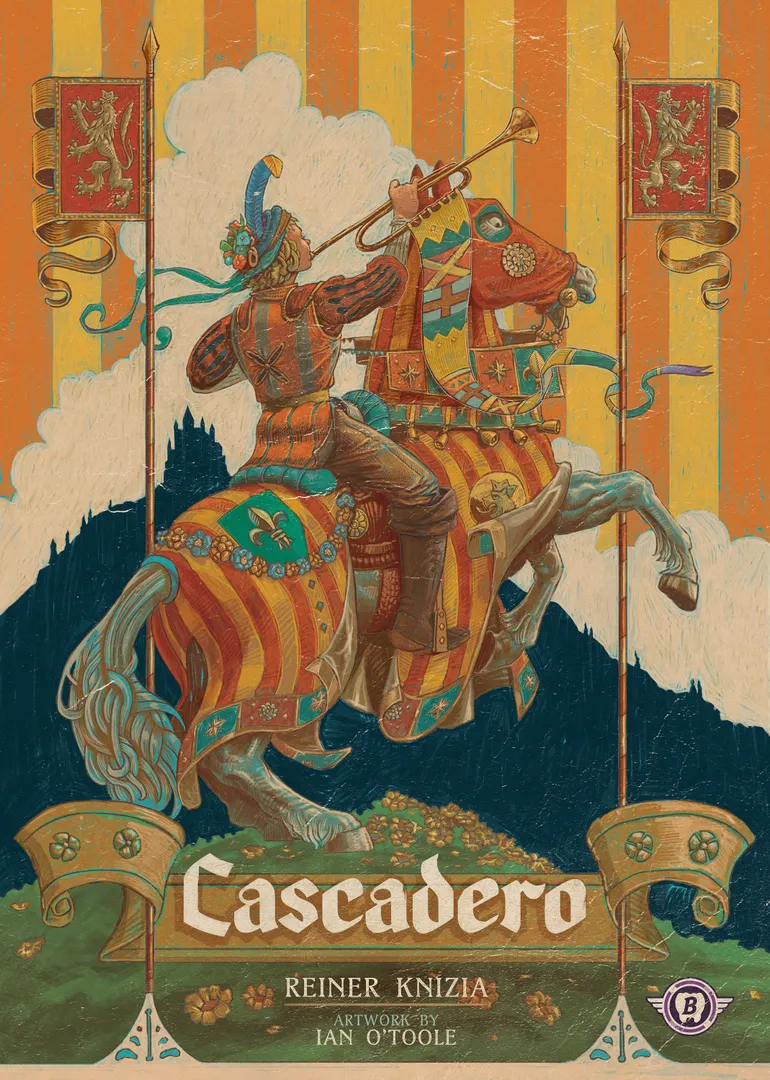
Cascadero is a board game released in 2024 for 2–4 players, 45–60 minutes per game, and ages 14 and up. It was designed by Reiner Knizia and its main mechanics are Track Movement, Network and Route Building, and Hexagon Grid.

The kingdom is shattered, its towns are divided, and its people are distrusting. The newly crowned ruler, El Cascadero, seeks to reunite the land, but he can’t do it alone. Thus, he appoints four ministers to visit the people and restore civil harmony. While the ministers are obligated to bring prosperity to the entire land, each of them also has one dedicated responsibility: Farming, Crafting, Mining, and Markets. El Cascadero also records in his book the successes of his ministers… Cascadero is the next epic tile placement strategy game from acclaimed designer Reiner Knizia. Ministers visit towns by placing their envoys adjacent to them; but towns are distrusting of single envoys, so newly placed envoys will only trigger town scoring when they are part of an established group or carry an official seal from El Cascadero himself. Towns with Royal Messengers at them or a history of envoy visits are even more valuable, as they willingly collaborate for even greater successes. Players must decide between two competing strategies: build long chains of their envoys to achieve synergies and objectives, or establish smaller, separate groups of envoys to trigger timely town scoring. Both will award victory points, yet your victory points will mean nothing if you don’t also reach the end of your appointed success column. By triggering town scoring, you’ll advance along that town’s matching success column, gaining bonuses as you pass over them. Bonuses include earning victory points, advancing further on any success column, claiming an official seal, repositioning an envoy, or even acquiring an additional turn. Through careful timing and clever plans, players can trigger a cascading combo of exciting bonuses that swing momentum in their favor. Cascadero provides a wealth of replayability through emergent player interaction, variable board and tile setups, and an advanced player mode featuring traveling heralds. Yet the game will always end in one of two ways: when one player reaches fifty victory points or must place a tile but has no tiles left. The players who reached the end of their appointed success column qualify for victory, and whoever among them has the most victory points wins. —description from the publisher
Cascadero supports 2–4 players according to the catalogue. This range comes from the publisher’s listed player count, so the game can be set up for any group size within it. Some setups, rules and scoring details may still vary by player count, so check your edition’s rulebook for the exact configuration.
The listed playing time for Cascadero is 45–60 minutes. This is the publisher’s estimate for a full game. The actual duration depends on the group, the player count and familiarity with the rules: first sessions usually run longer, while experienced groups often finish faster. Setup and teaching time are not included in this estimate.
The catalogue lists Cascadero for ages 14 and up. This is the publisher’s recommendation and reflects reading demands, rule complexity and small components rather than theme alone. Younger players can often join with help from an adult, so check the age guidance on your edition and consider your group’s experience with board games.
Cascadero has a complexity rating of 2.6 out of 5 from BoardGameGeek players, which makes it a medium-light game. The rating reflects how much rules knowledge, planning and decision-making a typical game demands. Expect a longer first teach for heavier games, and use a preparation guide before game night.
Cascadero belongs to these categories: Abstract Strategy and Renaissance. Its main mechanics are Track Movement, Network and Route Building, and Hexagon Grid. Categories describe the theme and setting of a game, while mechanics describe what players actually do on their turns. Each mechanic links to a catalogue hub with similar games, which helps when you want something comparable.
The credited designers of Cascadero are: Reiner Knizia. These credits come from the published game data and name the people responsible for the game’s design, not its illustrators or publishers. Designer pages on MeepleRules collect other titles by the same designers, which helps when you enjoy a game and want to find similar ones.
The catalogue lists Cascadero as a base game. It can be played on its own with the components in the box and does not require any other title. Expansions, if any exist, add new content or rules on top of it and are listed separately in the catalogue with a link back to this base game.