- BGG rating
- 8.9
CastleScape: Gates and Guilds
- 2–4 players
- 2025

2023
Rules assistance for CastleScape
Plain-language explanations of turns, card effects and disputed situations, with official source references and saved question history.
What would you like to know?
Answers come from the official rulebook, with the page to check.
CastleScape is a board game released in 2023 for 2–4 players, 60–90 minutes per game, and ages 14 and up. It was designed by Josh Horsley and its main mechanics are Area Majority / Influence, Square Grid, and Deck, Bag, and Pool Building.






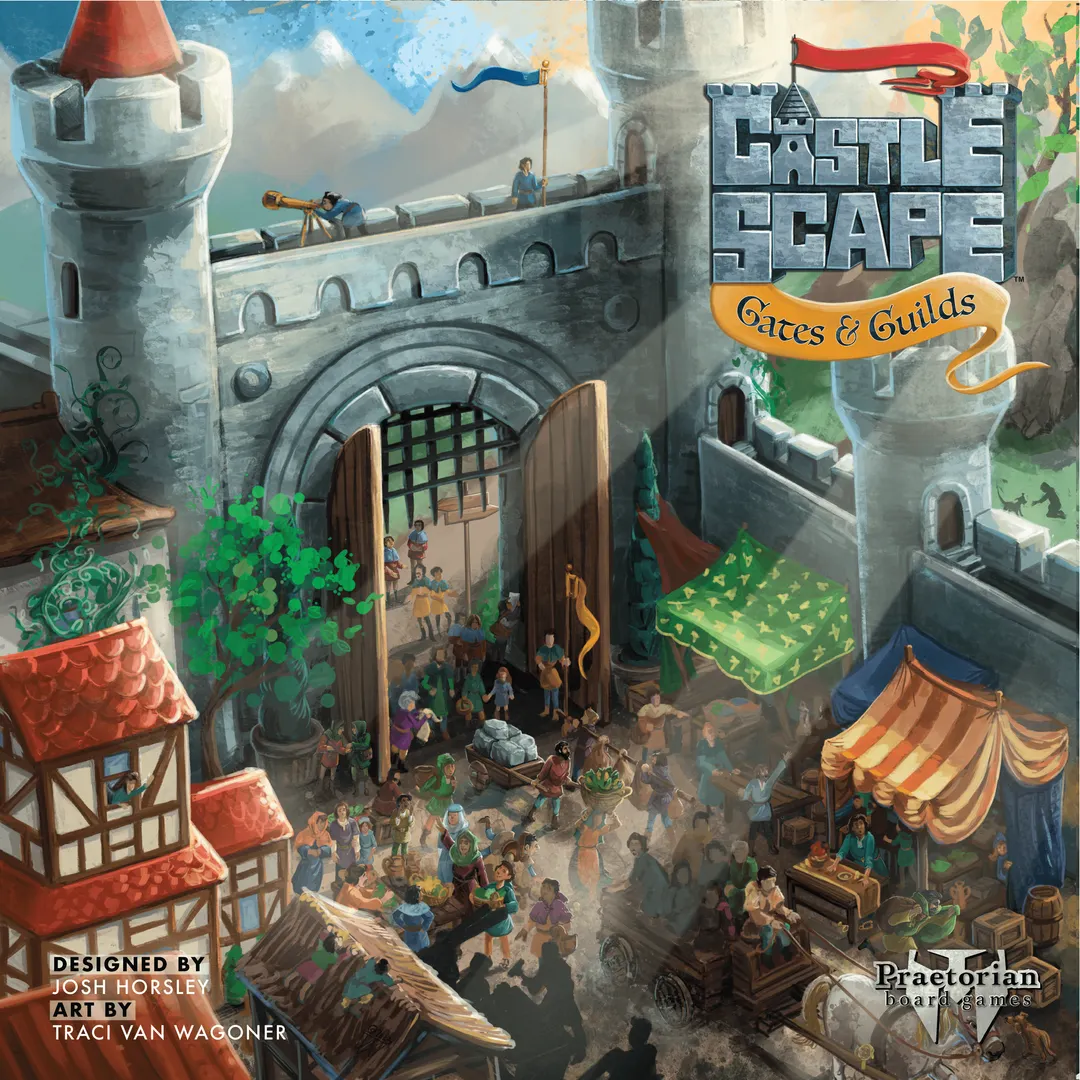
The King has commissioned a magnificent Castle that will span the ages. The ones who build it will be blessed with riches, power, and Renown for all time. This is where you come in. To build a Castle require workers, and your Guild is ready to answer the call. You are one of the few, the clever, and the devious, who aims to scheme and expand power by any means necessary. Use care though; the King will visit the Castle and Inspect it to make sure that everything is to his liking. If he finds you have been participating in shady deals, he will strip your Guild of its Influence and resources. Claim credit for building his Castle and prove to him that you are the greatest Guild in the land.” CastleScape is a deck-building area-control game set in medieval times. It is a time of Kings and Guilds, money and power, deception and influence. In CastleScape, each player represents one of four Guilds who are building a large castle, containing many Baileys, for the King. Players build Walls into Baileys, gather recruits to spread their Guild’s influence, spend gold, perform questionable deeds in the Back Alley, and complete Goals and Quests. However, they must balance their actions with how much Infamy and Corruption they will accrue from performing them. Whenever the King visits the Castle to inspect it, he will strip Influence from the Guilds based on their Infamy. Each player begins the game with a basic deck of cards (gold, recruits, walls, and a few clumsy thieves) and a couple hidden goals. The game board starts with one wall in the center, and players must build outward, always adding walls adjacent to other walls. Whenever a Bailey is completed, Renown(points) will be awarded based on how large that Bailey is, and the player with the most Influence in that Bailey will claim the Renown. Starting in the same area and building outwards forces all players to have a high level of player interactivity and decision making so that no two games will ever feel the same. Inspections will remove significant amounts of Influence from the game board, giving players additional ways to influence how things play out. CastleScape is highly strategic and incentivizes players to play differently each game. Besides each player’s hidden objective cards and a Castle that is procedurally built each game, players will plan multiple turns ahead to build the castle how they see fit. The Market also has both static and rotating card options to keep gameplay fresh and interesting. Points can be earned by building and claiming credit for Baileys, purchasing cards, and completing hidden or public goals; but points will be lost based on Corruption. CastleScape has been created to give a fresh take on the Deck-builder genre, adding heavy player interaction on a central game board, with far more to think about than just what cards you want to purchase. It offers deep strategy, nearly unlimited replayability, and interesting/fun interactions and combos. —description from the designer
CastleScape supports 2–4 players according to the catalogue. This range comes from the publisher’s listed player count, so the game can be set up for any group size within it. Some setups, rules and scoring details may still vary by player count, so check your edition’s rulebook for the exact configuration.
The listed playing time for CastleScape is 60–90 minutes. This is the publisher’s estimate for a full game. The actual duration depends on the group, the player count and familiarity with the rules: first sessions usually run longer, while experienced groups often finish faster. Setup and teaching time are not included in this estimate.
The catalogue lists CastleScape for ages 14 and up. This is the publisher’s recommendation and reflects reading demands, rule complexity and small components rather than theme alone. Younger players can often join with help from an adult, so check the age guidance on your edition and consider your group’s experience with board games.
CastleScape has a complexity rating of 2.1 out of 5 from BoardGameGeek players, which makes it a medium-light game. The rating reflects how much rules knowledge, planning and decision-making a typical game demands. Expect a longer first teach for heavier games, and use a preparation guide before game night.
CastleScape belongs to these categories: Territory Building, Miniatures, and Medieval. Its main mechanics are Area Majority / Influence, Square Grid, and Deck, Bag, and Pool Building. Categories describe the theme and setting of a game, while mechanics describe what players actually do on their turns. Each mechanic links to a catalogue hub with similar games, which helps when you want something comparable.
The credited designers of CastleScape are: Josh Horsley. These credits come from the published game data and name the people responsible for the game’s design, not its illustrators or publishers. Designer pages on MeepleRules collect other titles by the same designers, which helps when you enjoy a game and want to find similar ones.
The catalogue lists CastleScape as a base game. It can be played on its own with the components in the box and does not require any other title. Expansions, if any exist, add new content or rules on top of it and are listed separately in the catalogue with a link back to this base game.
