
- BGG rank
- BGG #1,098
- BGG rating
- 6.8
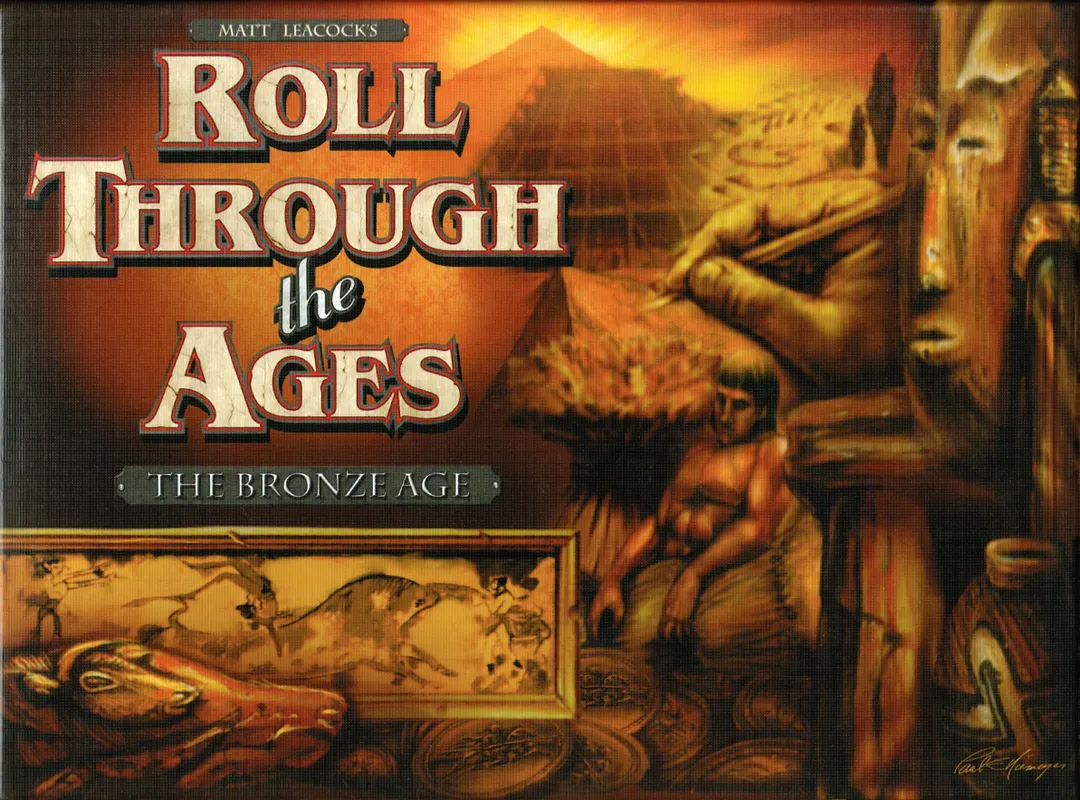
Roll Through the Ages: The Bronze Age
- 1–4 players
- 30–45 min
- Complexity 1.8/5
- 2008
2016
Rules assistance for Chariot Race
Plain-language explanations of turns, card effects and disputed situations, with official source references and saved question history.
For 2 players
What would you like to know?
Answers come from the official rulebook, with the page to check.
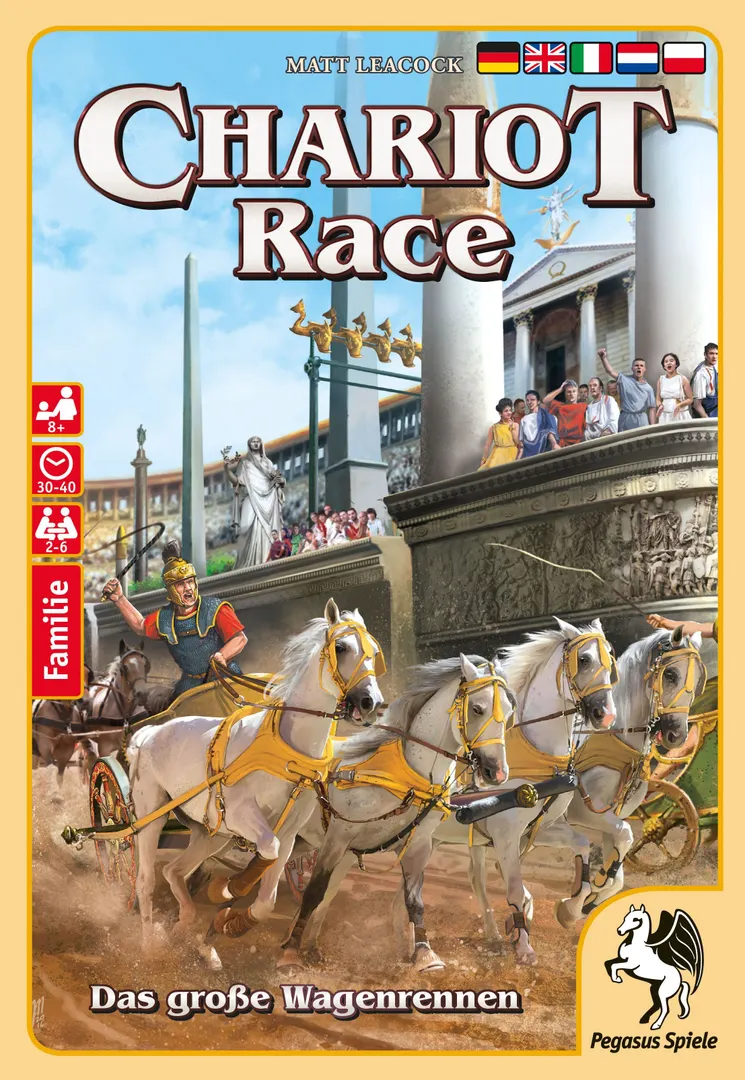
Chariot Race is a board game released in 2016 for 2–6 players, 15–45 minutes per game, and ages 8 and up. It was designed by Matt Leacock and its main mechanics are Race, Dice Rolling, and Die Icon Resolution.



Masses of people awaiting a spectacle… scorching afternoon heat… sweaty equine bodies nervously yanking their harnesses. There it is, the starting signal! Dashing ahead with your chariot, slowly at first, but quickly gaining speed… circling the spina in the center of the arena to complete the first lap. The next corner comes closer. Glancing back, one of the chariots is already far behind, and just ahead another chariot's speed is too high for the corner, sending the vehicle crashing into the wall and out of the race. Only a single chariot blocks your path to victory, so it's time to get uncivilized. Steadily you balance the javelin in your hand, waiting for the other charioteer to come into view…or should you just overtake him and throw caltrops in his path? In Chariot Race, players participate as charioteers in a great race in ancient Rome. Use the dice to complete two laps on the dusty arena's circuit and be the first to steer your chariot over the finish line. On a player's turn, if they have gained enough Favors of Fortuna, they can repair their chariot. Depending on the chariot's speed on the previous turn and its current condition, the initial speed is determined, which defines how many of the five dice will be rolled during the turn. Each face of the six-sided dice allows a different action: Gain new Favors, increase or decrease speed, change lanes, or attack opponents (either directly by hurling javelins or indirectly by dropping caltrops in their path). if the first roll is not satisfactory, the player may call on Fortuna to influence the dice, as long they have her favor. Once the result is set, the player moves their chariot forward according to the final speed they achieved and may then take actions against their rivals. However, breakneck racing and ramming are not without risk. If two chariots collide, they both take damage, and cornering at a wild gallop is not recommended. The further the safe speed is exceeded, the more damage is caused to the vehicle – which might fall apart in the middle of the arena if the driver is too careless, resulting in their elimination from the race.
Chariot Race supports 2–6 players according to the catalogue. This range comes from the publisher’s listed player count, so the game can be set up for any group size within it. Some setups, rules and scoring details may still vary by player count, so check your edition’s rulebook for the exact configuration.
The listed playing time for Chariot Race is 15–45 minutes. This is the publisher’s estimate for a full game. The actual duration depends on the group, the player count and familiarity with the rules: first sessions usually run longer, while experienced groups often finish faster. Setup and teaching time are not included in this estimate.
The catalogue lists Chariot Race for ages 8 and up. This is the publisher’s recommendation and reflects reading demands, rule complexity and small components rather than theme alone. Younger players can often join with help from an adult, so check the age guidance on your edition and consider your group’s experience with board games.
Chariot Race has a complexity rating of 1.8 out of 5 from BoardGameGeek players, which makes it a light game. The rating reflects how much rules knowledge, planning and decision-making a typical game demands. Expect a longer first teach for heavier games, and use a preparation guide before game night.
Chariot Race belongs to these categories: Ancient and Racing. Its main mechanics are Race, Dice Rolling, and Die Icon Resolution. Categories describe the theme and setting of a game, while mechanics describe what players actually do on their turns. Each mechanic links to a catalogue hub with similar games, which helps when you want something comparable.
The credited designers of Chariot Race are: Matt Leacock. These credits come from the published game data and name the people responsible for the game’s design, not its illustrators or publishers. Designer pages on MeepleRules collect other titles by the same designers, which helps when you enjoy a game and want to find similar ones.
The catalogue lists Chariot Race as a base game. It can be played on its own with the components in the box and does not require any other title. Expansions, if any exist, add new content or rules on top of it and are listed separately in the catalogue with a link back to this base game.