
- BGG rank
- BGG #31,070
- BGG rating
- 5.0
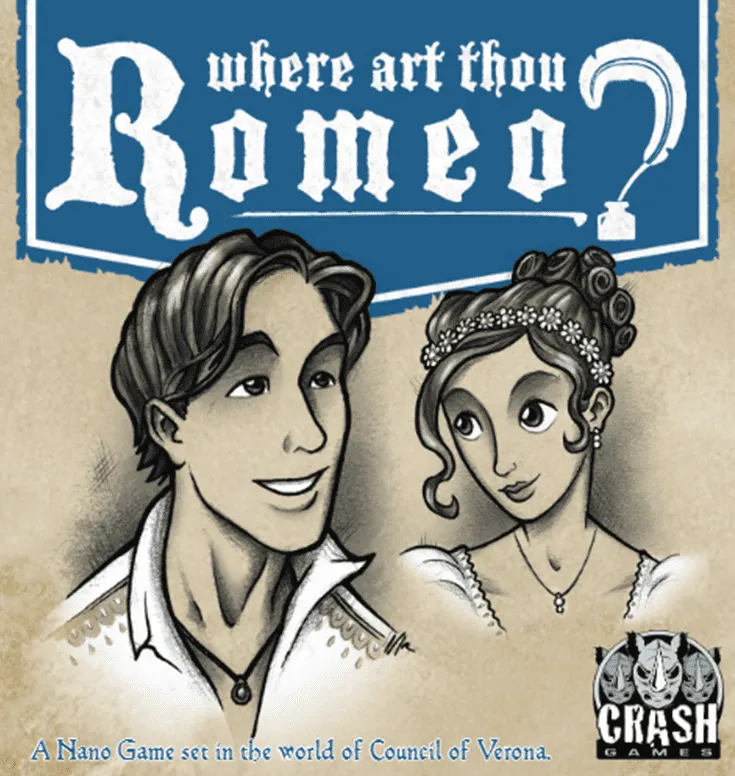
Where Art Thou Romeo?
- 3–5 players
- 15 min
- Complexity 1.1/5
- 2013
Rules assistance for Council of Verona: Corruption
Plain-language explanations of turns, card effects and disputed situations, with official source references and saved question history.
What would you like to know?
Answers come from the official rulebook, with the page to check.
Council of Verona: Corruption is an expansion for Council of Verona released in 2015 for 2–5 players, 20 minutes per game, and ages 13 and up. It was designed by Michael Eskue and Patrick Nickell and its main mechanics are Hand Management, Auction / Bidding, and Open Drafting.







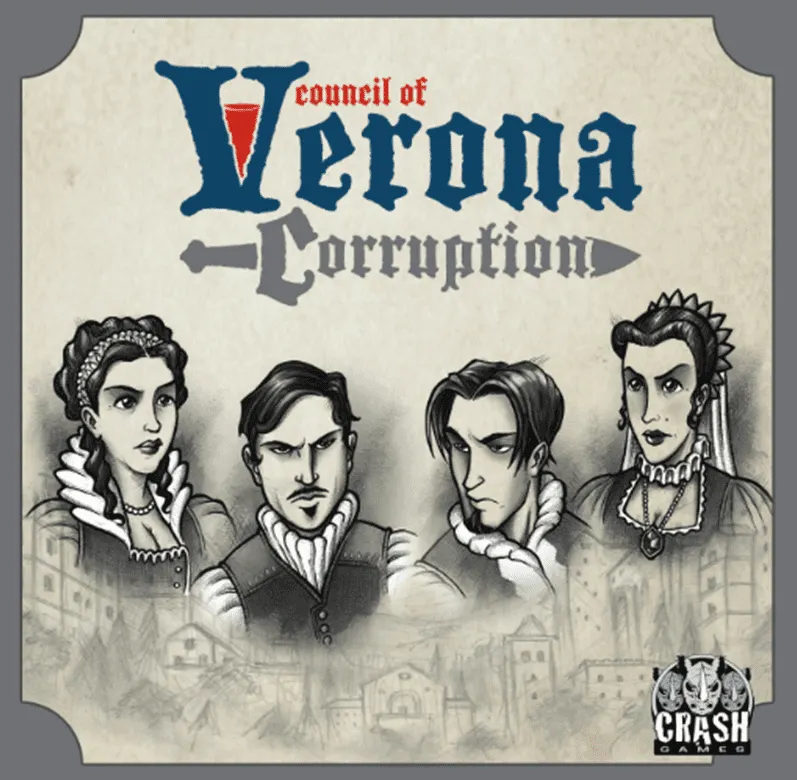
Alas, the corruption that dwells within us all. Oh, what scandal, what deception! Oh, what cruel manipulation of these two houses! Shall we pity them and grant them leave while these matters are sorted? Nay, the iron is indeed hot and we must strike with all intention. Fellow citizens of Verona, I plead for your joint purpose as we bring the dynasty to level. With power in excess, take what you will, and may the best of us rise to our place. Council of Verona: Corruption is an expansion for Council of Verona that adds 21 Corruption Cards into the game. Corruption Cards may add new influence spots, be played face-up for an ongoing or instant ability or played face-down for an end-game ability or as a bluff. Corruption Cards are dealt after the Character Card Draft and played either face-down or face-up on any Character Card on The Council or in Exile, adding an exciting additional layer of bluffing into the game. Each player will be dealt four Corruption Cards of which they will choose two to keep.
Council of Verona: Corruption supports 2–5 players according to the catalogue. This range comes from the publisher’s listed player count, so the game can be set up for any group size within it. Some setups, rules and scoring details may still vary by player count, so check your edition’s rulebook for the exact configuration.
The listed playing time for Council of Verona: Corruption is 20 minutes. This is the publisher’s estimate for a full game. The actual duration depends on the group, the player count and familiarity with the rules: first sessions usually run longer, while experienced groups often finish faster. Setup and teaching time are not included in this estimate.
The catalogue lists Council of Verona: Corruption for ages 13 and up. This is the publisher’s recommendation and reflects reading demands, rule complexity and small components rather than theme alone. Younger players can often join with help from an adult, so check the age guidance on your edition and consider your group’s experience with board games.
Council of Verona: Corruption belongs to these categories: Card Game, Deduction, and Bluffing. Its main mechanics are Hand Management, Auction / Bidding, and Open Drafting. Categories describe the theme and setting of a game, while mechanics describe what players actually do on their turns. Each mechanic links to a catalogue hub with similar games, which helps when you want something comparable.
The credited designers of Council of Verona: Corruption are: Michael Eskue and Patrick Nickell. These credits come from the published game data and name the people responsible for the game’s design, not its illustrators or publishers. Designer pages on MeepleRules collect other titles by the same designers, which helps when you enjoy a game and want to find similar ones.
The catalogue lists Council of Verona: Corruption as an expansion for Council of Verona. Expansions add new content, rules or scenarios to the base game and usually cannot be played on their own, so you need Council of Verona to use it. Check that your edition of Council of Verona is compatible, as some expansions were revised between editions.