
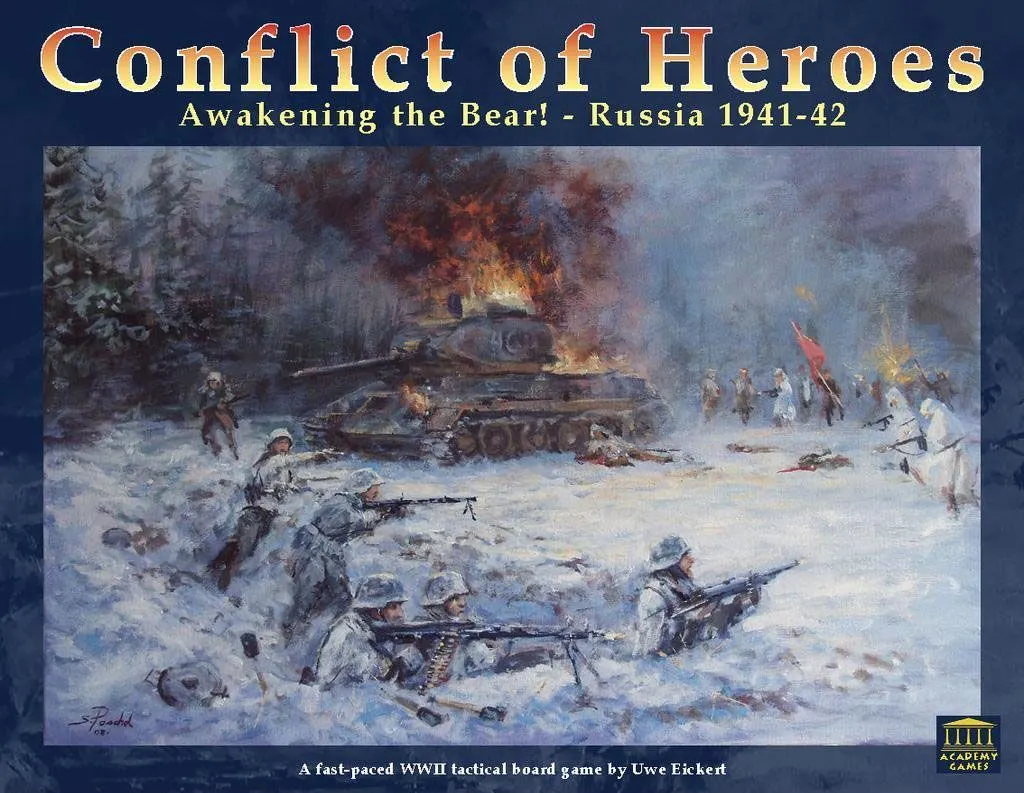
- BGG rank
- BGG #1,180
- BGG rating
- 7.5
Conflict of Heroes: Awakening the Bear! – Russia 1941-42
- 1–4 players
- 120 min
- Complexity 3.0/5
- 2008
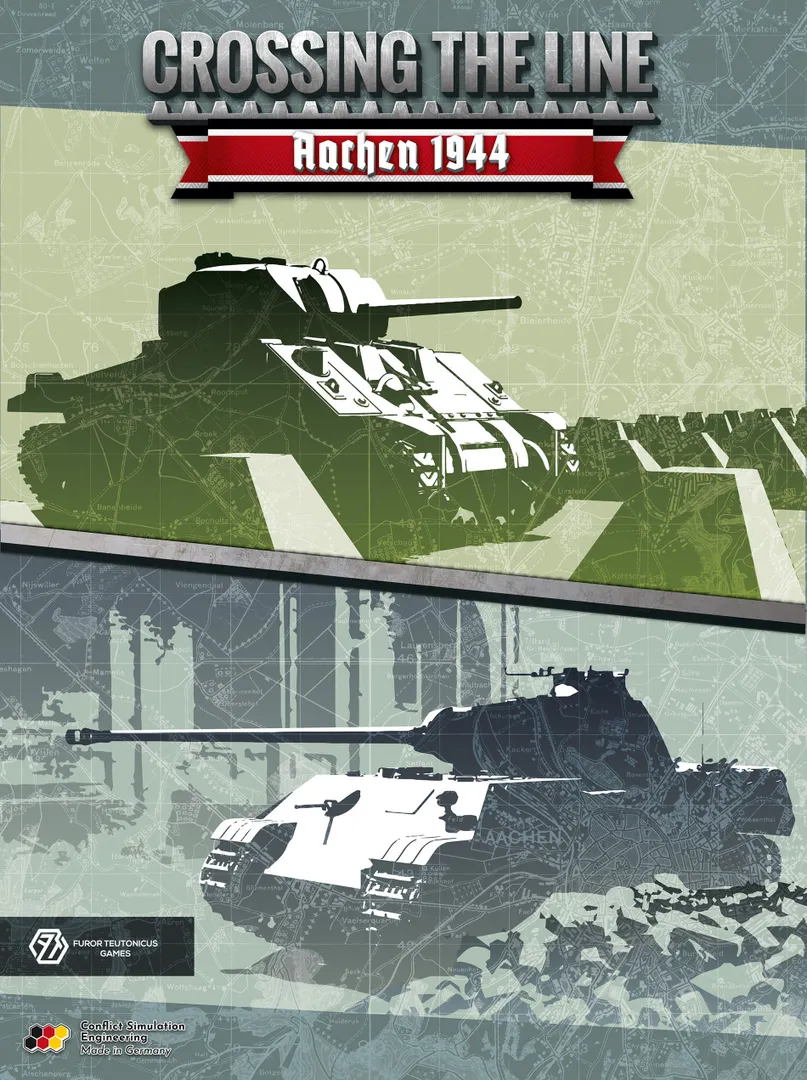
2019
Rules assistance for Crossing the Line: Aachen 1944
Plain-language explanations of turns, card effects and disputed situations, with official source references and saved question history.
For 1 player
What would you like to know?
Answers come from the official rulebook, with the page to check.
Crossing the Line: Aachen 1944 is a board game released in 2019 for 1–2 players and 30–600 minutes per game. It was designed by Dirk Blennemann and its main mechanics are Dice Rolling, Grid Movement, and Hexagon Grid.










The Game Crossing the Line – Aachen 1944 is an operational level simulation of the Battle for Aachen, which took place from September 12th to October 21st, 1944. The game is intended for two players but is also suitable for solitaire and team play. The game is played in a semi-interactive way, as only one Division of the active player is activated to conduct actions at the same time and the inactive player sometimes can have one of his Divisions react to specific threats and interrupt the enemy's actions. The Situation While Operation Market Garden was in the final stage of preparation, Lieutenant general Hodges led the leading elements of the First Army towards the Westwall fortified line south of Aachen. If successful, he might have the opportunity to drive through the fortified line, crossing the Roer River and perhaps reaching the Rhine River. Components coming in the game box: • One rulebook • One scenario booklet including four scenarios and extensive historical notes • One 22”x34” map sheet • 360 extra large counters of which 160 are combat units • Four Player aid charts • Setup charts • Reinforcement & Withdrawals charts The Scale (from the Rulebook): • A hex represents 1.2km of terrain from side to side. • Each turn represents a period of two to eight days. • Combat units are mostly battalions. 2nd Edition 2022: Game Contents, One rulebook. One mounted map. 448 extra large counters. Four double-sided player aids. Two double-sides Setup- and Reinforcements & Withdrawals displays. One solitaire play track sheet. Two 10-sided dice.
Crossing the Line: Aachen 1944 supports 1–2 players according to the catalogue. This range comes from the publisher’s listed player count, so the game can be set up for any group size within it. Some setups, rules and scoring details may still vary by player count, so check your edition’s rulebook for the exact configuration.
The listed playing time for Crossing the Line: Aachen 1944 is 30–600 minutes. This is the publisher’s estimate for a full game. The actual duration depends on the group, the player count and familiarity with the rules: first sessions usually run longer, while experienced groups often finish faster. Setup and teaching time are not included in this estimate.
Crossing the Line: Aachen 1944 has a complexity rating of 3.1 out of 5 from BoardGameGeek players, which makes it a medium-weight game. The rating reflects how much rules knowledge, planning and decision-making a typical game demands. Expect a longer first teach for heavier games, and use a preparation guide before game night.
Crossing the Line: Aachen 1944 belongs to these categories: Wargame and World War II. Its main mechanics are Dice Rolling, Grid Movement, and Hexagon Grid. Categories describe the theme and setting of a game, while mechanics describe what players actually do on their turns. Each mechanic links to a catalogue hub with similar games, which helps when you want something comparable.
The credited designers of Crossing the Line: Aachen 1944 are: Dirk Blennemann. These credits come from the published game data and name the people responsible for the game’s design, not its illustrators or publishers. Designer pages on MeepleRules collect other titles by the same designers, which helps when you enjoy a game and want to find similar ones.
The catalogue lists Crossing the Line: Aachen 1944 as a base game. It can be played on its own with the components in the box and does not require any other title. Expansions, if any exist, add new content or rules on top of it and are listed separately in the catalogue with a link back to this base game.