
- BGG rank
- BGG #2,174
- BGG rating
- 7.6
LYNGK
- 2 players
- 30–60 min
- Complexity 2.7/5
- 2017

1800
Rules assistance for Dara
Plain-language explanations of turns, card effects and disputed situations, with official source references and saved question history.
For 2 players
What would you like to know?
Answers come from the official rulebook, with the page to check.
Dara is a board game released in 1800 for 2 players and 60 minutes per game. Its main mechanics are Point to Point Movement and Pattern Building.


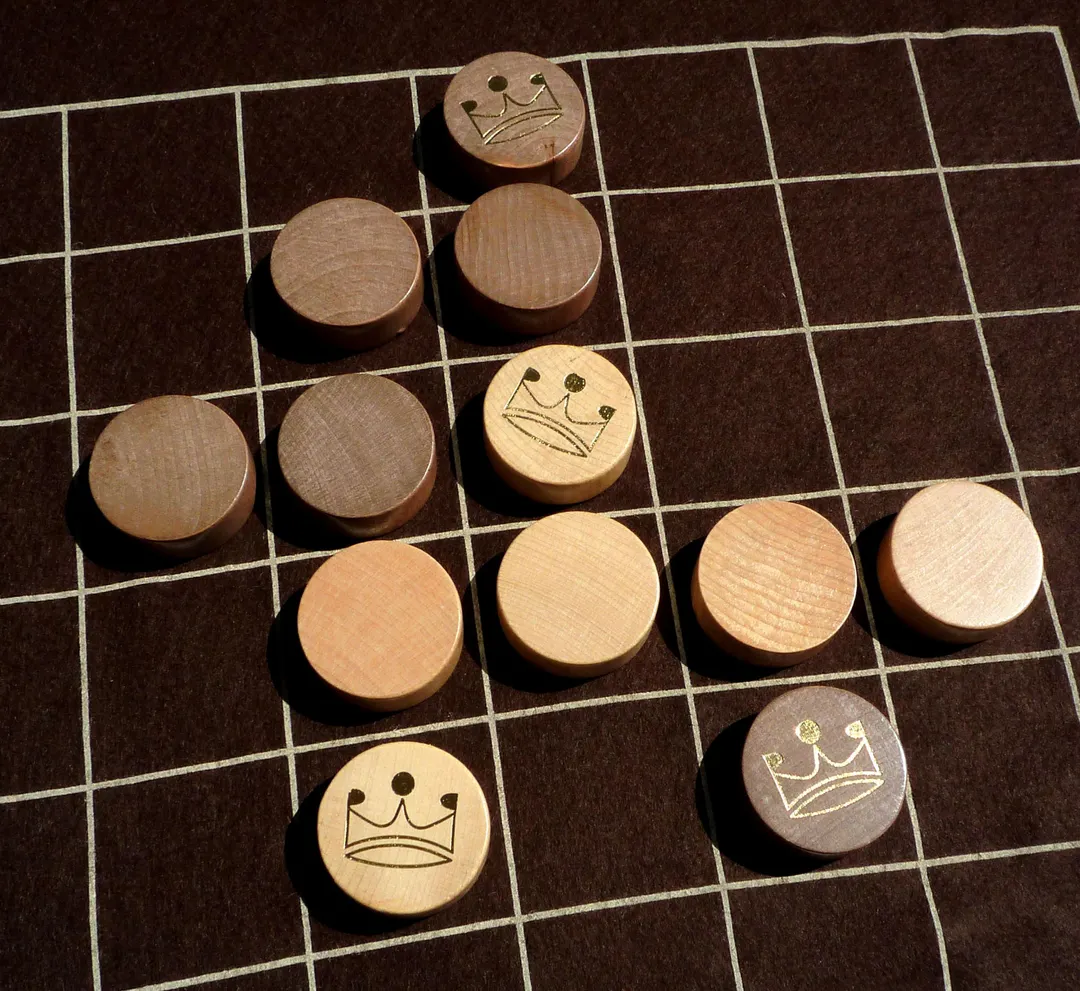



A game from Nigeria that may be played by two players or teams. Traditionally the game was played on an area consisting of 5x6 spaces using sticks or stones for pieces. The game begins with the players taking alternating turns placing one of their twelves pieces in an empty space. Once all of the pieces have been placed, the players alternate moving one of their pieces into an adjacent empty space. Diagonal movement is not allowed. When a player moves a piece to cause three of their pieces to be in a row, that player may remove one opposing piece that is not part of a row of three such pieces. Players are not permitted to make a move which results in more than three of their pieces being in a row. A player wins the game when the opposing player is unable to make a a row of three pieces.
Dara supports 2 players according to the catalogue. This is the publisher’s listed player count, so the game is designed for exactly that number of participants. Variants for other group sizes, if any, are described in the rulebook of your edition, so check it before setting up a different configuration.
The listed playing time for Dara is 60 minutes. This is the publisher’s estimate for a full game. The actual duration depends on the group, the player count and familiarity with the rules: first sessions usually run longer, while experienced groups often finish faster. Setup and teaching time are not included in this estimate.
Dara has a complexity rating of 1.8 out of 5 from BoardGameGeek players, which makes it a light game. The rating reflects how much rules knowledge, planning and decision-making a typical game demands. Expect a longer first teach for heavier games, and use a preparation guide before game night.
Dara belongs to these categories: Abstract Strategy. Its main mechanics are Point to Point Movement and Pattern Building. Categories describe the theme and setting of a game, while mechanics describe what players actually do on their turns. Each mechanic links to a catalogue hub with similar games, which helps when you want something comparable.
The catalogue lists Dara as a base game. It can be played on its own with the components in the box and does not require any other title. Expansions, if any exist, add new content or rules on top of it and are listed separately in the catalogue with a link back to this base game.