
- BGG rank
- BGG #499
- BGG rating
- 7.9
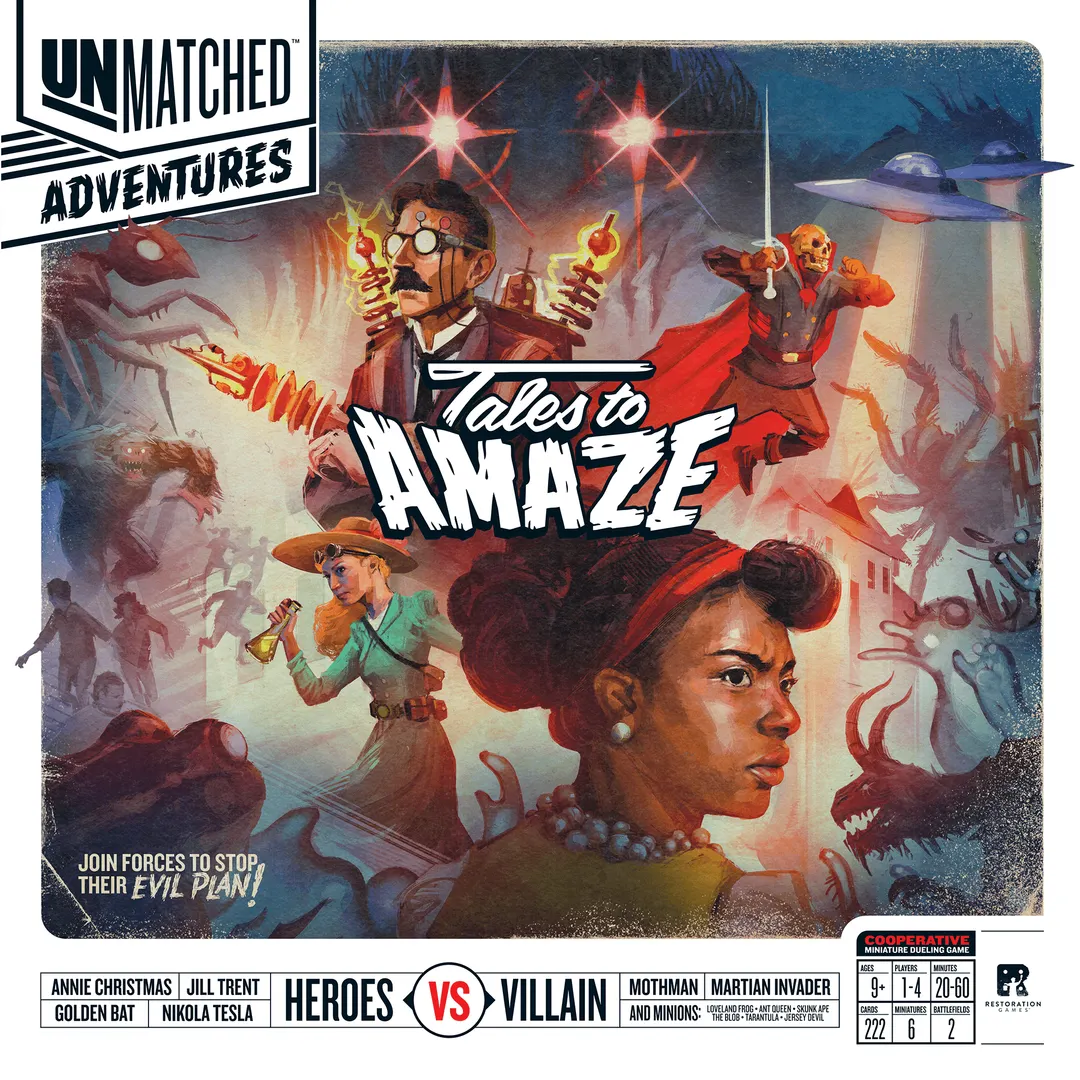
Unmatched Adventures: Tales to Amaze
- 1–4 players
- 20–60 min
- Complexity 2.3/5
- 2023
2012
Rules assistance for Day of the Dead
Plain-language explanations of turns, card effects and disputed situations, with official source references and saved question history.
For 2 players
What would you like to know?
Answers come from the official rulebook, with the page to check.
Day of the Dead is a board game released in 2012 for 2 players, 30 minutes per game, and ages 13 and up. It was designed by Evan Raisner and its main mechanics are Variable Player Powers, Hand Management, and Campaign / Battle Card Driven.
Day of the Dead is a highly strategic card game that turns you and a friend into necromancers! Summon the best team of undead fighters and in six turns you’ll be named Super Grand Master, a highly coveted and extremely descriptive title. At the start of the game, each necromancer is given a hand containing nine cards. They represent an eccentric collection of skeletons, zombies, vampires, ghouls, and other spooks. Each turn, you select one of these weird characters and send it to the field. Once your opponent has done the same, the fun begins! All the fighters pair off and fight to the death. Normally, this sort of thing would be dangerous, but undead are durable and really get into the spirit of the thing. Winners score points while losers are flipped face down. Undead are resilient, so losing fighters will reassemble themselves in time for next turn’s battle. But if you don’t think your losing fighter will do better next turn, you can pull him out of line and turn him into a spirit. Spirits are the ultimate fans, boosting the power of all of your fighters. Some spirits even let you replace weaker fighters! Strategy in Day of the Dead centers around positioning; when played in the right place, any fighter can be a champion. On the other hand, even your favorite fighter can be a total failure if you are too stubborn to pull him out of a losing matchup. Stay flexible and you will bury your competition. Turn Order Summoning — When you bring new cards to the field. A New Slot Opens — Each turn a new slot opens up on the field for both players. On the first turn, each player takes a card from their hand and places it as a fallen fighter in this new slot. On each turn after that, they will take their current spirit card and place it there. Play a New Card — Fighters start their undeath as spirits, face down and slightly below the field. Spirits are also rotated 90 degrees to show that they are special. When considering what card to play, remember that you can only have 2 cards of each back in play. On turn 6, the final turn, you are allowed to break this rule and choose whatever card back you want. The Field Becomes Active — Flip all cards on the field face up (except for your spirit, it’s not on the field though it’s watching with considerable interest). If any player chose an Unearth card to be their spirit, they resolve this effect now. Then you’re ready to fight! Fighting — When your fighters get to work. Fights resolve one by one, starting with the newest slot and going to the oldest. Fights are 1 on 1 affairs and follow rigid rules. Be aware of what spirits each player has, as they will affect the outcome of each fight. Use Effects — Starting with the player who has the Priority counter, both fighters use their effects. Fighters must use their effects if able.If a player has a Double card as their spirit, they use their fighter’s effect, then immediately use it again. Add Up the Power — Add on the printed power of each fighter to any bonuses they may have accumulated via effects or spirits (Remember, if a player has a Power Up card as their spirit, they will get +2 power this fight). Compare Power — The higher-powered fighter is declared winner (in the event of a tie, both fighters are considered winners) and stays active. The lower-powered fighter is declared the loser and flips face down, becoming fallen. The Loser May Become a Spirit — If your fighter lost its fight this turn and you want to try something new, you can pull it from line and turn it into a spirit. Move on to the Next Fight Rewards — When you gain victory points. Score Victory Points — Each player scores victory points equal to the printed power values on their active fighters. Fallen cards score no points. Use the score board to keep track of it all. Pass Priority — The player who currently has the priority counter passes it to the other player. Next turn, that player will be able to use their effects first. This turn is now over! Winning At the end of 6 turns, a winner is declared. Whoever has the most victory points is that amazing person/
Day of the Dead supports 2 players according to the catalogue. This is the publisher’s listed player count, so the game is designed for exactly that number of participants. Variants for other group sizes, if any, are described in the rulebook of your edition, so check it before setting up a different configuration.
The listed playing time for Day of the Dead is 30 minutes. This is the publisher’s estimate for a full game. The actual duration depends on the group, the player count and familiarity with the rules: first sessions usually run longer, while experienced groups often finish faster. Setup and teaching time are not included in this estimate.
The catalogue lists Day of the Dead for ages 13 and up. This is the publisher’s recommendation and reflects reading demands, rule complexity and small components rather than theme alone. Younger players can often join with help from an adult, so check the age guidance on your edition and consider your group’s experience with board games.
Day of the Dead has a complexity rating of 2.0 out of 5 from BoardGameGeek players, which makes it a medium-light game. The rating reflects how much rules knowledge, planning and decision-making a typical game demands. Expect a longer first teach for heavier games, and use a preparation guide before game night.
Day of the Dead belongs to these categories: Card Game and Fighting. Its main mechanics are Variable Player Powers, Hand Management, and Campaign / Battle Card Driven. Categories describe the theme and setting of a game, while mechanics describe what players actually do on their turns. Each mechanic links to a catalogue hub with similar games, which helps when you want something comparable.
The credited designers of Day of the Dead are: Evan Raisner. These credits come from the published game data and name the people responsible for the game’s design, not its illustrators or publishers. Designer pages on MeepleRules collect other titles by the same designers, which helps when you enjoy a game and want to find similar ones.
The catalogue lists Day of the Dead as a base game. It can be played on its own with the components in the box and does not require any other title. Expansions, if any exist, add new content or rules on top of it and are listed separately in the catalogue with a link back to this base game.