
- BGG rating
- 6.8
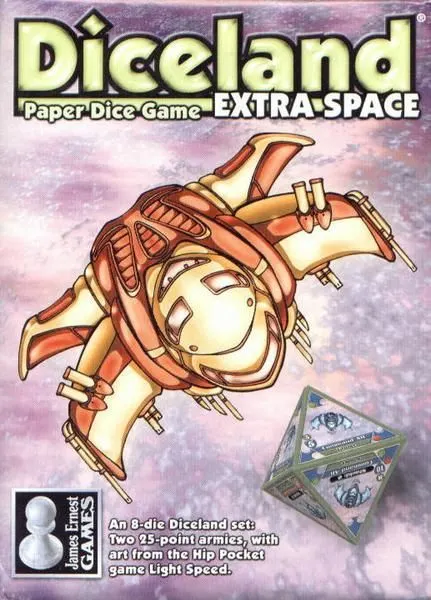
Diceland: Extra Space
- 2 players
- 20 min
- Complexity 1.5/5
- 2003
2003
Rules assistance for Diceland: Space
Plain-language explanations of turns, card effects and disputed situations, with official source references and saved question history.
For 2 players
What would you like to know?
Answers come from the official rulebook, with the page to check.
Diceland: Space is a board game released in 2003 for 2–8 players, 20 minutes per game, and ages 10 and up. It was designed by James Ernest and Falko Goettsch and its main mechanics are Variable Player Powers and Dice Rolling.
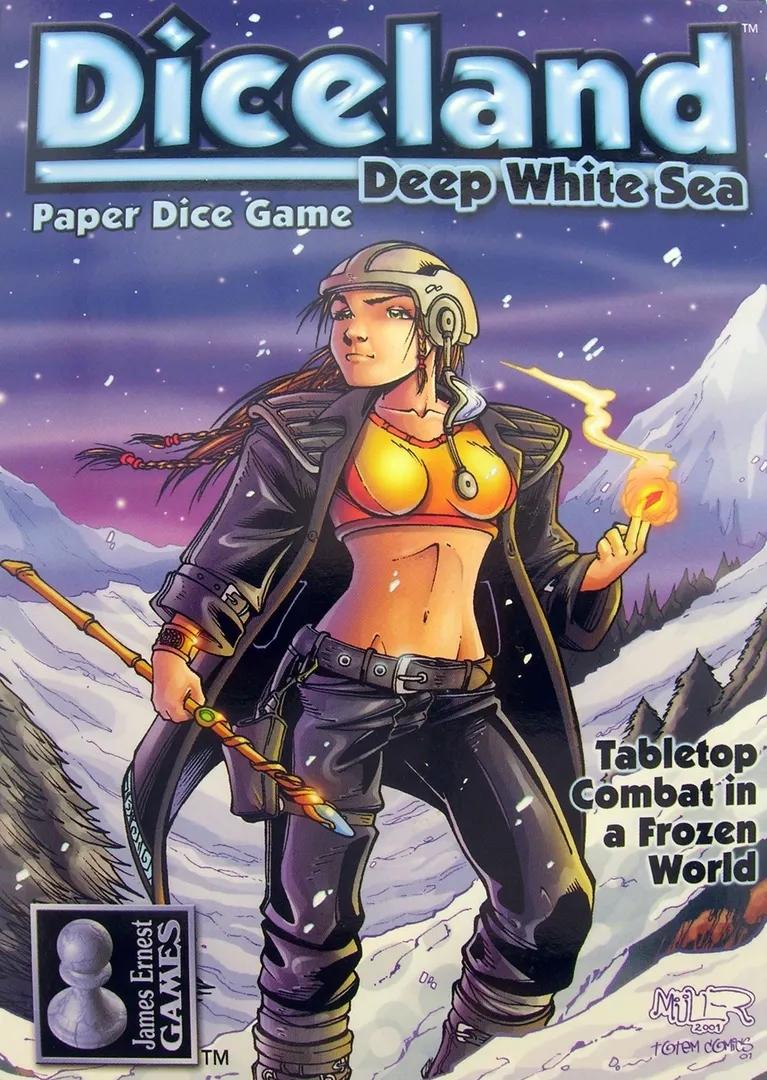




Diceland: Space uses the same basic mechanics as Diceland: Deep White Sea, although the setting details are starkly different. Using content from their Strange Adventures in Infinite Space computer game, Cheapass has made the new Diceland into a ship-to-ship combat game. From the Cheapass Games website: Diceland is a tabletop combat game that uses paper dice as the characters. The dice are eight-sided, printed in full color, and about 2 inches to a side. Each die is pre-cut and scored, and assembles with just tabs and slots. The "paper" in these paper dice is 12-point coated cardstock, which makes these dice solid enough to withstand any amount of normal play. Diceland: Space is a 50-die expansion for Diceland, which comes in two different 25-die boxes. The set introduces new abilities like Cloak, Remove, Dodge, and more, and gives players their first chance to construct customized Diceland armies. Each box contains two major armies, one smaller one, and a strange and wonderful 25th die. Space: Terrans vs. Urluquai includes an 11-die Terran army, featuring a fast-moving wing of Scouts and a powerful 15-point Destroyer; the 8-die Urluquai army including both a Corvette and a Fighter with the Cloaking ability; and the 5-die Zorg army, with a fat carrier and a unique Tender which can teleport enemies off the board. Also in the Terrans vs. Urluquai box, you’ll find the friendly Klakar Frigate, an impressive 16-point frigate that’s a perfect addition to any army that can afford him. Space: Garthans vs. Muktians includes an 11-die Garthan army, featuring both the Light and Super Carriers as well as a vast array of small Fighters; the 8-die Muktian army featuring a mix of unusual ship designs; and the 5-die Tan Ru army, featuring a powerhouse 15-point Decimator and a wing of three mindless Drones. Also in the Garthans vs. Muktians box, you'll find the 50-point Yellow Kawangi die, a bizarre and powerful die that's sure to be illegal in tournaments any day now. List of Diceland sets and armies
Diceland: Space supports 2–8 players according to the catalogue. This range comes from the publisher’s listed player count, so the game can be set up for any group size within it. Some setups, rules and scoring details may still vary by player count, so check your edition’s rulebook for the exact configuration.
The listed playing time for Diceland: Space is 20 minutes. This is the publisher’s estimate for a full game. The actual duration depends on the group, the player count and familiarity with the rules: first sessions usually run longer, while experienced groups often finish faster. Setup and teaching time are not included in this estimate.
The catalogue lists Diceland: Space for ages 10 and up. This is the publisher’s recommendation and reflects reading demands, rule complexity and small components rather than theme alone. Younger players can often join with help from an adult, so check the age guidance on your edition and consider your group’s experience with board games.
Diceland: Space has a complexity rating of 1.5 out of 5 from BoardGameGeek players, which makes it a light game. The rating reflects how much rules knowledge, planning and decision-making a typical game demands. Expect a longer first teach for heavier games, and use a preparation guide before game night.
Diceland: Space belongs to these categories: Fighting, Dice, and Video Game Theme. Its main mechanics are Variable Player Powers and Dice Rolling. Categories describe the theme and setting of a game, while mechanics describe what players actually do on their turns. Each mechanic links to a catalogue hub with similar games, which helps when you want something comparable.
The credited designers of Diceland: Space are: James Ernest and Falko Goettsch. These credits come from the published game data and name the people responsible for the game’s design, not its illustrators or publishers. Designer pages on MeepleRules collect other titles by the same designers, which helps when you enjoy a game and want to find similar ones.
The catalogue lists Diceland: Space as a base game. It can be played on its own with the components in the box and does not require any other title. Expansions, if any exist, add new content or rules on top of it and are listed separately in the catalogue with a link back to this base game.