
- BGG rank
- BGG #171
- BGG rating
- 7.7
Champions of Midgard
- 2–4 players
- 60–90 min
- Complexity 2.6/5
- 2015

2016
Rules assistance for Dreary Hamlet
Plain-language explanations of turns, card effects and disputed situations, with official source references and saved question history.
For 1 player
What would you like to know?
Answers come from the official rulebook, with the page to check.
Dreary Hamlet is a board game released in 2016 for 1–4 players, 15–90 minutes per game, and ages 7 and up. Its main mechanics are Dice Rolling.
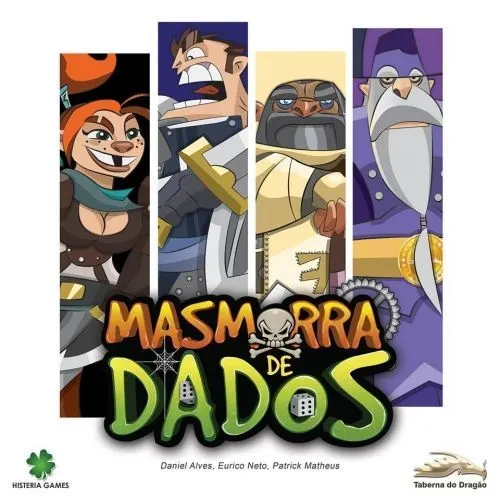
In Dreary Hamlet you will play as an adventurer caught in their weakest moment. In medieval England times are hard, and to feed your family you will be forced to trek into the countryside, where you hope to slay the mysterious beasts that seem to be plaguing the tiny town of Hamlet. You have heard tales of the wretched creatures regurgitated from the Hamletsmaw, and though travellers shout of their horror, they also whisper through drink-numbed lips of the treasures that may be found within their guts. The aim of the game is simple; be the player with the most loot once every player is dead. The journey there is not such a simple one though. Each round of gameplay consists of a day and night phase. Creatures are drawn from a deck and placed in a grid at the centre of the table, where during the day players will choose which to face. Many things will affect the outcome of this combat, such as ammunition type equipped, creature health, defence, and number of attacks, and player health and items. Combat is resolved through dice rolls, and if the player survives they may receive a loot reward. These rewards can be sold for gold, crafted into better items that will be worth more in the future, or eaten to stave off death. While players have control during the day, once the sun sets and night settles across the land, the creatures in play will follow them back to camp, setting upon the doomed adventurers. No loot can be won during the chaos of night, leaving survival the only reward to a successful defence. At the same time, all players are competing to become the richest hero, so back-stabbing, betrayal, theft, and murder will be in abundance. The most important thing to remember is that death is inevitable, so take joy in your friend's suffering, and race to meet them on the other side!
Dreary Hamlet supports 1–4 players according to the catalogue. This range comes from the publisher’s listed player count, so the game can be set up for any group size within it. Some setups, rules and scoring details may still vary by player count, so check your edition’s rulebook for the exact configuration.
The listed playing time for Dreary Hamlet is 15–90 minutes. This is the publisher’s estimate for a full game. The actual duration depends on the group, the player count and familiarity with the rules: first sessions usually run longer, while experienced groups often finish faster. Setup and teaching time are not included in this estimate.
The catalogue lists Dreary Hamlet for ages 7 and up. This is the publisher’s recommendation and reflects reading demands, rule complexity and small components rather than theme alone. Younger players can often join with help from an adult, so check the age guidance on your edition and consider your group’s experience with board games.
Dreary Hamlet has a complexity rating of 2.0 out of 5 from BoardGameGeek players, which makes it a medium-light game. The rating reflects how much rules knowledge, planning and decision-making a typical game demands. Expect a longer first teach for heavier games, and use a preparation guide before game night.
Dreary Hamlet belongs to these categories: Card Game, Fighting, and Dice. Its main mechanics are Dice Rolling. Categories describe the theme and setting of a game, while mechanics describe what players actually do on their turns. Each mechanic links to a catalogue hub with similar games, which helps when you want something comparable.
The catalogue lists Dreary Hamlet as a base game. It can be played on its own with the components in the box and does not require any other title. Expansions, if any exist, add new content or rules on top of it and are listed separately in the catalogue with a link back to this base game.