

- BGG rank
- BGG #217
- BGG rating
- 7.9
Dune
- 2–6 players
- 120–180 min
- Complexity 4.0/5
- 2019
Rules assistance for Dune: The Landsraad Maneuver
Plain-language explanations of turns, card effects and disputed situations, with official source references and saved question history.
What would you like to know?
Answers come from the official rulebook, with the page to check.
Dune: The Landsraad Maneuver is an expansion for Dune released in 1990 for 2–6 players, 60–180 minutes per game, and ages 12 and up. It was designed by Kenneth Burke and its main mechanics are Variable Player Powers, Hand Management, and Auction / Bidding.
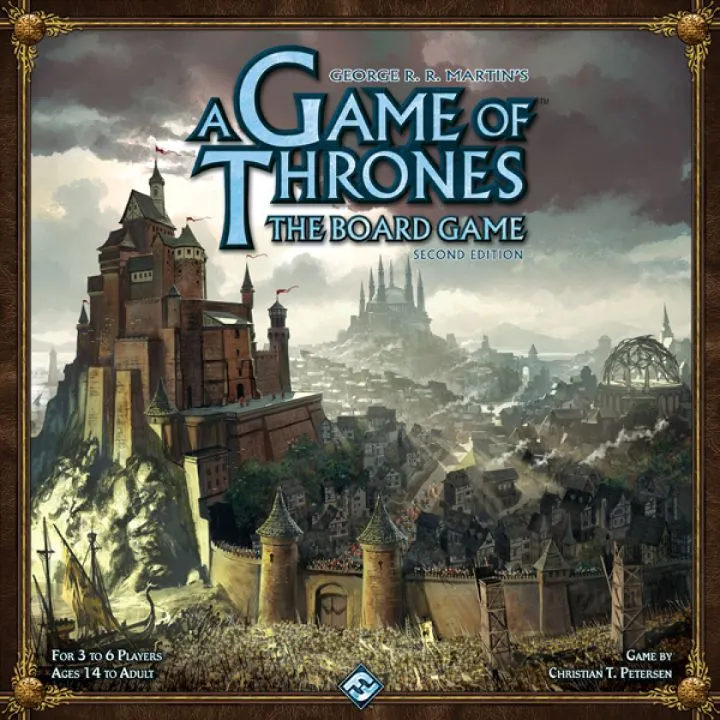







Variant of Dune published in The General vol. 26 #1 Pieces and cards published on insert. LANDSRAAD (New faction): AT START— 20 tokens in reserves (off-planet). Start with 30 spice. FREE REVIVAL— 3 tokens. ADVANTAGE— You have Influence over almost all major powers (except the Fremen) on Dune. 1. During a turn, you may use your power of Influence during the revival/movement or the battle round. a. In the revival /movement round, you may order any player to "hold in place". That player will not be able to reclaim tokens from the tanks, ship tokens onto or off Dune, or move his tokens on the mapboard during the round. b. In the battle round, you may order any player to "hold in place". That player will not be able to attack: anyone during that round, but may defend if attacked by another party. ALLIANCE — You may not ally with the Fremen (although a third player may be allied to both). Allies may make use of the Lansraad "Optional Advantage" of restricting territories; the same conditions as to who may be affected is imposed. Leaders and Values: Baron Moat — 6 Earl Viacontc — 5 Administrator — 3 Commissioner — 2 Representative — 1 Disadvantages : 1. You cannot make use of your power of Influence in both the revival/movement and combat rounds of the same turn (unless able to play a Karama card, to be described later). 2. You have no power of Influence over the Fremen player, nor may you ever ally with the Fremen player. Optional Advantage: At the start of any turn, before the Storm marker position is determined, you may declare any non-sietch territory on the mapboard (except for the Polar Sink) "restricted' All tokens that do not belong to the Lansraad player, a Lansraad-allied player, the Fremen player, or are co-existing Bene Gesserit tokens must be moved out of this territory during the upcoming revival/movement turns. Failure to do so results in the tokens being sent to the tanks. With the exception of the above-mentioned token types, tokens may not be moved into the territory during the entire turn. The Lansraad player may not declare the same territory "restricted" for two consecutive turns. Karama Powers: 1. When played against the Lansraad player, this prevents him from using his power of Influence or optional "restriction" once. The card would be played right after the Lansraad ordered a player to hold in place or declared a territory restricted. 2. If the optional special Karama Power rules are used, the Lansraad player may use a Karama card once during the game to use his power of Influence during the revival/movement and combat rounds of the same game turn. The card would be played at the start of the battle round.
Dune: The Landsraad Maneuver supports 2–6 players according to the catalogue. This range comes from the publisher’s listed player count, so the game can be set up for any group size within it. Some setups, rules and scoring details may still vary by player count, so check your edition’s rulebook for the exact configuration.
The listed playing time for Dune: The Landsraad Maneuver is 60–180 minutes. This is the publisher’s estimate for a full game. The actual duration depends on the group, the player count and familiarity with the rules: first sessions usually run longer, while experienced groups often finish faster. Setup and teaching time are not included in this estimate.
The catalogue lists Dune: The Landsraad Maneuver for ages 12 and up. This is the publisher’s recommendation and reflects reading demands, rule complexity and small components rather than theme alone. Younger players can often join with help from an adult, so check the age guidance on your edition and consider your group’s experience with board games.
Dune: The Landsraad Maneuver belongs to these categories: Fighting, Bluffing, and Political. Its main mechanics are Variable Player Powers, Hand Management, and Auction / Bidding. Categories describe the theme and setting of a game, while mechanics describe what players actually do on their turns. Each mechanic links to a catalogue hub with similar games, which helps when you want something comparable.
The credited designers of Dune: The Landsraad Maneuver are: Kenneth Burke. These credits come from the published game data and name the people responsible for the game’s design, not its illustrators or publishers. Designer pages on MeepleRules collect other titles by the same designers, which helps when you enjoy a game and want to find similar ones.
The catalogue lists Dune: The Landsraad Maneuver as an expansion for Dune. Expansions add new content, rules or scenarios to the base game and usually cannot be played on their own, so you need Dune to use it. Check that your edition of Dune is compatible, as some expansions were revised between editions.