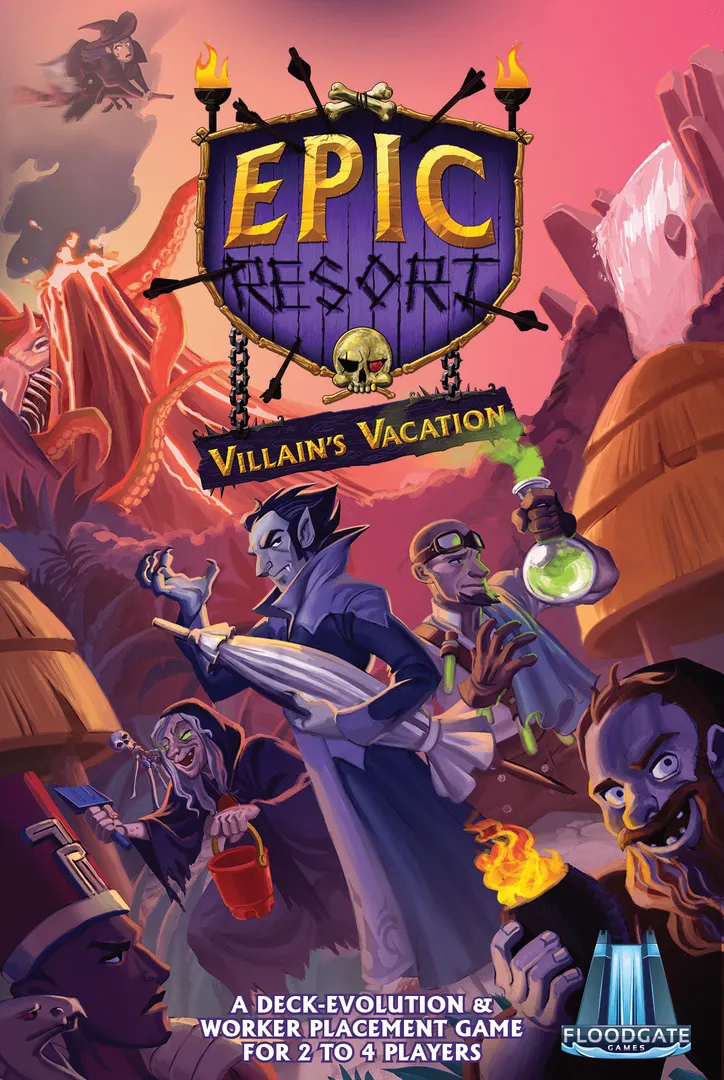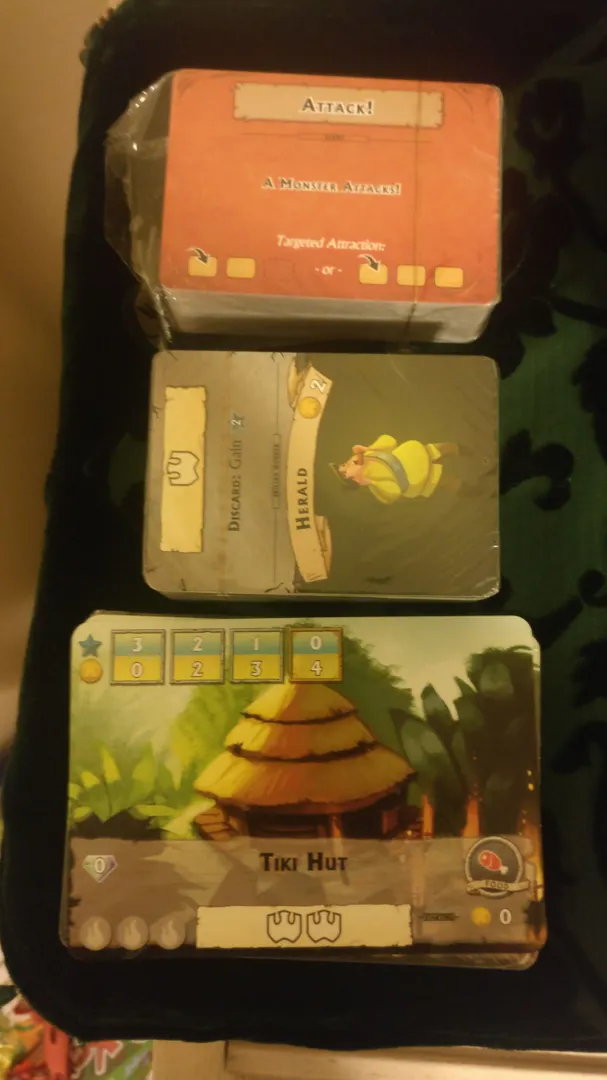
- BGG rating
- 7.5
Epic Resort: Upgrade Kit
- 2–4 players
- 90 min
- 2016
2014
Rules assistance for Epic Resort
Plain-language explanations of turns, card effects and disputed situations, with official source references and saved question history.
For 2 players
What would you like to know?
Answers come from the official rulebook, with the page to check.
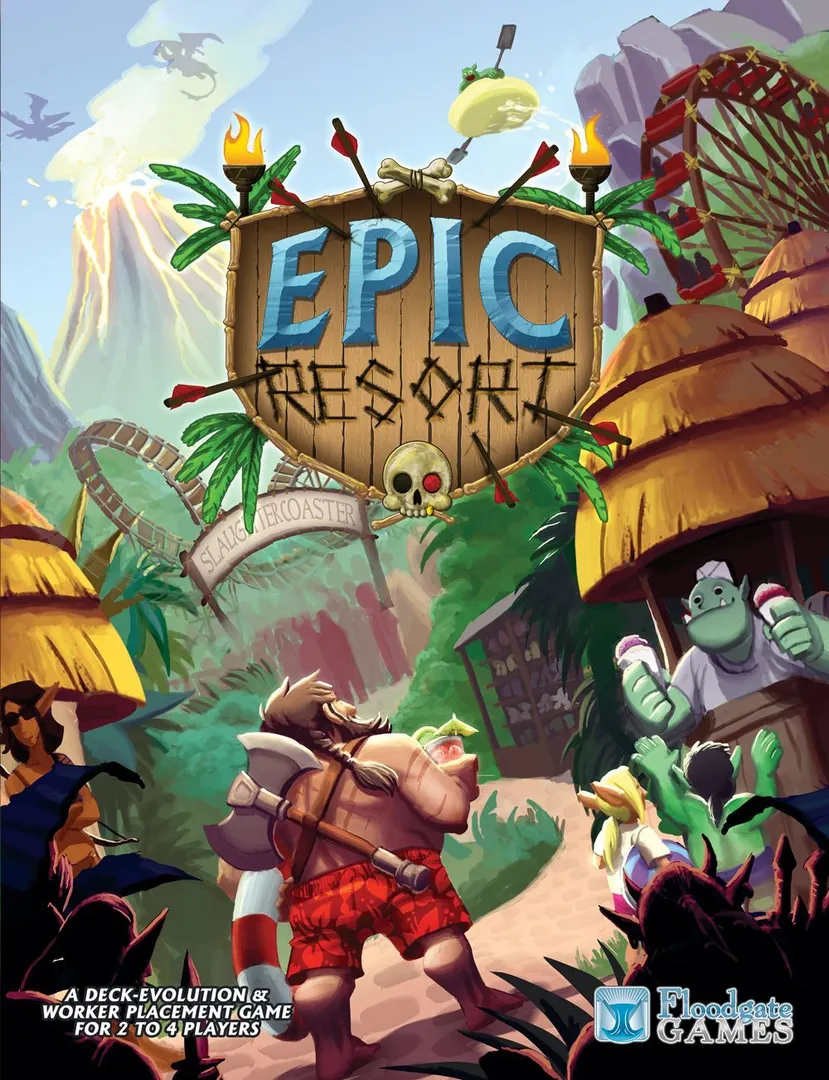
Epic Resort is a board game released in 2014 for 2–4 players, 60–120 minutes per game, and ages 12 and up. It was designed by Ben Harkins and its main mechanics are Hand Management, Deck, Bag, and Pool Building, and Worker Placement.

Players compete to build the best resort for attracting fantasy heroes and tourists looking for fun and relaxation. The more you attract, the more likely monsters will attack! Overview Hire and train your workers, build and upgrade your attractions, and convince your battle weary heroes to fight just one more time so without letting too many tourists get eaten! Gain Victory points by upgrading attractions and giving Heroes the rest they need. The highest scoring player when all monsters are defeated is the winner. Setup Each player begins with a humble resort consisting of a Beach, a Tiki Hut and a small number of Tourists, placed at each attraction. Each player starts with their own worker Deck consisting of 7 Apprentices, 3 Street Performers, and 3 Lazy Peons. Gameplay Each round consists of 4 phases: Phase I - Get to Work Each Player draws a hand of 5 Workers from their Worker Deck. Players simultaneously send worker cards from their hand to do work at each of their Attractions. Any missing units of work (are required by the Attraction) cause Tourists to leave before gathering resources. Players gain the primary resource of Gold by having more tourists at each attraction, and Flair by having less tourists. Phase II - Action: Attract, Hire & Upgrade In order, players take one action per turn or pass. Players will be interacting with common draft areas, as well as using abilities from their own workers and attractions. Possible actions include: Attract Tourists from the Dock (Spending Flair) - Tourists are placed at attractions, potentially increasing the Gold gained on the subsequent turn. Attract a Hero from the Dock (Spending Flair) - Heroes start with low health, which is gained at the end of each round. Fully Rested Heroes are scored for Victory Points. Upgrade an Attraction (Spending Gold) - Providing higher tourist capacity, better Gold payout, better abilities and more Victory Points. Upgraded attractions typically require more workers to keep them fully staffed. Train or Hire new Workers (Spending Gold) - Upgrade your workers to provide more work, or better abilities. Training locks a worker draft pile, preventing other players from upgrading to that particular worker during the round. Training workers is a 1-for-1 exchange, keeping players' Worker Deck lean by design. Pass - The first Player to Pass becomes the Start Player for the next round Any time during a player's turn, he may use abilities from fully-staffed attractions, or discard worker cards to use their unique abilities. Phase III - A Ship Arrives The dock is refilled with new Heroes and Tourists from a center pile. While refilling, it's possible to trigger a Monster Attack! If an Attack! card is revealed, the top Monster from the Monster Pile will choose which player it's attacking; typically by Most Tourists or Most Heroes at their resort, ties broken clockwise from the start player. If a Hero defends against a Monster Attack, he loses 1 health. Any undefended damage causes tourists to be eaten by the Monster. Heroes may dodge into, or out of, a Monster Attack up to one time per round. If an attraction has no Hero or Tourists, a Monster will Damage it, potentially destroying the attraction. A player may chose (if they have one) to throw a Lazy Peon at the monster, ending the attack and permenantly removing the Worker Card from the game. The Dock Continues to refill, potentially triggering more Monster Attacks, until it is full. Phase IV - Clean Up Used and unused Workers are placed in players' discard piles. Any fully-rested Heroes are scored - Placed to the side, each worth Victory Points at the end of the game. This Hero also removes the top Monster from the remaining Monster Deck. Remaining Heroes gain 1 Health each. Any Locked Worker Draft Piles and Attraction Abilities are made available for the next round. Any unused Flair is sent back to the supply. Gold carries over to the next round. Gameplay continues with Phase I Game End If at the end of the round there are no Monsters remaining, the game is over and players total Victory Points from Attractions, Scored Heroes, and 1 point for each remaining Hero at their resort. The player with the highest Victory Point total has built the most Epic Resort and is victorious!
Epic Resort supports 2–4 players according to the catalogue. This range comes from the publisher’s listed player count, so the game can be set up for any group size within it. Some setups, rules and scoring details may still vary by player count, so check your edition’s rulebook for the exact configuration.
The listed playing time for Epic Resort is 60–120 minutes. This is the publisher’s estimate for a full game. The actual duration depends on the group, the player count and familiarity with the rules: first sessions usually run longer, while experienced groups often finish faster. Setup and teaching time are not included in this estimate.
The catalogue lists Epic Resort for ages 12 and up. This is the publisher’s recommendation and reflects reading demands, rule complexity and small components rather than theme alone. Younger players can often join with help from an adult, so check the age guidance on your edition and consider your group’s experience with board games.
Epic Resort has a complexity rating of 2.5 out of 5 from BoardGameGeek players, which makes it a medium-light game. The rating reflects how much rules knowledge, planning and decision-making a typical game demands. Expect a longer first teach for heavier games, and use a preparation guide before game night.
Epic Resort belongs to these categories: Fantasy and Pirates. Its main mechanics are Hand Management, Deck, Bag, and Pool Building, and Worker Placement. Categories describe the theme and setting of a game, while mechanics describe what players actually do on their turns. Each mechanic links to a catalogue hub with similar games, which helps when you want something comparable.
The credited designers of Epic Resort are: Ben Harkins. These credits come from the published game data and name the people responsible for the game’s design, not its illustrators or publishers. Designer pages on MeepleRules collect other titles by the same designers, which helps when you enjoy a game and want to find similar ones.
The catalogue lists Epic Resort as a base game. It can be played on its own with the components in the box and does not require any other title. Expansions, if any exist, add new content or rules on top of it and are listed separately in the catalogue with a link back to this base game.