
- BGG rank
- BGG #1,934
- BGG rating
- 7.3
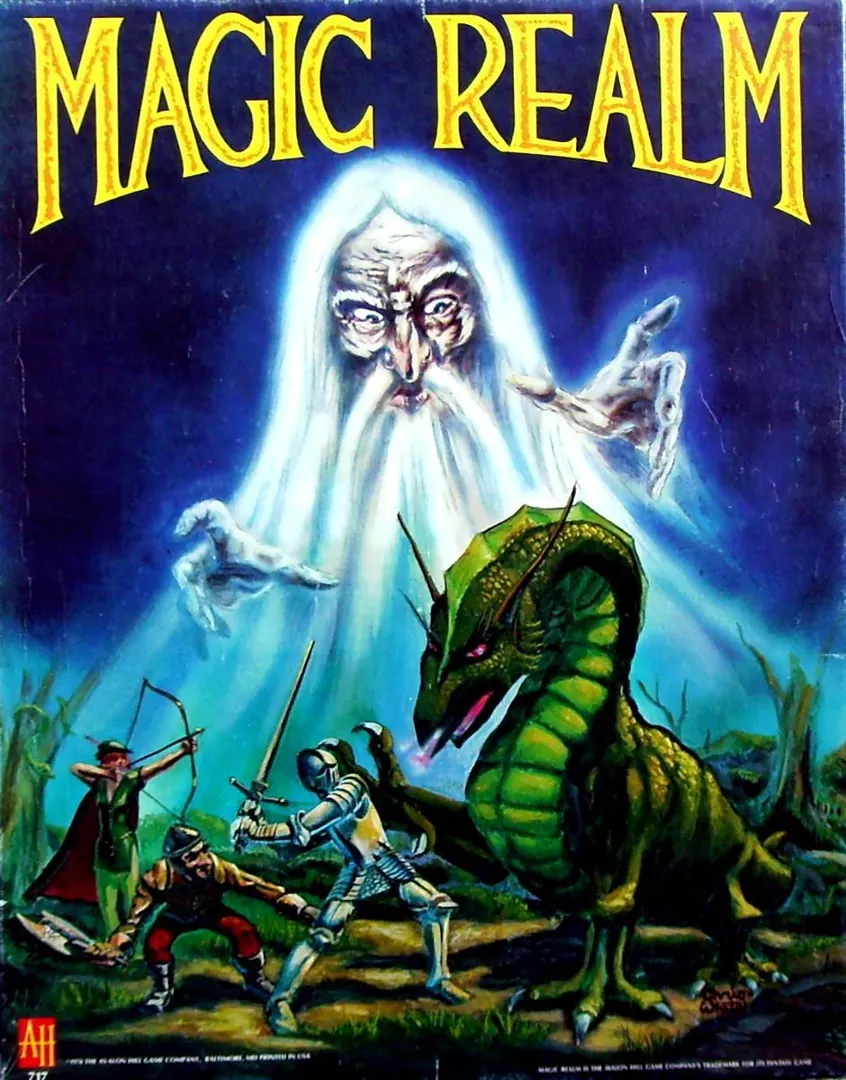
Magic Realm
- 1–16 players
- 60–240 min
- Complexity 4.6/5
- 1979
1989
Rules assistance for Excalibur
Plain-language explanations of turns, card effects and disputed situations, with official source references and saved question history.
For 2 players
What would you like to know?
Answers come from the official rulebook, with the page to check.
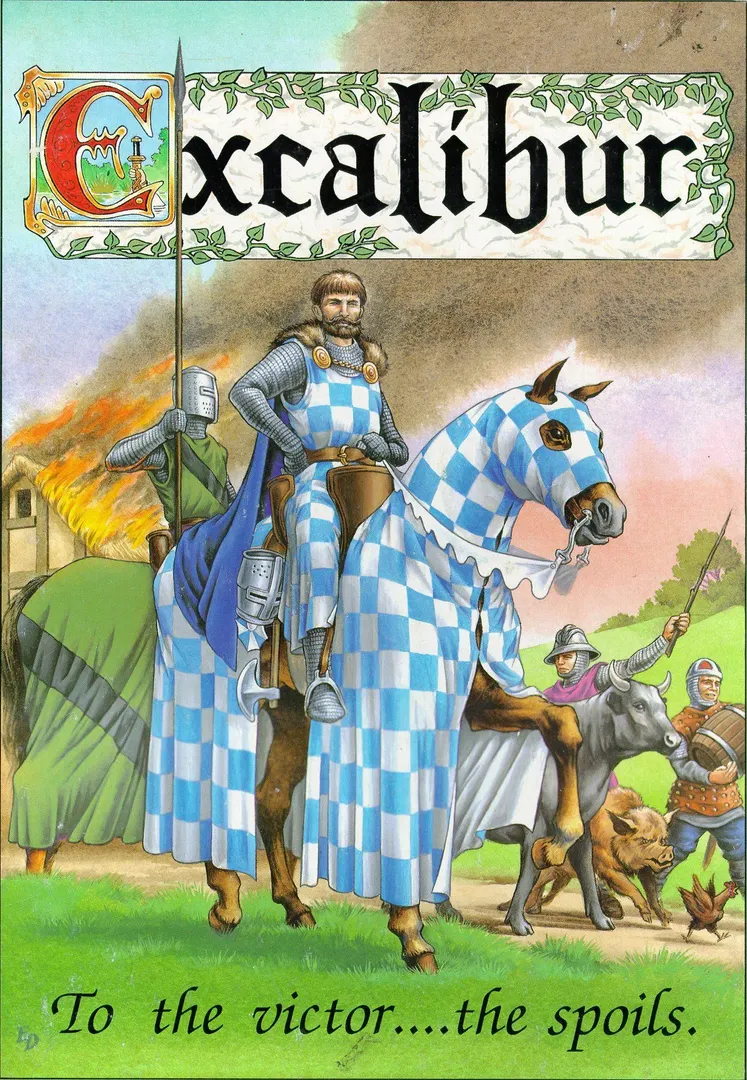
Excalibur is a board game released in 1989 for 2–6 players, 120 minutes per game, and ages 14 and up. It was designed by Julian Musgrave, Chris Courtiour, Richard Milner, Jamie Walker, and Dieter Schmidt and its main mechanics are Dice Rolling, Point to Point Movement, and Simultaneous Action Selection.



In Camelot every player plays one of the knights of the grail. King Artus sends them to the valley of Camelot to prove their ability to reign and become the lord of Britain. Each game turn is divided into 4 seasons. It starts with spring when everybody can either supervise the seed with his knights or move his knights and mercenaries to conquer new fiefs, fight the other players who might retreat in castles, then siege and loot the villages or one of the two monasteries in the valley. Movement is either simultaneous (in three phases) or secretly written down, depending on what the players agree. In summer and autumn it is the same but in autumn you have to be back at your own fields to supervise the harvest and make sure the farmers give all their grain to their master. Winter gives time to reorder the belongings and spend the gold earned over the year. You have to pay salaries for your men which improve their combat strength for experience, may hire new knights and mercenaries or concentrate on your economy. If you expand too fast without buying beehives, hire fishermen and foresters you won´t be able to maintain your landed properties. This is the time to build castles and mills as well. At the beginning of the next year a random event happens (such as plague, floods or robber barons coming to the valley). The optional rules add religion (you have to choose a religion and build churches or celtic stone circles) and honour, weather (which influences the harvest) and loyalty of your troops. Winner is the player who owns first 21 of the 40 fiefs or has the highest amount of honour after ten years of play (optional).
Excalibur supports 2–6 players according to the catalogue. This range comes from the publisher’s listed player count, so the game can be set up for any group size within it. Some setups, rules and scoring details may still vary by player count, so check your edition’s rulebook for the exact configuration.
The listed playing time for Excalibur is 120 minutes. This is the publisher’s estimate for a full game. The actual duration depends on the group, the player count and familiarity with the rules: first sessions usually run longer, while experienced groups often finish faster. Setup and teaching time are not included in this estimate.
The catalogue lists Excalibur for ages 14 and up. This is the publisher’s recommendation and reflects reading demands, rule complexity and small components rather than theme alone. Younger players can often join with help from an adult, so check the age guidance on your edition and consider your group’s experience with board games.
Excalibur has a complexity rating of 3.0 out of 5 from BoardGameGeek players, which makes it a medium-weight game. The rating reflects how much rules knowledge, planning and decision-making a typical game demands. Expect a longer first teach for heavier games, and use a preparation guide before game night.
Excalibur belongs to these categories: Fighting, Wargame, and Medieval. Its main mechanics are Dice Rolling, Point to Point Movement, and Simultaneous Action Selection. Categories describe the theme and setting of a game, while mechanics describe what players actually do on their turns. Each mechanic links to a catalogue hub with similar games, which helps when you want something comparable.
The credited designers of Excalibur are: Julian Musgrave, Chris Courtiour, Richard Milner, Jamie Walker, and Dieter Schmidt. These credits come from the published game data and name the people responsible for the game’s design, not its illustrators or publishers. Designer pages on MeepleRules collect other titles by the same designers, which helps when you enjoy a game and want to find similar ones.
The catalogue lists Excalibur as a base game. It can be played on its own with the components in the box and does not require any other title. Expansions, if any exist, add new content or rules on top of it and are listed separately in the catalogue with a link back to this base game.