- BGG rating
- 4.5
DDP Promodeck 2023
- 2023
2021
Rules assistance for Factory 42
Plain-language explanations of turns, card effects and disputed situations, with official source references and saved question history.
For 2 players
What would you like to know?
Answers come from the official rulebook, with the page to check.
Factory 42 is a board game released in 2021 for 2–5 players, 90–120 minutes per game, and ages 12 and up. It was designed by Ren Multamäki and its main mechanics are Negotiation, Worker Placement, and Semi-Cooperative Game.

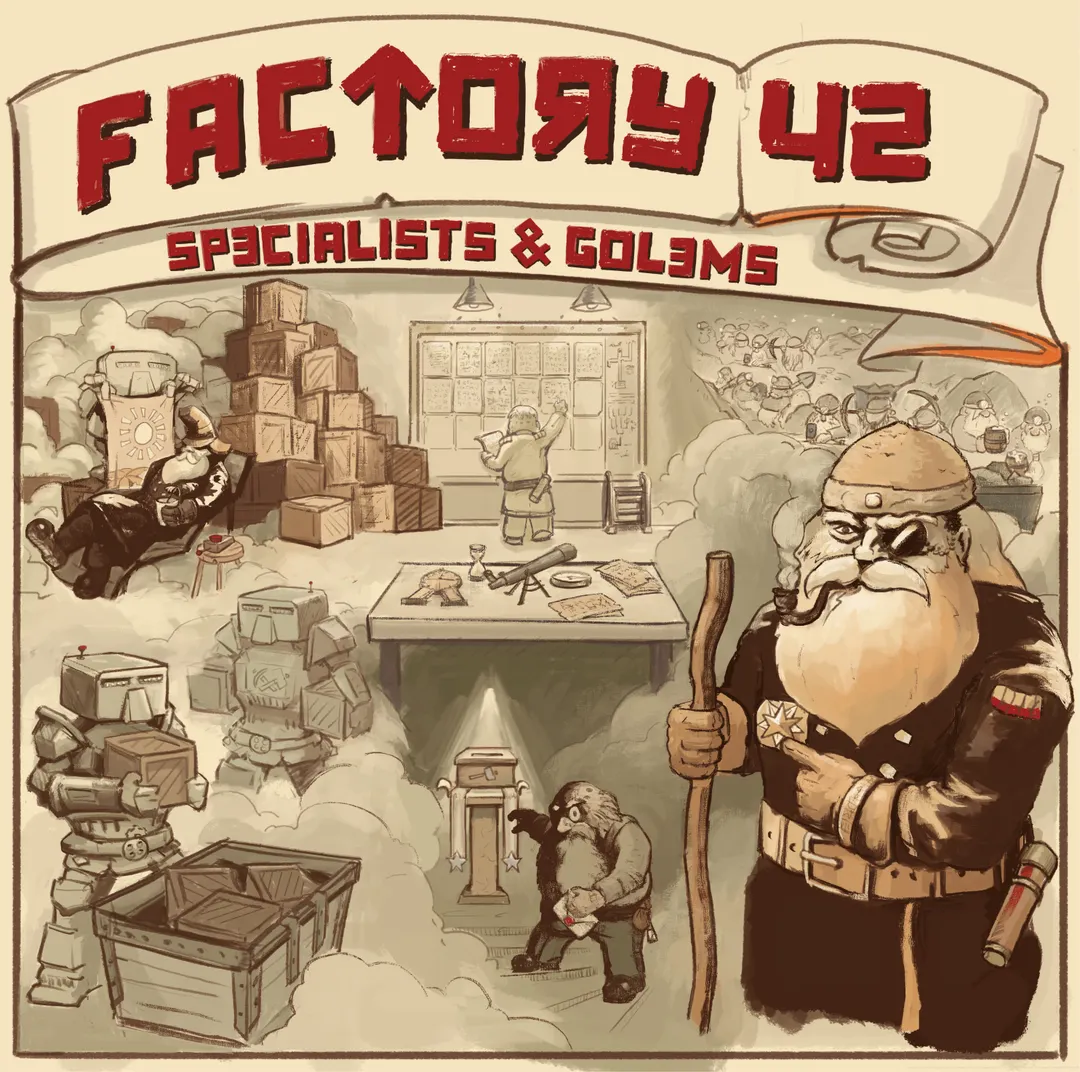
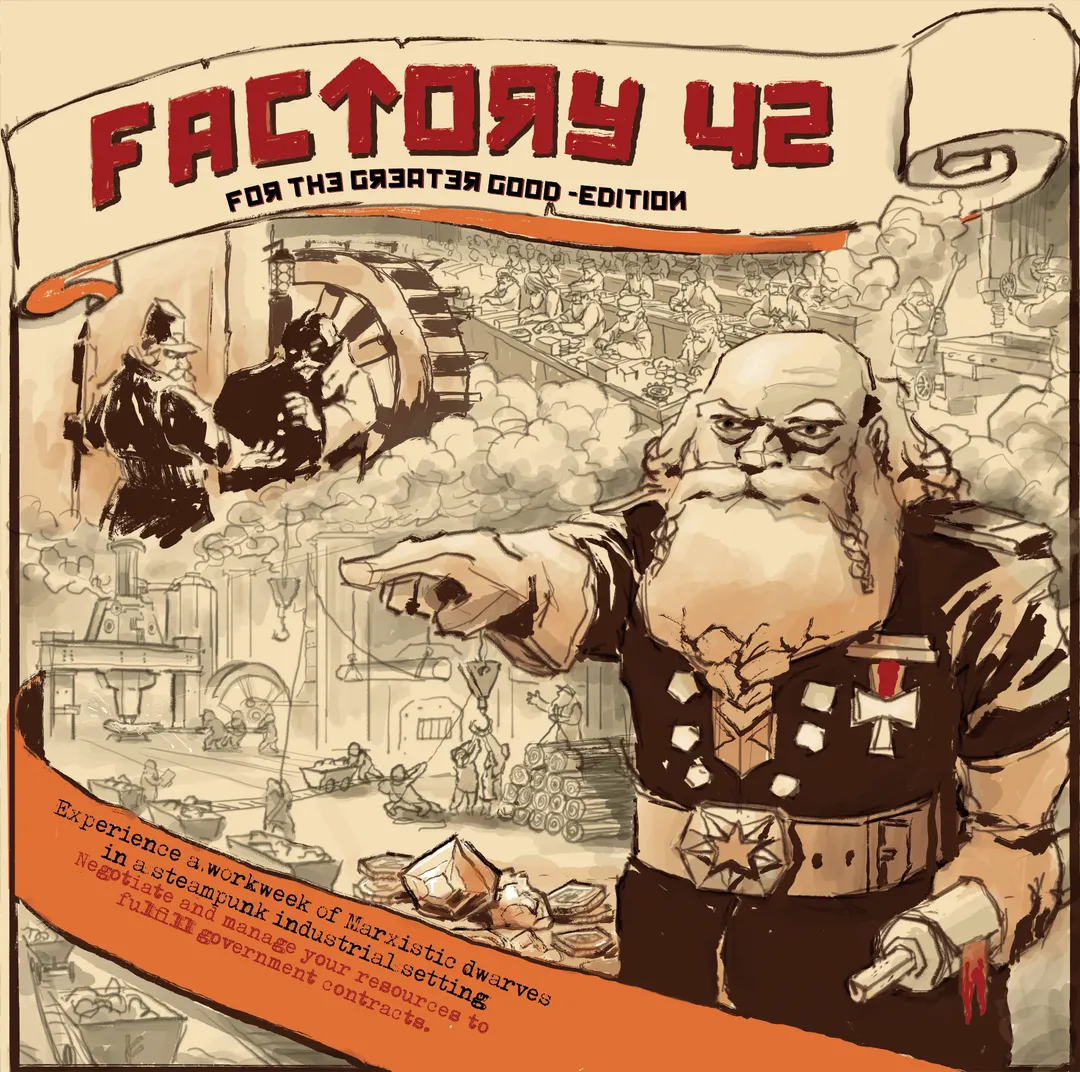
Factory 42 is a Euro-style board game for 2-5 players. The game tells the story of the workweek of Marxistic dwarves in a steampunk industrial setting, placing the player in the role of factory Overseers. It combines worker placement and a cube tower to create a resource management puzzle. Factory 42 is a cutthroat competitive game with elements of co-operation and deals involving Economics, Fantasy, Industry and Negotiation with a pinch of satire, but not too much to make it a Humor game. It satisfyingly blends two-fold tensions: camaraderie forged in shared goals, and the opportunistic trampling of temporary competition. A tight game of glancing blows and communal glory creating a wicked blend of sharp elbows and shared ambition. Visually, Factory 42 takes its influence from 1920’s Soviet Union propaganda, fantasy literature and elements of pre-WWI Prussian decor. The general process control at Factory 42 is as follows: Receive work orders/requisitions from the government Receive some of the requisitioned resources (as determined by the cube tower) Load resources (and spike additional resources) onto railcars Transfer the railcars to docks at individual manufacturing facilities Burn leftover resources to generate steam Trade resources on the open market Use steam and resources to manufacture requested items. Capricious Bureaucracy:* Resources made available to all players, making up a common pool, are delivered via the Bureaucracy Tower; a mechanic that can deliver or withhold resources in a random manner. This replicates the notion that “the powers that be” redirect funds/resources by tying them up in red tape, trapping resources that would otherwise normally be available for the general populace. What goes into the tower does not always come out, or may have been held up during some unknown bureaucratic process, to later materialize when least expected Requisition:* Tactical decisions start with the acquisition of resources vital to the production process. The order of worker meeples on the requisition line dictates the volume of resources acquired for the common pool (available to all) and the number that can be obtained and stored in a player’s personal warehouse. Choices made here can benefit a player’s future actions but may also unwittingly aid a rival, making each choice so very important. Loading:* Players can tactically direct their workers to the loading bays where resources are loaded onto lines of rail transport. Order here can be extremely vital to one’s success. Misjudging the order (or cunningly foreseeing the future) may lead a player to have to load a cart for a rival rather than for one’s self. Alliances may be made during this process, just as enemies can be made of rivals, depending on choices made when loading Shipping and Storage:* Once loaded, each rail cart proceeds to the shipping location awaiting direction. Workers have the option of forwarding on the loaded carts to player’s docks. Once more order of placement is paramount as carts are only shipped in order. A cart may not contain useful resources and so could be sent to a rival, taking up valuable storage space, or maybe it will benefit a rival in an attempt to build a verbally agreed alliance. Often a cart has been loaded with a wide variety of resources and only part of this precious load is of use. Limited storage space in player’s personal docks and warehouses dictates the shipping decision-making process as much as a rival’s needs Trade and Research:* Commodities may be traded on an ever changing market, often enabling an unnecessary resource to be exchanged at a price, for something of more use. Research is equally important, allowing players to expand storage facilities, improve material handling in the manufacturing process or even learn how to use Invention cards to add special actions/abilities during play Manufacture and Accounting:* The government dictate what should...no, what must be manufactured during a game round. The government orders must be completed or many, sometimes all players suffer sanctions. A degree of cooperation is needed here for the greater good of Dwarven society, but on an individual level, completion of a government order leads to reward and ultimately progression on the path to victory
Factory 42 supports 2–5 players according to the catalogue. This range comes from the publisher’s listed player count, so the game can be set up for any group size within it. Some setups, rules and scoring details may still vary by player count, so check your edition’s rulebook for the exact configuration.
The listed playing time for Factory 42 is 90–120 minutes. This is the publisher’s estimate for a full game. The actual duration depends on the group, the player count and familiarity with the rules: first sessions usually run longer, while experienced groups often finish faster. Setup and teaching time are not included in this estimate.
The catalogue lists Factory 42 for ages 12 and up. This is the publisher’s recommendation and reflects reading demands, rule complexity and small components rather than theme alone. Younger players can often join with help from an adult, so check the age guidance on your edition and consider your group’s experience with board games.
Factory 42 has a complexity rating of 3.6 out of 5 from BoardGameGeek players, which makes it a medium-weight game. The rating reflects how much rules knowledge, planning and decision-making a typical game demands. Expect a longer first teach for heavier games, and use a preparation guide before game night.
Factory 42 belongs to these categories: Fantasy and Industry / Manufacturing. Its main mechanics are Negotiation, Worker Placement, and Semi-Cooperative Game. Categories describe the theme and setting of a game, while mechanics describe what players actually do on their turns. Each mechanic links to a catalogue hub with similar games, which helps when you want something comparable.
The credited designers of Factory 42 are: Ren Multamäki. These credits come from the published game data and name the people responsible for the game’s design, not its illustrators or publishers. Designer pages on MeepleRules collect other titles by the same designers, which helps when you enjoy a game and want to find similar ones.
The catalogue lists Factory 42 as a base game. It can be played on its own with the components in the box and does not require any other title. Expansions, if any exist, add new content or rules on top of it and are listed separately in the catalogue with a link back to this base game.