- BGG rating
- 8.6
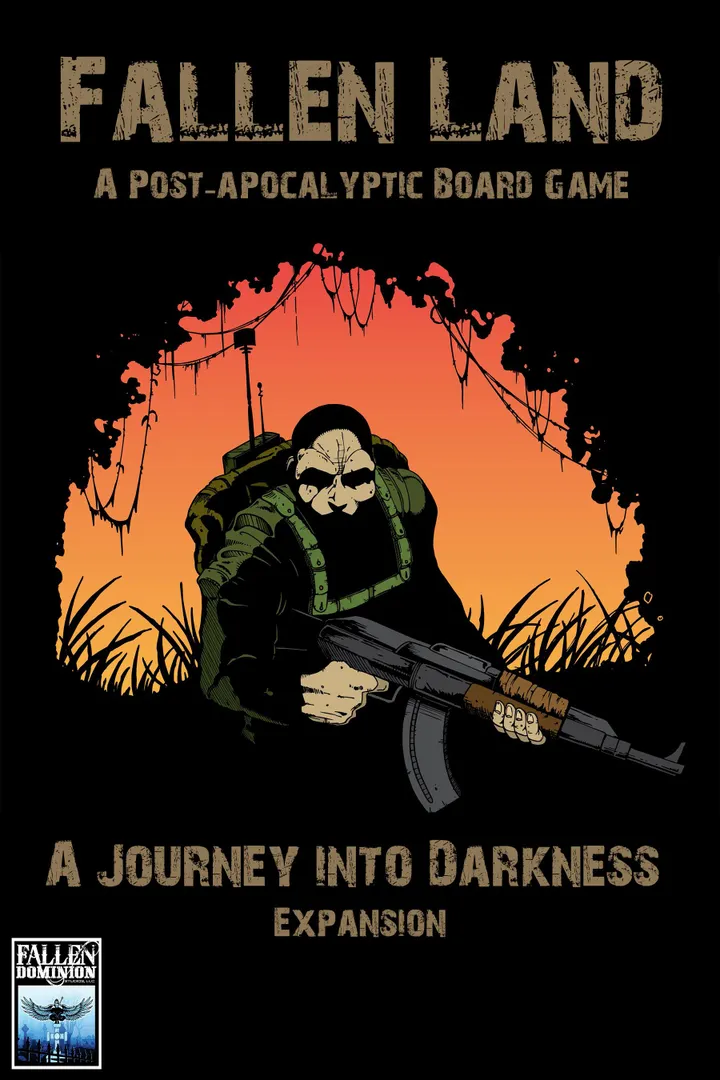
Fallen Land: A Journey into Darkness
- 1–6 players
- 60–360 min
- 2017
2017
Rules assistance for Fallen Land: A Post Apocalyptic Board Game
Plain-language explanations of turns, card effects and disputed situations, with official source references and saved question history.
For 2 players
What would you like to know?
Answers come from the official rulebook, with the page to check.
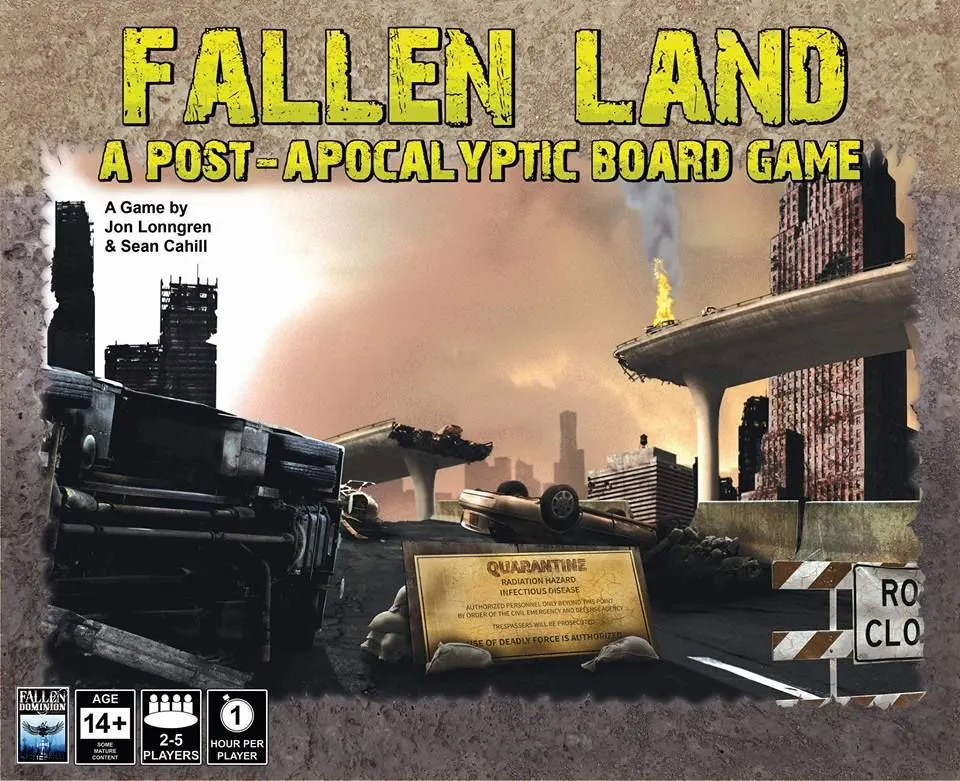
Fallen Land: A Post Apocalyptic Board Game is a board game released in 2017 for 2–5 players, 120–300 minutes per game, and ages 14 and up. It was designed by Sean Cahill and Jon Lonngren and its main mechanics are Variable Player Powers, Trading, and Area Movement.
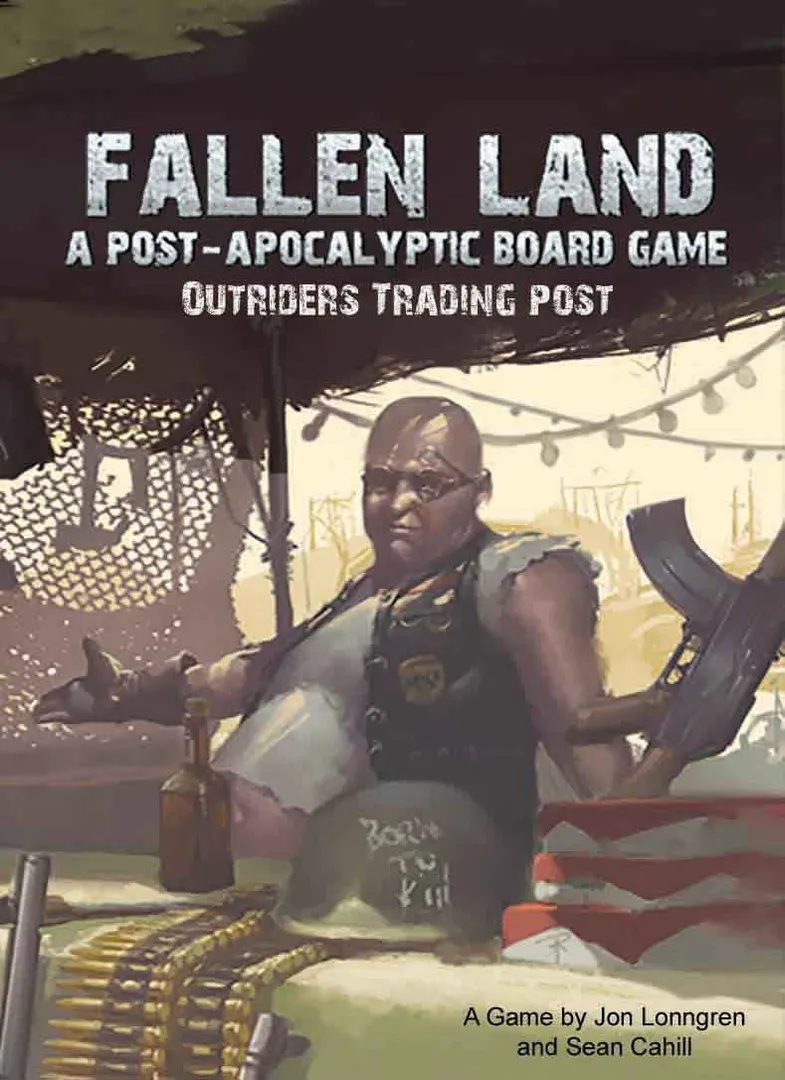
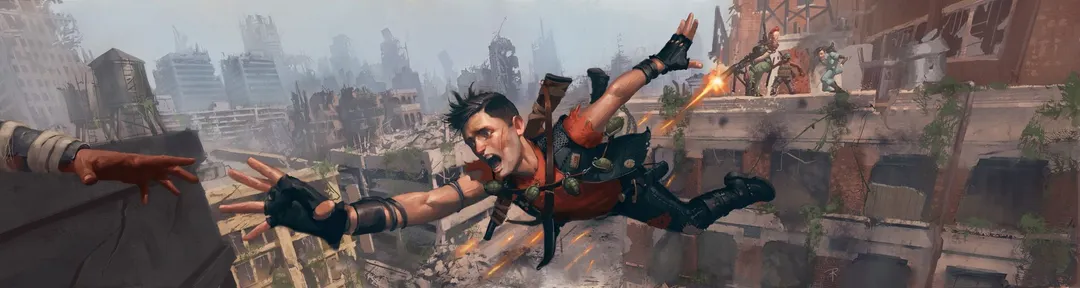
Set in a post-apocalyptic sci-fi setting, Fallen Land: A Post Apocalyptic Board Game is a hybrid game that combines the elements of a strategy board game, with card building and role-playing. It is driven by macabre stories of a world gone mad and features adventure, politics and economics to deliver an unlimited sandbox experience. Each game the variables change: cards, player interactions, stories, strategies and threats. While the game has a strong pulp influence, its roots stem from Cold War studies. We have expanded upon this research to arrive at our game’s premise: What would happen after a nuclear and biological apocalypse? Our answer is Fallen Land. As a player, you are the leader of a unique faction of survivors competing for primacy in the ruinous aftermath of post-apocalyptic America. You must manage and enhance your town, protect your citizens and secure resources. You will also have to make and break treaties to endure, amidst a myriad of bribery and betrayal by the other players. But that is just where the adventure begins! You must also direct your agents (a party of characters), to explore the rugged landscape, establish your territory and solidify your agenda. Game play is comprised of Turns. Each represents one month and is divided into Phases and Sub-Phases. The First Player resolves each Phase and Sub-Phase followed clockwise by the other players, before proceeding to the next Phase or Sub-Phase. A Turn is over when all players have had the opportunity to act or pass on each Phase. I. Effects Phase * 1.) Resolve. II. Town Business Phase * 1.) Deal. 2.) Resource Production. 3.) Auction House. 4.) Roll 1d10 on Town Events Chart. 5.) Financial period. ~Sell. ~Purchase. ~Hire (NPCMs). III. Party Exploits Phase * 1.) NPCMs move. 2.) Choose Party Exploits (4 weeks to spend). ~Movement, spend 1 week. ~Encounter, spend 1 week. ~PVP, spend 1 week. ~Resource, spend 2 weeks. ~Healing, spend 2 weeks. ~Mission, spend 3 weeks. IV. End Turn Phase * 1.) Adjust Turn Marker. 2.) Pass the First Player Sheet. Resolve an Action Card in each Phase or Sub-Phase as directed by the card. A player's town is simulated by a Town Play Mat. Players organize their owned Resources, inventory, Party Characters, excess Characters and movement bonuses here. In addition, Town Play Mats can be upgraded three different ways: Town Defense Chips, Town Technologies and Action Cards. The first two upgrades are available for purchase during the Town Business Phase. However, Action Cards are dealt at the beginning of each Turn and are also drawn as a reward. Players also manage their Party consisting of five Character Cards. Characters may be equipped with gear (Spoils Cards), to increase their Base Skills. A party can move around the map, draw Encounter and Mission cards (stories) which contain Skill Checks (challenges) and even attack another player's Party in PVP. Dice are rolled for these many "deeds" to determine the outcome. There are seven decks of cards. These are drawn and played throughout the game. Some are stories, such as Encounter and Mission Cards, Characters are a Faction's agents, and Spoils are equipment/vehicle/gear. Lastly, Action Cards modify the story and/or game play. To win, one of two Victory Conditions is necessary, either 20 Prestige or 80 Town Health. Prestige represents your reputation as a leader, while Town Health represents your town’s prosperity and number of its citizens. Both conditions are marked on their respective Victory Tracks bordering the map. Adventure and intrigue await! We hope you have the opportunity to play Fallen Land and that you enjoy playing it as much as we have enjoyed creating it for you.
Fallen Land: A Post Apocalyptic Board Game supports 2–5 players according to the catalogue. This range comes from the publisher’s listed player count, so the game can be set up for any group size within it. Some setups, rules and scoring details may still vary by player count, so check your edition’s rulebook for the exact configuration.
The listed playing time for Fallen Land: A Post Apocalyptic Board Game is 120–300 minutes. This is the publisher’s estimate for a full game. The actual duration depends on the group, the player count and familiarity with the rules: first sessions usually run longer, while experienced groups often finish faster. Setup and teaching time are not included in this estimate.
The catalogue lists Fallen Land: A Post Apocalyptic Board Game for ages 14 and up. This is the publisher’s recommendation and reflects reading demands, rule complexity and small components rather than theme alone. Younger players can often join with help from an adult, so check the age guidance on your edition and consider your group’s experience with board games.
Fallen Land: A Post Apocalyptic Board Game has a complexity rating of 3.7 out of 5 from BoardGameGeek players, which makes it a medium-weight game. The rating reflects how much rules knowledge, planning and decision-making a typical game demands. Expect a longer first teach for heavier games, and use a preparation guide before game night.
Fallen Land: A Post Apocalyptic Board Game belongs to these categories: Card Game, Economic, and Adventure. Its main mechanics are Variable Player Powers, Trading, and Area Movement. Categories describe the theme and setting of a game, while mechanics describe what players actually do on their turns. Each mechanic links to a catalogue hub with similar games, which helps when you want something comparable.
The credited designers of Fallen Land: A Post Apocalyptic Board Game are: Sean Cahill and Jon Lonngren. These credits come from the published game data and name the people responsible for the game’s design, not its illustrators or publishers. Designer pages on MeepleRules collect other titles by the same designers, which helps when you enjoy a game and want to find similar ones.
The catalogue lists Fallen Land: A Post Apocalyptic Board Game as a base game. It can be played on its own with the components in the box and does not require any other title. Expansions, if any exist, add new content or rules on top of it and are listed separately in the catalogue with a link back to this base game.