

- BGG rank
- BGG #15,568
- BGG rating
- 7.4
Heart of Oak: Naval Miniatures Rules for the Age of Fighting Sail
- 2 players
- 90 min
- Complexity 3.7/5
- 1978
2015
Rules assistance for Fighting Sail: Fleet Actions 1775–1815
Plain-language explanations of turns, card effects and disputed situations, with official source references and saved question history.
What would you like to know?
Answers come from the official rulebook, with the page to check.
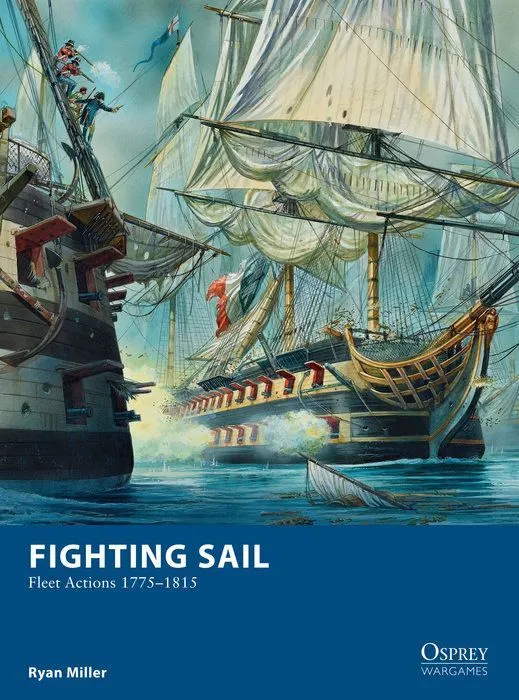
Fighting Sail: Fleet Actions 1775–1815 is a board game released in 2015. It was designed by Ryan Miller and its main mechanics are Dice Rolling and Simulation.




Fighting Sail: Fleet Actions 1775–1815 is a tabletop miniatures wargame of fleet battles in the age of canvas, cannon, and timbers. Players take on the roles of fleet admirals in battles ranging from the American War of Independence to the Napoleonic Wars and the War of 1812. Each fleet has access to different ships, tactics, and command personalities - each with its own strengths and weaknesses. Offering a unique blend of detail and simplicity, the scenarios included enable the recreation of historic actions or 'what-if' scenarios. The rules are designed for 1/1200 scale ship miniatures, although they can be easily adjusted for smaller scales. Game focus is on ships of 6th Rate or above. The game is hex-less, so uses movement and turning templates along with a tape measure or ruler. Combat and other tests utilize a pool of six-sided dice. Fighting Sail was designed with a crew-centric approach and has a goal of immersion over simulation. To perform actions players roll a number of dice based on crew and ship capability to test against a target number. More successes return a better result (more movement, more hits in combat, more damage saves, etc.). The goal of the game is to break the enemy fleet by reducing their morale to zero. Morale can be lost by taking damage, suffering a collision, or when a ship is taken out of action (by striking, being sunk, or captured in a boarding action). The Fighting Sail rules include a points-based system for building fleets and balancing scenarios. The ship/crew capabilities and special rules for eight fleets are detailed in the book (including privateers and pirates). Six general engagement scenarios are described to get prospective admirals started on their journey into the adventurous age of fighting sail.
Fighting Sail: Fleet Actions 1775–1815 has a complexity rating of 1.3 out of 5 from BoardGameGeek players, which makes it a light game. The rating reflects how much rules knowledge, planning and decision-making a typical game demands. Expect a longer first teach for heavier games, and use a preparation guide before game night.
Fighting Sail: Fleet Actions 1775–1815 belongs to these categories: Wargame, Dice, and Napoleonic. Its main mechanics are Dice Rolling and Simulation. Categories describe the theme and setting of a game, while mechanics describe what players actually do on their turns. Each mechanic links to a catalogue hub with similar games, which helps when you want something comparable.
The credited designers of Fighting Sail: Fleet Actions 1775–1815 are: Ryan Miller. These credits come from the published game data and name the people responsible for the game’s design, not its illustrators or publishers. Designer pages on MeepleRules collect other titles by the same designers, which helps when you enjoy a game and want to find similar ones.
The catalogue lists Fighting Sail: Fleet Actions 1775–1815 as a base game. It can be played on its own with the components in the box and does not require any other title. Expansions, if any exist, add new content or rules on top of it and are listed separately in the catalogue with a link back to this base game.