
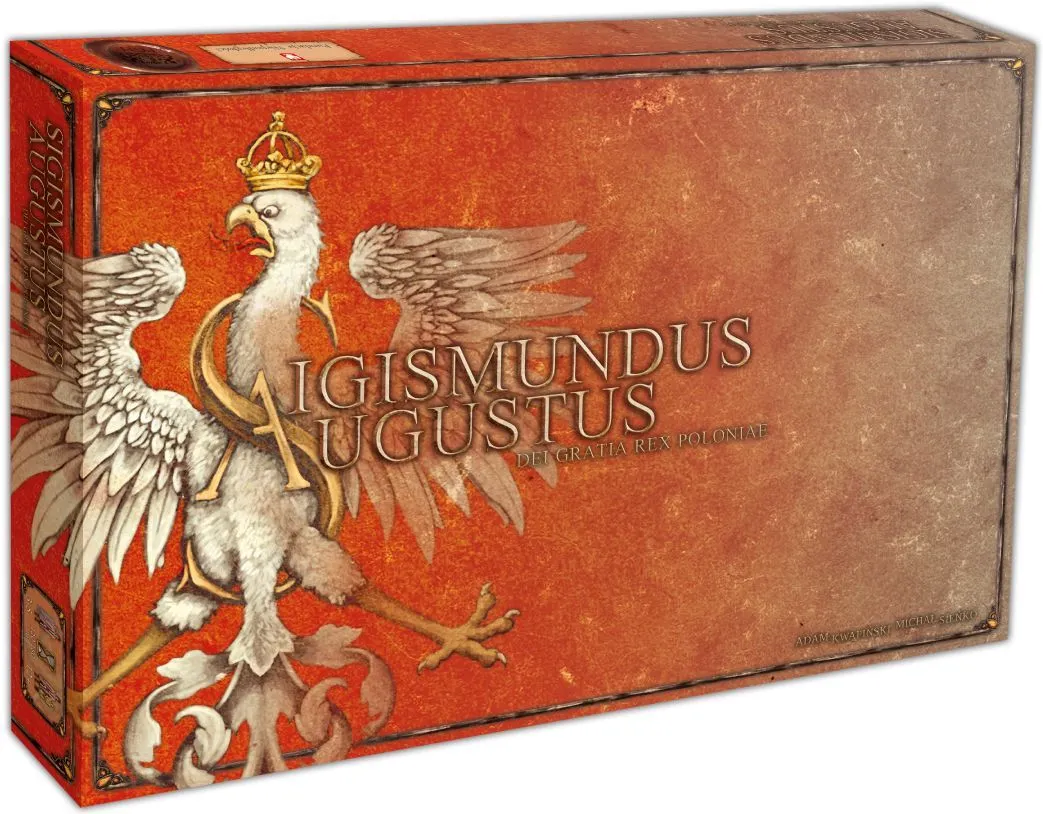
- BGG rank
- BGG #8,723
- BGG rating
- 7.1
Sigismundus Augustus: Dei gratia rex Poloniae
- 3–5 players
- 120 min
- Complexity 3.9/5
- 2012
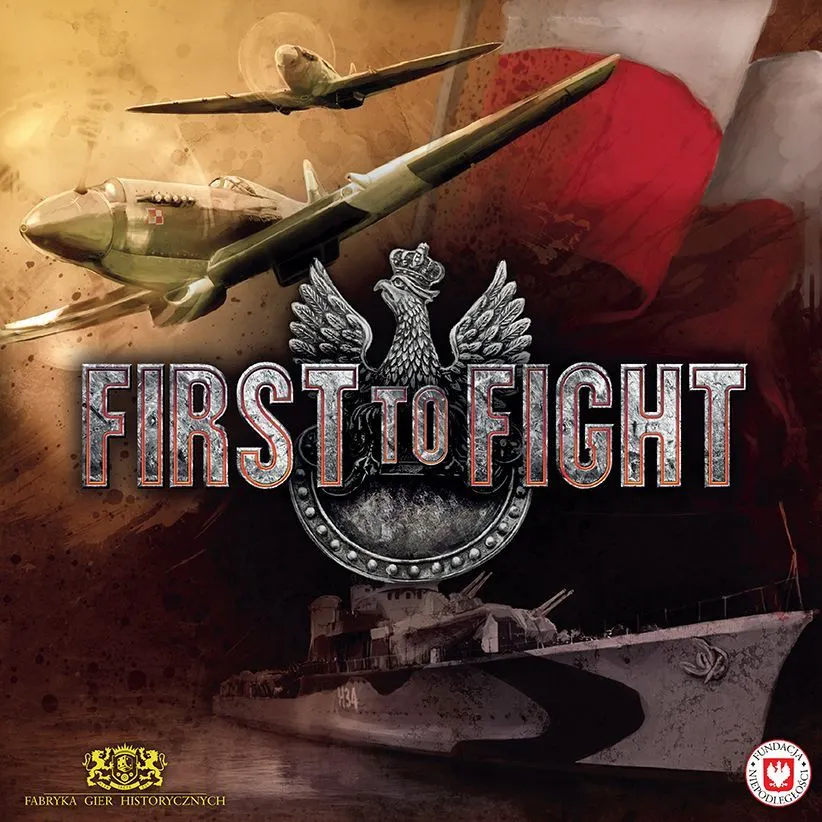
2014
Rules assistance for First to Fight
Plain-language explanations of turns, card effects and disputed situations, with official source references and saved question history.
For 2 players
What would you like to know?
Answers come from the official rulebook, with the page to check.
First to Fight is a board game released in 2014 for 2–4 players, 60 minutes per game, and ages 10 and up. It was designed by Adam Kwapiński and Michał Sieńko and its main mechanics are Dice Rolling, Point to Point Movement, and Open Drafting.

The title of First to Fight refers to the famous slogan and poster distributed in European countries after Poland was the first country to be attacked by Germany in September 1939. This game, released by Fabryka Gier Historycznych (Historical Games Factory)in cooperation with Fundacja Niepodległości (Foundation for Independence), takes place throughout the entirety of World War II, with the players taking the roles of commanders of the Polish forces that are fighting on numerous fronts: Eastern and Western Europe, Africa, etc. By allocating their troops in different regions of the world, they aim to carry out missions (including the most famous battles of WW2) and earn victory points (VPs). The players do not "own" or control the soldiers, which are represented by neutral cards, moved by the players around the board, and activated only when it is the time to play a mission card in a given region; that said, their particular specialization may increase a player's chance to win a mission. The player with the most VPs at the end of the War (May 1945) wins. The game presents true historical characters, events and places. First to Fight shows the scale of various activities that took place during the war – but it is not a wargame. Over its 40-70 minute playing time, a player will get to know many people and places that played an important role in achieving the victory over Germany. Among the soldiers to command, you can find Antoni Chruściel ps. Monter, August Emil Fieldorf ps. Nil, Jan Kozielewski ps. Jan Karski, Zdzisław Jeziorański ps. Jan Nowak, Stanisław Maczek ps. Baca, Jan Piwnik ps. Ponury, Zofia Rapp-Kochańska ps. Marie Springer, Stanisław Skalski, Elżbieta Zawacka ps. Zo, Witold Urbanowicz ps. Kobra. In order to win the game, you will have to train your soldiers and send them to various fronts – from the cold regions of Northern Europe, through the sun-baked deserts of Northern Africa and peaceful (only in theory!) Western Europe, to Warsaw, always fighting to the last bullet and the last soldier! All characters and events presented in the game were real.
First to Fight supports 2–4 players according to the catalogue. This range comes from the publisher’s listed player count, so the game can be set up for any group size within it. Some setups, rules and scoring details may still vary by player count, so check your edition’s rulebook for the exact configuration.
The listed playing time for First to Fight is 60 minutes. This is the publisher’s estimate for a full game. The actual duration depends on the group, the player count and familiarity with the rules: first sessions usually run longer, while experienced groups often finish faster. Setup and teaching time are not included in this estimate.
The catalogue lists First to Fight for ages 10 and up. This is the publisher’s recommendation and reflects reading demands, rule complexity and small components rather than theme alone. Younger players can often join with help from an adult, so check the age guidance on your edition and consider your group’s experience with board games.
First to Fight has a complexity rating of 2.5 out of 5 from BoardGameGeek players, which makes it a medium-light game. The rating reflects how much rules knowledge, planning and decision-making a typical game demands. Expect a longer first teach for heavier games, and use a preparation guide before game night.
First to Fight belongs to these categories: Wargame, Educational, and World War II. Its main mechanics are Dice Rolling, Point to Point Movement, and Open Drafting. Categories describe the theme and setting of a game, while mechanics describe what players actually do on their turns. Each mechanic links to a catalogue hub with similar games, which helps when you want something comparable.
The credited designers of First to Fight are: Adam Kwapiński and Michał Sieńko. These credits come from the published game data and name the people responsible for the game’s design, not its illustrators or publishers. Designer pages on MeepleRules collect other titles by the same designers, which helps when you enjoy a game and want to find similar ones.
The catalogue lists First to Fight as a base game. It can be played on its own with the components in the box and does not require any other title. Expansions, if any exist, add new content or rules on top of it and are listed separately in the catalogue with a link back to this base game.