
- BGG rank
- BGG #2,135
- BGG rating
- 7.6
Renegade
- 1–5 players
- 90 min
- Complexity 3.7/5
- 2018
2027
Rules assistance for Fjordar
Plain-language explanations of turns, card effects and disputed situations, with official source references and saved question history.
For 1 player
What would you like to know?
Answers come from the official rulebook, with the page to check.
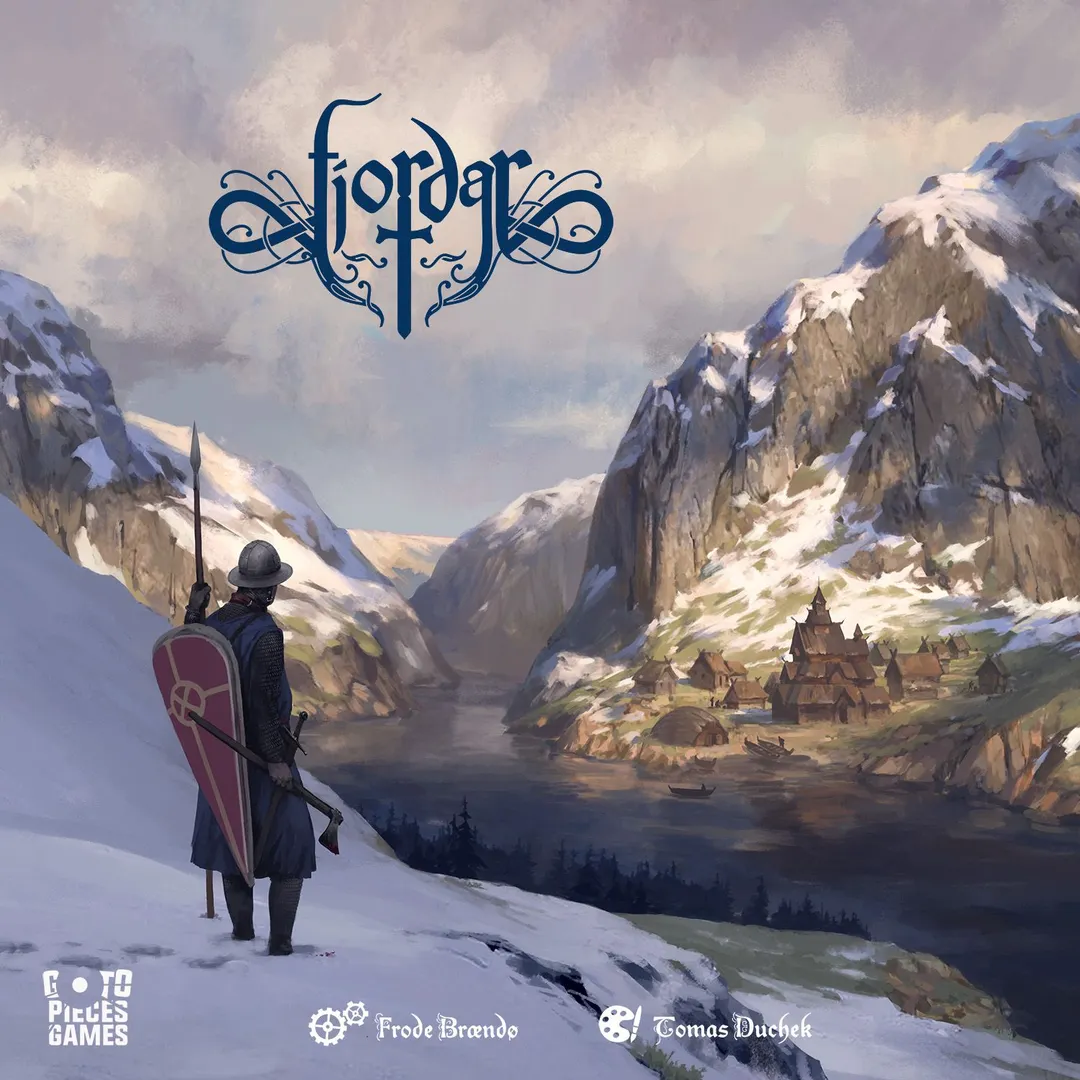
Fjordar is a board game released in 2027 for 1–4 players, 40–120 minutes per game, and ages 14 and up. It was designed by Frode Brændø and its main mechanics are Push Your Luck, Area Majority / Influence, and Modular Board.

Fjordar is an epic, tactical strategy game for 1 to 4 players, set during the Norwegian Civil War. The game begins in the year 1130, when the old king Sigurd Jorsalfar dies. Each player begins the game as one of Sigurd's heirs or one of the other influential people in Norway at the time, who is vying for power in the vacuum left by the old king's death. As the game progresses through the 110 years of the conflict, players will use their heirs that are spread around the board to either strengthen their influence through marriage, or to continue the fight for control over Norway. By gaining glory in combat you can also attract famous warriors to your cause. The game is played on a modular, semi-abstract, three dimensional board with a typical Norwegian coastal landscape, with mountains, fjords and islands, without being a map of Norway. Since the board is modular, players can set up the board in a new way each time they play, giving them the possibility for endless variety. A player's turn in Fjordar typically goes like this: You play a card with movement points and various abilities, and use the movement points to move your units and establish supplylines. If you have moved one or more of your units into an area with enemy soldiers, you and the other player resolve combat by each choosing a combat card in secret and reveal them simultaneously, with the combat cards adding extra strength to your units' base strength. What combat card is the most effective is highly dependent on each situation. You may then use your units to perform various actions at the different locations on the board. In forests you can build new ships, churches and villages. In villages you can muster troops and collect taxes, while in the castles you can marry away your heirs or bring them home to your own castle along your supplylines. Some of the effects on previously played movement cards and combat cards also carry over to your later turns, which means that through proper planning, and adding the right persons to your cause, you can build up to some very effective turns later in the game. Points are scored for building new stave churches, burning stave churches, founding new villages, igniting beacons and moving your heirs between castles. The game is over when a player has reached a certain number of points, whereupon there is a final score count where you may score extra points depending on how much glory you have gained in battle and what families you have connected to through marriage. —description from the designer
Fjordar supports 1–4 players according to the catalogue. This range comes from the publisher’s listed player count, so the game can be set up for any group size within it. Some setups, rules and scoring details may still vary by player count, so check your edition’s rulebook for the exact configuration.
The listed playing time for Fjordar is 40–120 minutes. This is the publisher’s estimate for a full game. The actual duration depends on the group, the player count and familiarity with the rules: first sessions usually run longer, while experienced groups often finish faster. Setup and teaching time are not included in this estimate.
The catalogue lists Fjordar for ages 14 and up. This is the publisher’s recommendation and reflects reading demands, rule complexity and small components rather than theme alone. Younger players can often join with help from an adult, so check the age guidance on your edition and consider your group’s experience with board games.
Fjordar has a complexity rating of 3.0 out of 5 from BoardGameGeek players, which makes it a medium-weight game. The rating reflects how much rules knowledge, planning and decision-making a typical game demands. Expect a longer first teach for heavier games, and use a preparation guide before game night.
Fjordar belongs to these categories: Wargame, Medieval, and Civil War. Its main mechanics are Push Your Luck, Area Majority / Influence, and Modular Board. Categories describe the theme and setting of a game, while mechanics describe what players actually do on their turns. Each mechanic links to a catalogue hub with similar games, which helps when you want something comparable.
The credited designers of Fjordar are: Frode Brændø. These credits come from the published game data and name the people responsible for the game’s design, not its illustrators or publishers. Designer pages on MeepleRules collect other titles by the same designers, which helps when you enjoy a game and want to find similar ones.
The catalogue lists Fjordar as a base game. It can be played on its own with the components in the box and does not require any other title. Expansions, if any exist, add new content or rules on top of it and are listed separately in the catalogue with a link back to this base game.