
- BGG rank
- BGG #874
- BGG rating
- 6.9
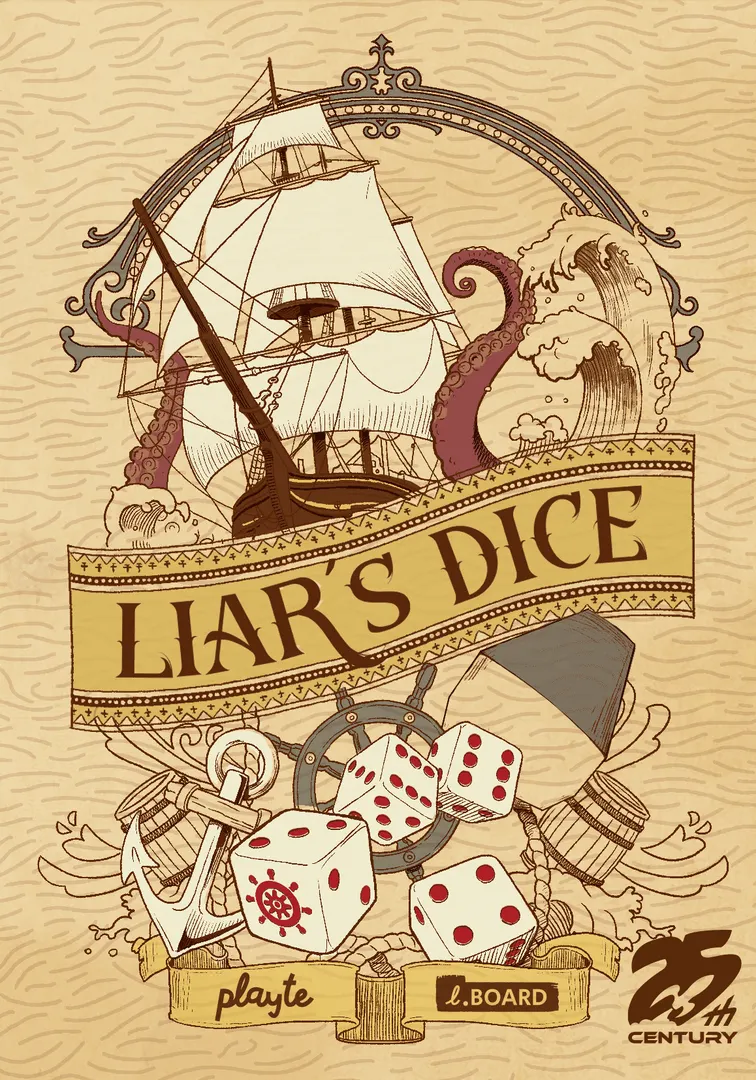
Liar's Dice
- 2–10 players
- 15–30 min
- Complexity 1.3/5
- 1800
2018
Rules assistance for Fluff
Plain-language explanations of turns, card effects and disputed situations, with official source references and saved question history.
For 2 players
What would you like to know?
Answers come from the official rulebook, with the page to check.
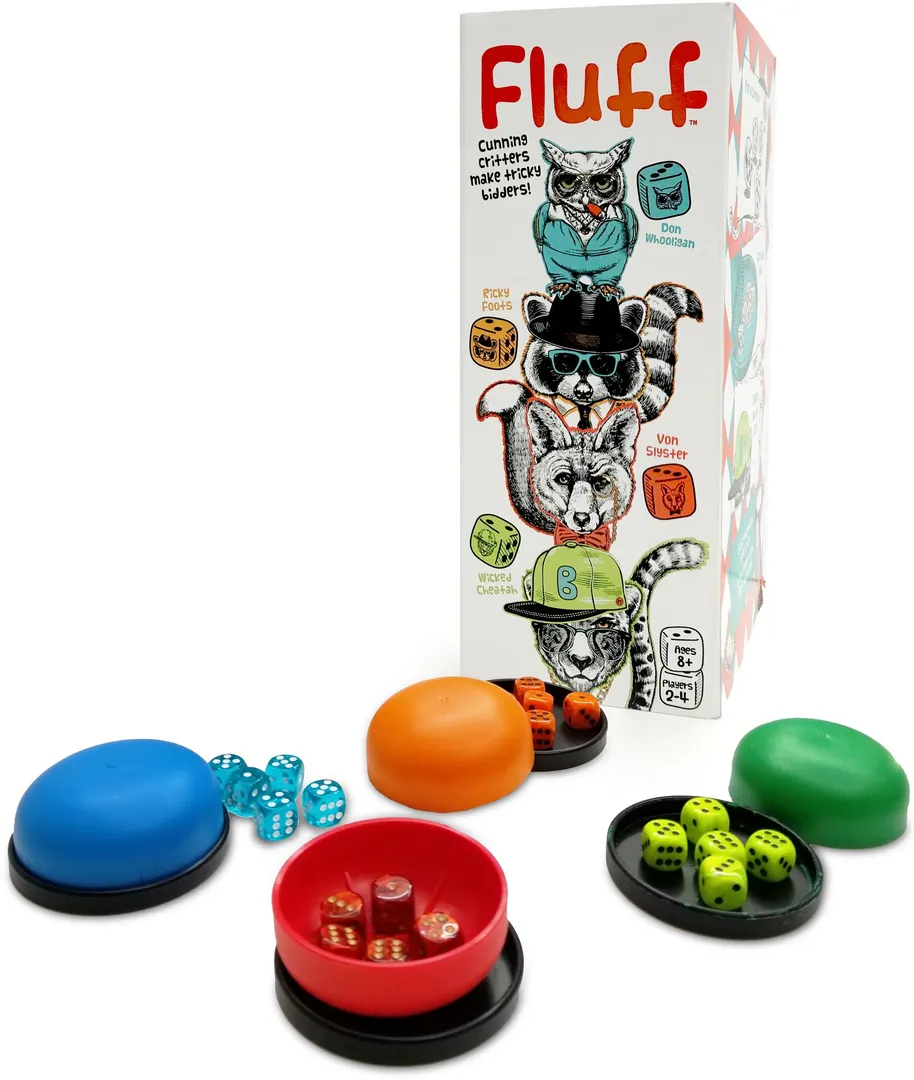
Fluff is a board game released in 2018 for 2–4 players, 20–30 minutes per game, and ages 8 and up. Its main mechanics are Player Elimination, Dice Rolling, and Betting and Bluffing.



Clever and crafty, this liar's dice experience is an evolution on the classic bluffing game. Fluff features palm-fitted rolling cups for poker-style peeking, and critter-adorned dice for "wild-style" play to inspire bolder bidding. Fluff up the bids, or challenge the calls. Be the best fluffer to outlast the other cast of characters. Each player places dice in their cup and gives them a good shake. Take a peek at the dice. Your goal is to "call" the total number of a particular dice across all the hands at the table. So the first player places a bid, such as "I think there are 4 threes across all hands." Player to the left increases the bid or calls. You can only raise the value of the last bid by either increasing the value or quantity. So if I'm the next player, I can say 5 THREES, or keep the quantity the same and raise the value to 4 FOURS. Your other option is to call "Fluff!" on the existing bid. Say I bid "9 FIVES" and you have no fives. You might think I'm bananas, so you call "Fluff!" All players reveal their dice. If there are 9 FIVES or more, you would lose a die. If there are fewer than 9 FIVES, I lose a die, and I'm sad. You may also call "Fluff!" when it's not your turn, but you will lose two dice if you're wrong and the bidder still loses only 1 if you're right. It's risky and frisky! When you lose a die, set it aside for all to see, and start fresh with a new roll. The person who lost the die starts the next round with the opening bid. When you lose your last die, you're out. Now you're sad, too. Play continues until only one player has dice left. That player wins and may celebrate in any way they choose. So be the best fluffer to outlast the other cast of characters.
Fluff supports 2–4 players according to the catalogue. This range comes from the publisher’s listed player count, so the game can be set up for any group size within it. Some setups, rules and scoring details may still vary by player count, so check your edition’s rulebook for the exact configuration.
The listed playing time for Fluff is 20–30 minutes. This is the publisher’s estimate for a full game. The actual duration depends on the group, the player count and familiarity with the rules: first sessions usually run longer, while experienced groups often finish faster. Setup and teaching time are not included in this estimate.
The catalogue lists Fluff for ages 8 and up. This is the publisher’s recommendation and reflects reading demands, rule complexity and small components rather than theme alone. Younger players can often join with help from an adult, so check the age guidance on your edition and consider your group’s experience with board games.
Fluff has a complexity rating of 1.3 out of 5 from BoardGameGeek players, which makes it a light game. The rating reflects how much rules knowledge, planning and decision-making a typical game demands. Expect a longer first teach for heavier games, and use a preparation guide before game night.
Fluff belongs to these categories: Party Game, Dice, and Bluffing. Its main mechanics are Player Elimination, Dice Rolling, and Betting and Bluffing. Categories describe the theme and setting of a game, while mechanics describe what players actually do on their turns. Each mechanic links to a catalogue hub with similar games, which helps when you want something comparable.
The catalogue lists Fluff as a base game. It can be played on its own with the components in the box and does not require any other title. Expansions, if any exist, add new content or rules on top of it and are listed separately in the catalogue with a link back to this base game.