
- BGG rank
- BGG #487
- BGG rating
- 7.3
The Pillars of the Earth
- 2–4 players
- 90–120 min
- Complexity 2.8/5
- 2006
2011
Rules assistance for Fortuna
Plain-language explanations of turns, card effects and disputed situations, with official source references and saved question history.
For 2 players
What would you like to know?
Answers come from the official rulebook, with the page to check.
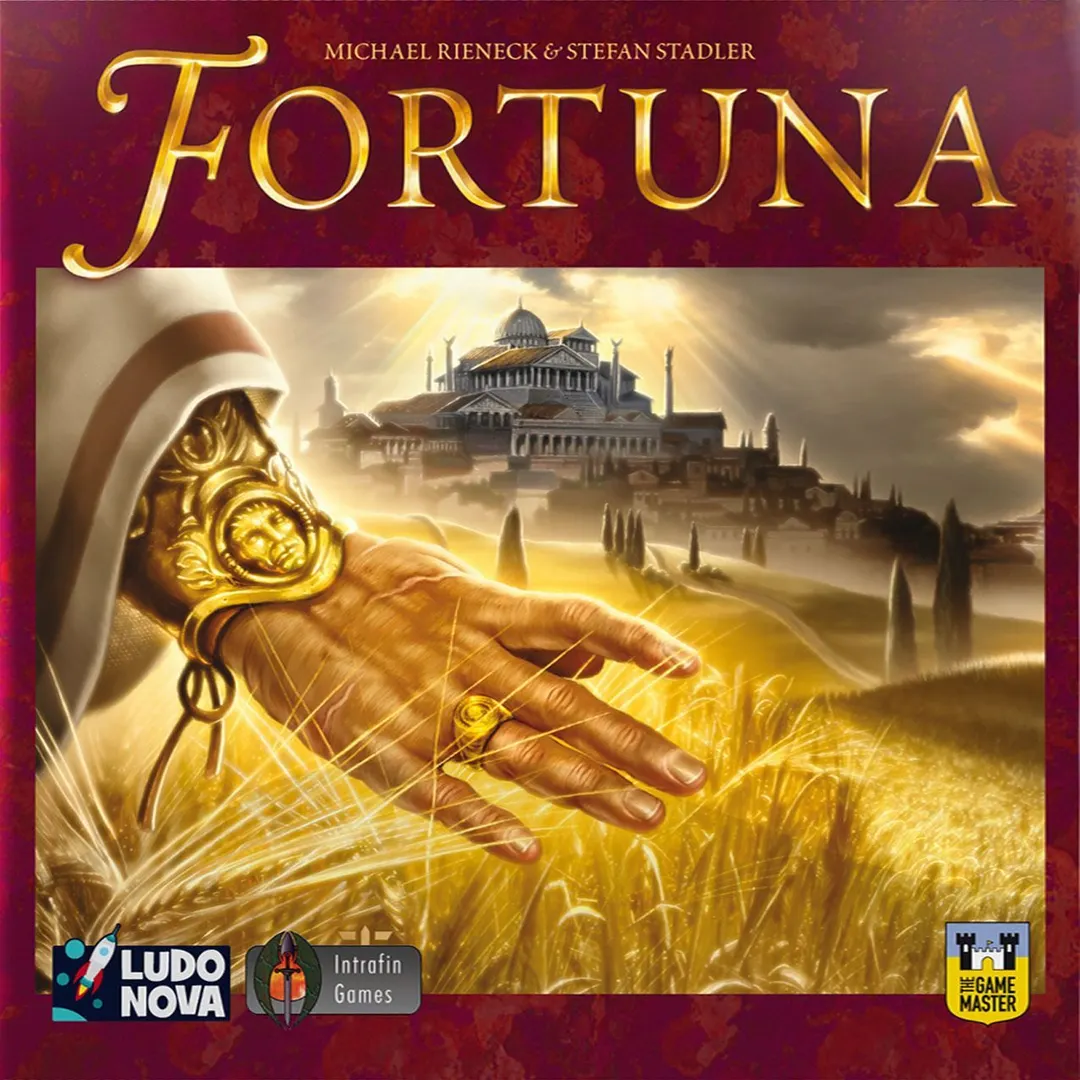
Fortuna is a board game released in 2011 for 2–4 players, 60 minutes per game, and ages 10 and up. It was designed by Michael Rieneck and Stefan Stadler and its main mechanics are Hand Management, Dice Rolling, and Point to Point Movement.


Fortuna is situated in the Roman Empire, during Caesar's reign. The players are ambitious Romans striving for influence in the Roman Empire. While striving for power, happiness and wealth, they leave their own village and travel towards the City of Rome. The road to Rome is long and there are many ways to reach your life purpose. As a hardworking farmer you can work the land and grow large quantities of grain and wine. A clever farmer irrigates the land to improve the yield of his harvest. Trading your harvested goods for the best price may bring you the means to move up the ladder of the Roman hierarchy. When will you decide to move on and buy yourself an army of Centurions? Or will you choose the sacred way of Religion and serve the ruthless Roman Gods? Along the way, you will have the opportunity to find happiness and wealth in marriage. Will you take this chance to become happy or not? If you contribute well to the Roman Empire, you will grow in the favor of the Emperor and move further to Rome. Will the citizens of Rome welcome you jubilantly? Coming nearer to Rome and the Emperor's Palace the tension in the game becomes higher. Which of the players has contributed most to the Empire? And which of the players has saved the city in times of crisis? Just when water and food supplies become exhausted or Centurions are needed to protect Rome against a hostile invasion, only the most prestigious Romans show their courage and value. The Emperor will reward this Roman with golden Fortuna coins, and the deeper the crisis, the richer the reward. When a player has reached the centre of Rome, only the player who has done most for the Emperor and the People of Rome will become Victorious. Make sure to be in the City of Rome so you are able to take that triumphal march to Victory! How to win the game? The player with the highest number of Victory Points at the end of the game wins. The game ends when one player gets to the Center of Rome (the Palace of the Emperor), then this final round is completed. Scoring in the game is partly based on the number of steps you have made towards Rome = each step is one VP. The other Victory Points are scored by collecting the right combination of privilege cards and resources. The VP scored with the privately held privilege cards stays a secret till the end of the game when the total scoring is revealed.
Fortuna supports 2–4 players according to the catalogue. This range comes from the publisher’s listed player count, so the game can be set up for any group size within it. Some setups, rules and scoring details may still vary by player count, so check your edition’s rulebook for the exact configuration.
The listed playing time for Fortuna is 60 minutes. This is the publisher’s estimate for a full game. The actual duration depends on the group, the player count and familiarity with the rules: first sessions usually run longer, while experienced groups often finish faster. Setup and teaching time are not included in this estimate.
The catalogue lists Fortuna for ages 10 and up. This is the publisher’s recommendation and reflects reading demands, rule complexity and small components rather than theme alone. Younger players can often join with help from an adult, so check the age guidance on your edition and consider your group’s experience with board games.
Fortuna has a complexity rating of 2.4 out of 5 from BoardGameGeek players, which makes it a medium-light game. The rating reflects how much rules knowledge, planning and decision-making a typical game demands. Expect a longer first teach for heavier games, and use a preparation guide before game night.
Fortuna belongs to these categories: Ancient. Its main mechanics are Hand Management, Dice Rolling, and Point to Point Movement. Categories describe the theme and setting of a game, while mechanics describe what players actually do on their turns. Each mechanic links to a catalogue hub with similar games, which helps when you want something comparable.
The credited designers of Fortuna are: Michael Rieneck and Stefan Stadler. These credits come from the published game data and name the people responsible for the game’s design, not its illustrators or publishers. Designer pages on MeepleRules collect other titles by the same designers, which helps when you enjoy a game and want to find similar ones.
The catalogue lists Fortuna as a base game. It can be played on its own with the components in the box and does not require any other title. Expansions, if any exist, add new content or rules on top of it and are listed separately in the catalogue with a link back to this base game.