
- BGG rank
- BGG #15,287
- BGG rating
- 7.5
España 20: Volume 1
- 1–2 players
- 60 min
- Complexity 2.3/5
- 2014
1992
Rules assistance for Friedland
Plain-language explanations of turns, card effects and disputed situations, with official source references and saved question history.
For 2 players
What would you like to know?
Answers come from the official rulebook, with the page to check.
Friedland is a board game released in 1992 for 2 players and ages 12 and up. It was designed by Joseph Miranda and its main mechanics are Hexagon Grid.
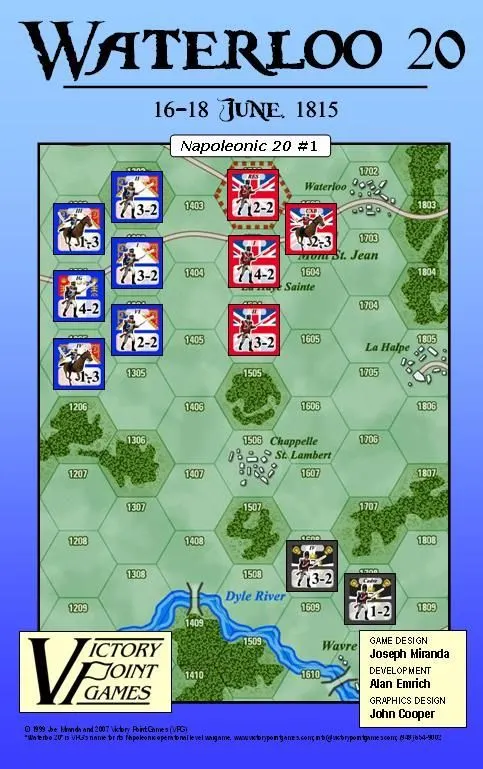
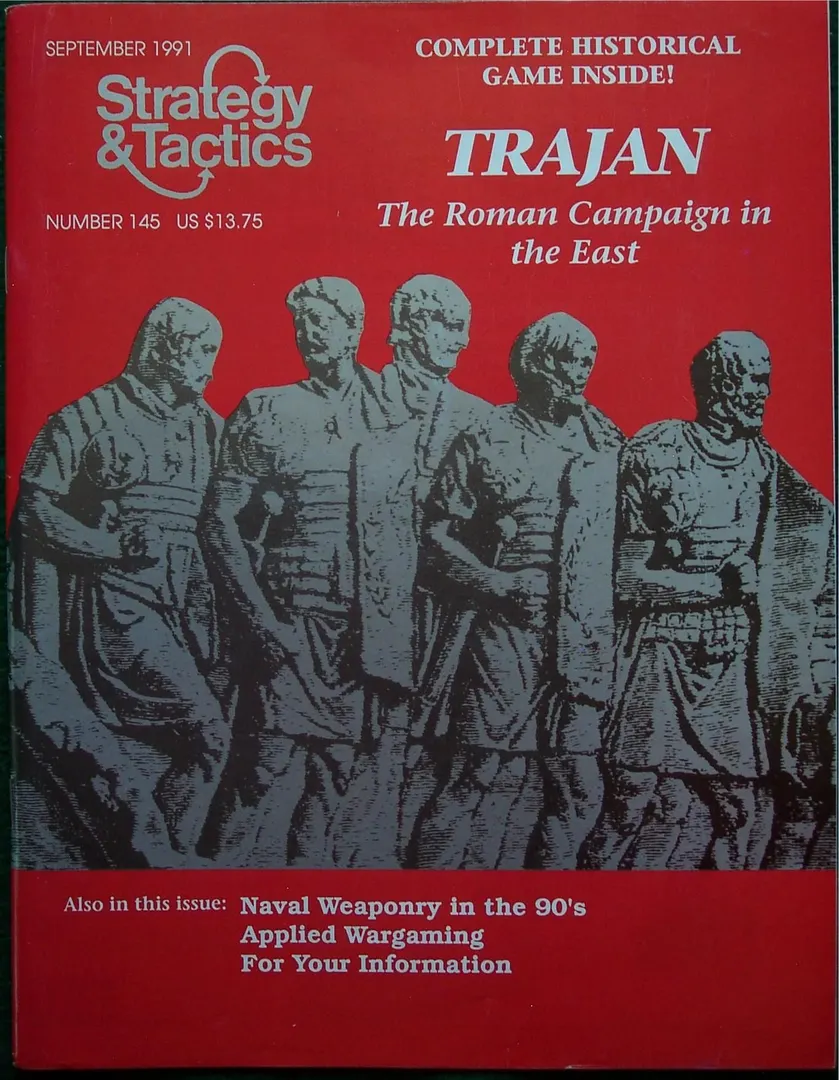
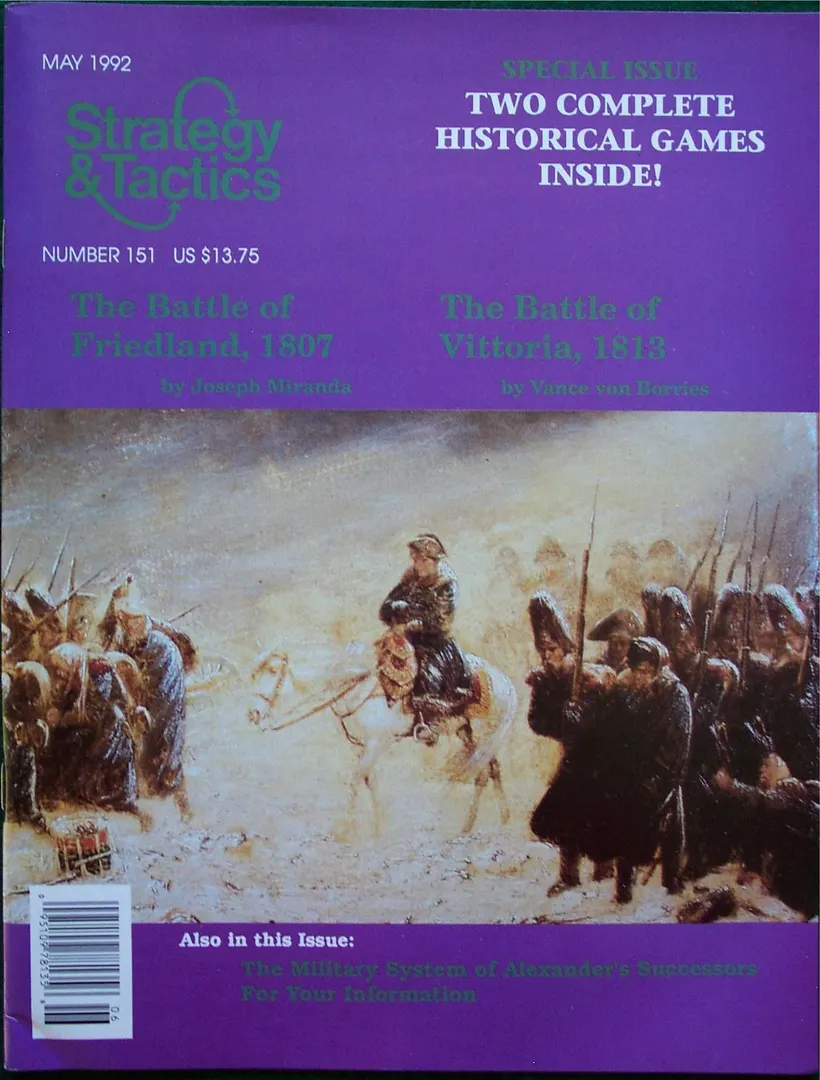
Friedland 1807, is a simulation of The Battle of Friedland (June 14, 1807), a major engagement of the Napoleonic Wars between the armies of the French Empire commanded by Napoleon I and the armies of the Russian Empire led by Count von Bennigsen. Napoleon and the French obtained a decisive victory that routed much of the Russian army, which retreated chaotically over the Alle River by the end of the fighting. The engagement at Friedland was a strategic necessity after the Battle of Eylau earlier in 1807 had failed to yield a decisive verdict for either side. The battle began when Bennigsen noticed the seemingly isolated corps of Marshal Lannes at the town of Friedland. Bennigsen, who planned only to secure his march northward to Wehlau and never intended to risk an engagement against Napoleon's numerically-superior forces, thought he had a good chance of destroying these isolated French units and ordered his entire army over the Alle River. Lannes held his ground against determined Russian attacks until Napoleon could bring additional forces onto the field. Bennigsen could have recalled the Russian forces, numbering about 50,000–60,000 men, and retreated across the river before the arrival of Napoleon’s entire army but, being in poor health, decided to stay at Friedland and took no measures to protect his exposed and exhausted army. By late afternoon, the French had amassed a force of 80,000 troops on the battlefield. Relying on superior numbers, Napoleon concluded that the moment had come and ordered a massive assault against the Russian left flank. The sustained French attack pushed back the Russian army and pressed them against the river behind. Unable to withstand the pressure, the Russians broke and started escaping across the Alle, where an unknown number of them died from drowning. The Russian army suffered horrific casualties at Friedland–losing over 40% of its soldiers on the battlefield Originally published by Decision Games (I) in Strategy & Tactics magazine #151, along with Vittoria. A page of errata was published in S&T #153. Game Scale: Turn: approximately 1 hour Hex: approximately .6km Units: Brigade Game Inventory: One 22 x 34" full color mapsheet One dual-side printed countersheet (200 1/2" counters, approximately 100 per game) One 28-page combined Vittoria/Friedland/Napoleonic Battles System rules booklet Complexity: Medium Solitaire Suitability: Medium Players: 1 or more Playing Time: 1-2 Hours Players will have to provide one 6-sided die
Friedland supports 2 players according to the catalogue. This is the publisher’s listed player count, so the game is designed for exactly that number of participants. Variants for other group sizes, if any, are described in the rulebook of your edition, so check it before setting up a different configuration.
The catalogue lists Friedland for ages 12 and up. This is the publisher’s recommendation and reflects reading demands, rule complexity and small components rather than theme alone. Younger players can often join with help from an adult, so check the age guidance on your edition and consider your group’s experience with board games.
Friedland has a complexity rating of 2.9 out of 5 from BoardGameGeek players, which makes it a medium-light game. The rating reflects how much rules knowledge, planning and decision-making a typical game demands. Expect a longer first teach for heavier games, and use a preparation guide before game night.
Friedland belongs to these categories: Wargame and Napoleonic. Its main mechanics are Hexagon Grid. Categories describe the theme and setting of a game, while mechanics describe what players actually do on their turns. Each mechanic links to a catalogue hub with similar games, which helps when you want something comparable.
The credited designers of Friedland are: Joseph Miranda. These credits come from the published game data and name the people responsible for the game’s design, not its illustrators or publishers. Designer pages on MeepleRules collect other titles by the same designers, which helps when you enjoy a game and want to find similar ones.
The catalogue lists Friedland as a base game. It can be played on its own with the components in the box and does not require any other title. Expansions, if any exist, add new content or rules on top of it and are listed separately in the catalogue with a link back to this base game.