

- BGG rank
- BGG #1,041
- BGG rating
- 7.0
Jambo
- 2 players
- 45 min
- Complexity 2.1/5
- 2004
2024
Rules assistance for Gangs of Kyoto
Plain-language explanations of turns, card effects and disputed situations, with official source references and saved question history.
What would you like to know?
Answers come from the official rulebook, with the page to check.
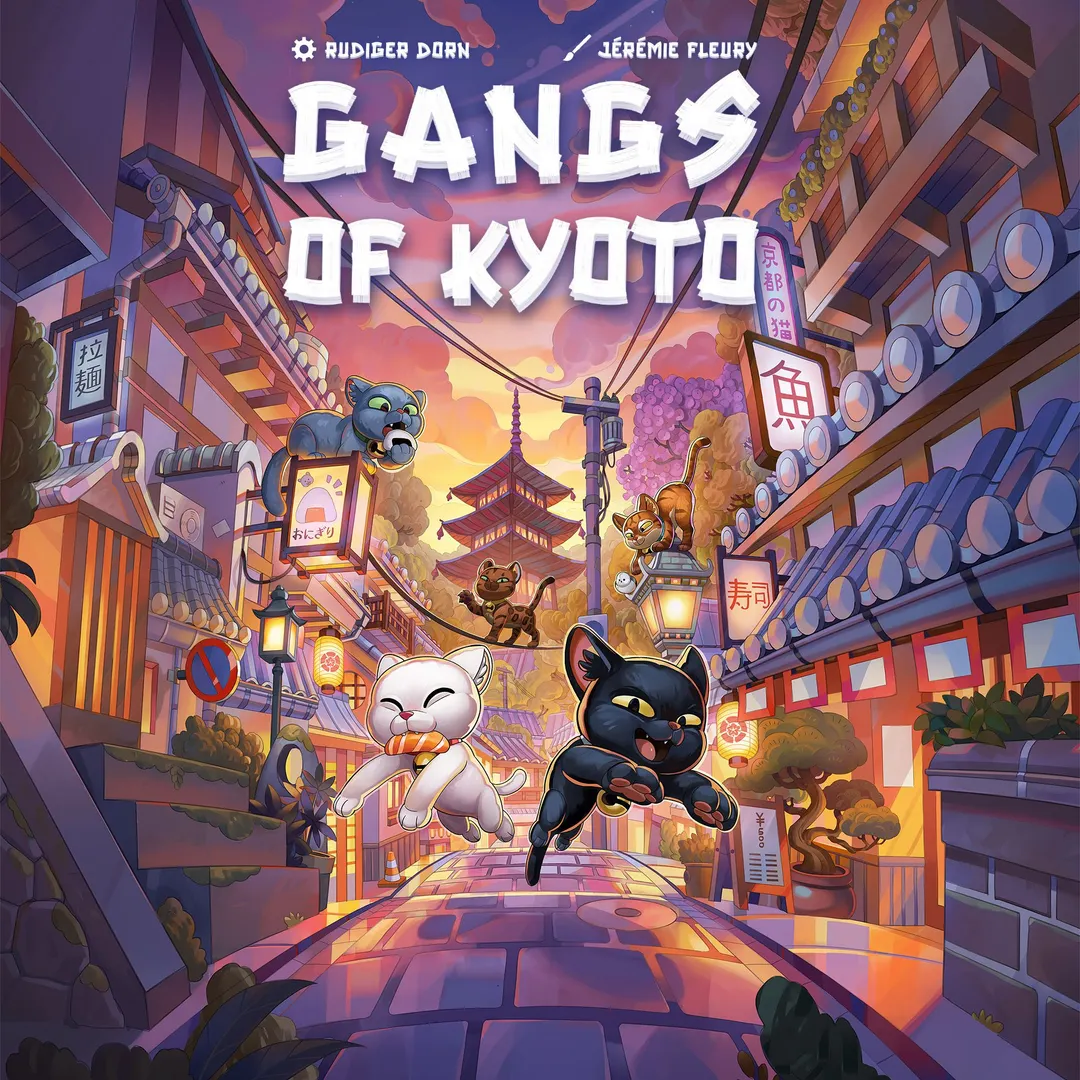
Gangs of Kyoto is a board game released in 2024 for 2–5 players, 15–30 minutes per game, and ages 8 and up. It was designed by Rüdiger Dorn and its main mechanics are Set Collection.







A cat's life may be wonderful, but even the happiest of cats will be curious to know what's hidden behind the walls of their garden! In this game, players take on the role of cats exploring the city. As the deck is explored, the cats will find food, friends and special gifts... But be careful not to stay too late: you might get lost in the streets of Kyoto! In the card game Gangs Of Kyoto, the goal of the game is simple: be the first to have banked 13 bells before anyone else. The cards in the game represent bells, clever little powers or nothing at all. They also all have a numerical value from 0 to 5. On their turn, the active player deals cards one by one to the players around the table, including themselves. Each card is added in value to the previous one received in another round, and as soon as a player reaches or exceeds 13, the round ends, he "jumps" and allows the other players to "bank" all their bells cards. Enjoy quick rounds set in the world of Kyoto No Neko! _______________________________________ La vie d’un chat peut très bien être formiaoudable, mais même le plus heureux des chats sera curieux de savoir ce qui se cache derrière les murs de son jardin ! Dans ce jeu, les joueurs incarnent les chats qui explorent la ville. Au fur et à mesure que la pioche est explorée, les chats découvriront de la nourriture, des amis et des cadeaux spéciaux... Mais attention à ne pas rester trop tard : vous pourriez bien vous perdre dans les rues de Kyoto! Dans le jeu de cartes Gangs Of Kyoto, le but du jeu est simple, être le premier à avoir banqué 13 grelots avant les autres. Les cartes du jeu représentent des grelots, des petits pouvoirs malins ou rien du tout. Elles ont également toutes une valeur chiffrée comprise entre 0 et 5. À son tour de jeu, le joueur actif donne une à une des cartes aux joueurs autour de la table, y compris lui. Chaque carte s'additionne en valeur à la précédente reçue dans une autre manche et dès qu'un joueur atteint ou dépasse 13, la manche prend fin, il "saute" et permet aux autres joueurs de "banquer" toutes leurs cartes Grelots. Ce petit jeu de cartes un peu chafouin propose une revisite familiale du célèbre Black Jack et les illustrations de Jérémie Fleury portent l'ambiance : les choix sont bien là et l'envie d'en enchainer les parties également.
Gangs of Kyoto supports 2–5 players according to the catalogue. This range comes from the publisher’s listed player count, so the game can be set up for any group size within it. Some setups, rules and scoring details may still vary by player count, so check your edition’s rulebook for the exact configuration.
The listed playing time for Gangs of Kyoto is 15–30 minutes. This is the publisher’s estimate for a full game. The actual duration depends on the group, the player count and familiarity with the rules: first sessions usually run longer, while experienced groups often finish faster. Setup and teaching time are not included in this estimate.
The catalogue lists Gangs of Kyoto for ages 8 and up. This is the publisher’s recommendation and reflects reading demands, rule complexity and small components rather than theme alone. Younger players can often join with help from an adult, so check the age guidance on your edition and consider your group’s experience with board games.
Gangs of Kyoto has a complexity rating of 1.1 out of 5 from BoardGameGeek players, which makes it a light game. The rating reflects how much rules knowledge, planning and decision-making a typical game demands. Expect a longer first teach for heavier games, and use a preparation guide before game night.
Gangs of Kyoto belongs to these categories: Card Game. Its main mechanics are Set Collection. Categories describe the theme and setting of a game, while mechanics describe what players actually do on their turns. Each mechanic links to a catalogue hub with similar games, which helps when you want something comparable.
The credited designers of Gangs of Kyoto are: Rüdiger Dorn. These credits come from the published game data and name the people responsible for the game’s design, not its illustrators or publishers. Designer pages on MeepleRules collect other titles by the same designers, which helps when you enjoy a game and want to find similar ones.
The catalogue lists Gangs of Kyoto as a base game. It can be played on its own with the components in the box and does not require any other title. Expansions, if any exist, add new content or rules on top of it and are listed separately in the catalogue with a link back to this base game.