
- BGG rating
- 7.6
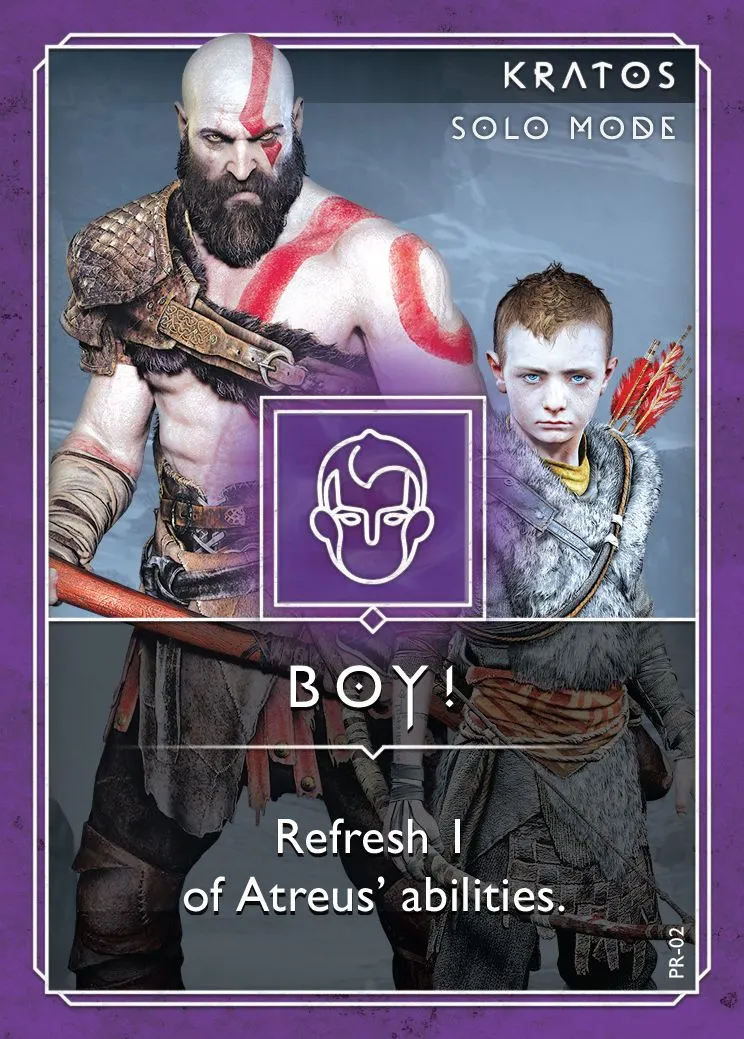
God of War: The Card Game – Boy!
- 1 player
- Complexity 1.0/5
- 2019
2019
Rules assistance for God of War: The Card Game
Plain-language explanations of turns, card effects and disputed situations, with official source references and saved question history.
For 1 player
What would you like to know?
Answers come from the official rulebook, with the page to check.
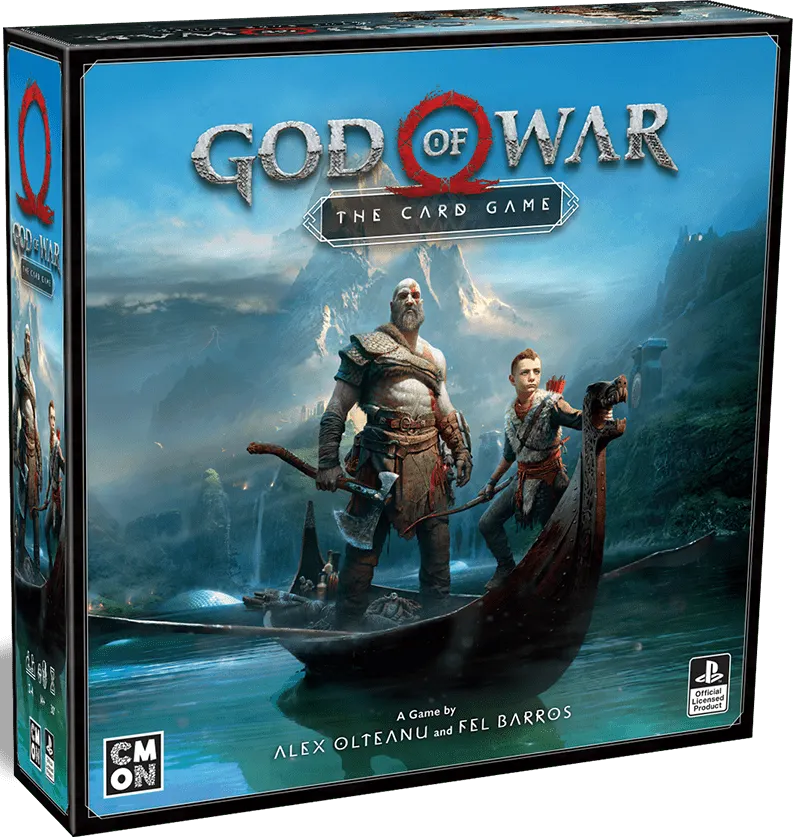
God of War: The Card Game is a board game released in 2019 for 1–4 players, 90–180 minutes per game, and ages 14 and up. It was designed by Fel Barros and Alex Olteanu and its main mechanics are Cooperative Game, Solo / Solitaire Game, and Deck, Bag, and Pool Building.
Ragnarök is coming. The fate of all existence is at stake. Is destruction inevitable, or are there ways to avoid ultimate cataclysm? The Norns, mystical beings of great power, have decided they will not go quietly into oblivion and have turned their attention to the well of Fate, Urðr, in order to find any possible way to stop Ragnarök. Looking deep into the swirling waters, they can foresee which potential combination of heroes, villains, battles, victories, and defeats might stop the end of all that is known — but will they find the right combination in time? Is there any true path to salvation at all? They must hurry and seek the true way through, before all is lost. In God of War: The Card Game, players take on the role of the Norns as they try different combinations of heroes and events in order to stop Ragnarök. Each game is a new attempt to find the right key to saving Midgard from destruction. Players must work together, embodying mighty heroes such as Kratos, Mimir, Atreus, Brok and Sindri, and Freya. They will fight enemies and bosses from the popular God of War video game, but combined and remixed in exciting new ways, creating unique "What if...?" scenarios each time they play. If they succeed, the way forward has been secured and Ragnarök can be halted. Failure means the Norns will have to try again as only death and destruction lay along that particular path. Each quest in God of War: The Card Game is made up of a mosaic of cards that recreate monsters and locations from the video game. Each quest's mosaic is different, and each card is double-sided, depending on whether a section has been destroyed or not, and each has special rules that go into effect when it is face up on the tabletop. Learning how each quest is won, as well as what strategy to employ, is key to victory. As players progress, earlier quests have an effect on what comes after them. At certain points along their path, players must choose which quest they will complete. Completing one might grant a bonus, but quests left untouched result in dire permanent consequences as the players move forward. These choices and challenges lead to new strategies, making it so no two games of God of War: The Card Game are alike. Heroes in the game have several elements that make them unique. Each comes with their own dashboard that explains their special abilities and health totals, in addition to tracking the number of cards a player can keep in their hand from round to round. Tokens are used to keep everything clear as heroes gain and lose health and build up their power so they can unleash a mighty special attack. Heroes begin the game with a unique starting deck of cards that will be augmented from additional decks as the game progresses. Players can construct their deck to focus on their strengths or look for ways to generalize their approach, preparing for future quests that lie ahead. Each hero also has a unique standee that indicates which portion of the mosaic they are facing. With multiple heroes from which to choose, numerous ways to build their deck, and various different quests to attempt, each game of God of War: The Card Game will be a new experience that will echo throughout eternity. —description from the publisher
God of War: The Card Game supports 1–4 players according to the catalogue. This range comes from the publisher’s listed player count, so the game can be set up for any group size within it. Some setups, rules and scoring details may still vary by player count, so check your edition’s rulebook for the exact configuration.
The listed playing time for God of War: The Card Game is 90–180 minutes. This is the publisher’s estimate for a full game. The actual duration depends on the group, the player count and familiarity with the rules: first sessions usually run longer, while experienced groups often finish faster. Setup and teaching time are not included in this estimate.
The catalogue lists God of War: The Card Game for ages 14 and up. This is the publisher’s recommendation and reflects reading demands, rule complexity and small components rather than theme alone. Younger players can often join with help from an adult, so check the age guidance on your edition and consider your group’s experience with board games.
God of War: The Card Game has a complexity rating of 2.5 out of 5 from BoardGameGeek players, which makes it a medium-light game. The rating reflects how much rules knowledge, planning and decision-making a typical game demands. Expect a longer first teach for heavier games, and use a preparation guide before game night.
God of War: The Card Game belongs to these categories: Card Game, Fantasy, and Video Game Theme. Its main mechanics are Cooperative Game, Solo / Solitaire Game, and Deck, Bag, and Pool Building. Categories describe the theme and setting of a game, while mechanics describe what players actually do on their turns. Each mechanic links to a catalogue hub with similar games, which helps when you want something comparable.
The credited designers of God of War: The Card Game are: Fel Barros and Alex Olteanu. These credits come from the published game data and name the people responsible for the game’s design, not its illustrators or publishers. Designer pages on MeepleRules collect other titles by the same designers, which helps when you enjoy a game and want to find similar ones.
The catalogue lists God of War: The Card Game as a base game. It can be played on its own with the components in the box and does not require any other title. Expansions, if any exist, add new content or rules on top of it and are listed separately in the catalogue with a link back to this base game.