
- BGG rank
- BGG #536
- BGG rating
- 7.3
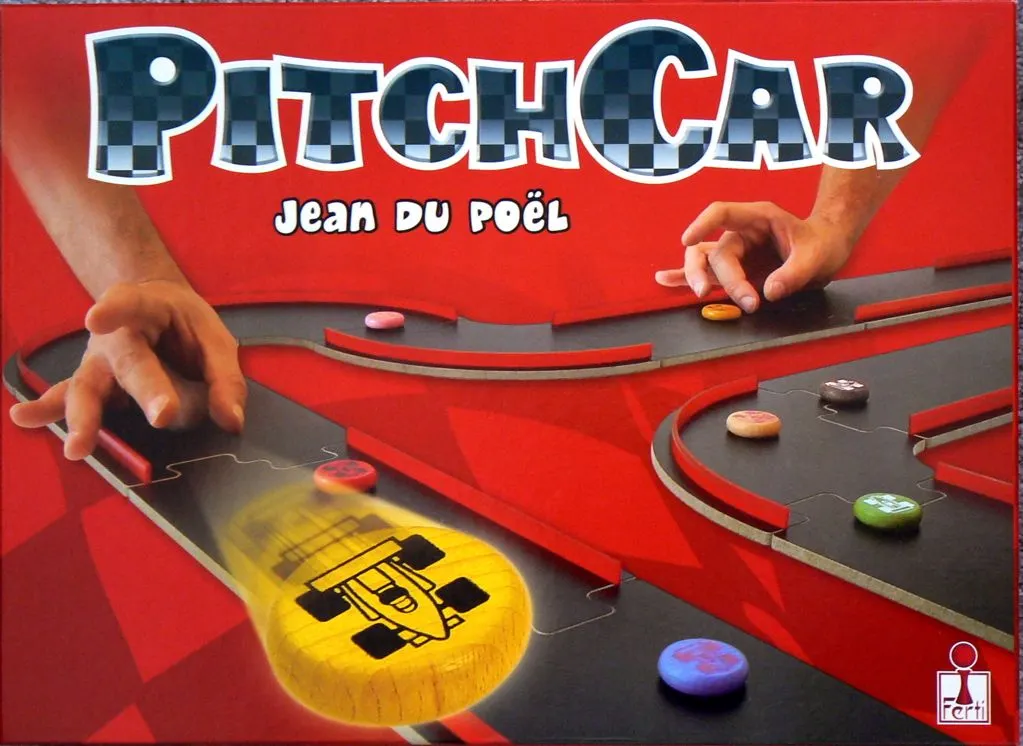
PitchCar
- 2–8 players
- 30 min
- Complexity 1.1/5
- 1995
1994
Rules assistance for Goofy Golf Machine
Plain-language explanations of turns, card effects and disputed situations, with official source references and saved question history.
What would you like to know?
Answers come from the official rulebook, with the page to check.
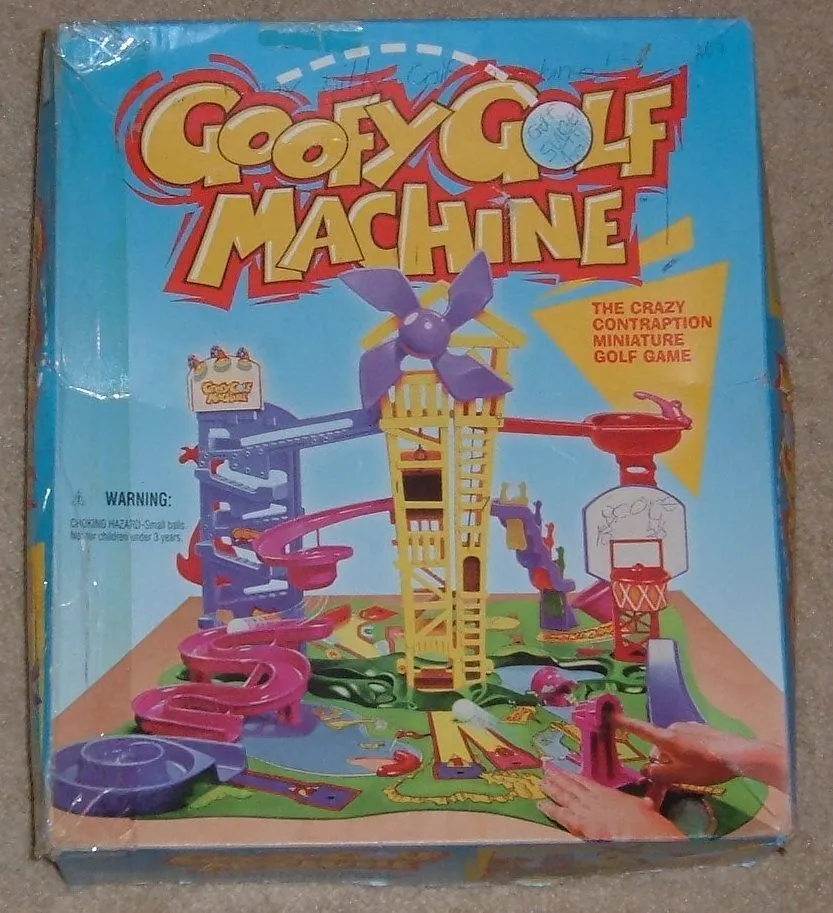
Goofy Golf Machine is a board game released in 1994 for 1–4 players, 10 minutes per game, and ages 6 and up. Its main mechanics are Modular Board.



Try as I might, I couldn't manage to fit this game with any of the mechanics mentioned above. I suppose that alone makes it fairly special. Also, the rules state that it's for 2-4 players, but I see no reason why one person couldn't play solo with it. The Goofy Golf Machine is almost more a toy than a game. Like Mousetrap, the gameboard is dominated (in fact, consists of) a large Rube Goldberg-ish contraption. Players use a plastic "putter" to flick a small (about 1cm in diameter) ball around a nine-hole miniature golf course. Some holes require the ball to roll into an elevator which carries it up and dumps it into a spiral track leading to the hole. Others require the ball to be hit up a ramp into a basketball hoop or rebounded off bumpers. One hole even consists of a dangling plastic chicken that swings back and forth pendulum-style (a little oil might be useful for this one as there's too much friction as-is for the chicken to swing freely.) Players have three chances to play each hole. Whoever sinks their putt in the fewest shots is awarded a token--no tokens awarded for ties. The ninth hole has two holes, one harder to reach than the other. Players are awarded one token for sinking their putt into the easy hole, or two for the hard one. The player with the most tokens wins.
Goofy Golf Machine supports 1–4 players according to the catalogue. This range comes from the publisher’s listed player count, so the game can be set up for any group size within it. Some setups, rules and scoring details may still vary by player count, so check your edition’s rulebook for the exact configuration.
The listed playing time for Goofy Golf Machine is 10 minutes. This is the publisher’s estimate for a full game. The actual duration depends on the group, the player count and familiarity with the rules: first sessions usually run longer, while experienced groups often finish faster. Setup and teaching time are not included in this estimate.
The catalogue lists Goofy Golf Machine for ages 6 and up. This is the publisher’s recommendation and reflects reading demands, rule complexity and small components rather than theme alone. Younger players can often join with help from an adult, so check the age guidance on your edition and consider your group’s experience with board games.
Goofy Golf Machine has a complexity rating of 1.5 out of 5 from BoardGameGeek players, which makes it a light game. The rating reflects how much rules knowledge, planning and decision-making a typical game demands. Expect a longer first teach for heavier games, and use a preparation guide before game night.
Goofy Golf Machine belongs to these categories: Action / Dexterity. Its main mechanics are Modular Board. Categories describe the theme and setting of a game, while mechanics describe what players actually do on their turns. Each mechanic links to a catalogue hub with similar games, which helps when you want something comparable.
The catalogue lists Goofy Golf Machine as a base game. It can be played on its own with the components in the box and does not require any other title. Expansions, if any exist, add new content or rules on top of it and are listed separately in the catalogue with a link back to this base game.