

- BGG rank
- BGG #9,028
- BGG rating
- 7.2
Great War at Sea: Jutland
- 2 players
- 30–120 min
- Complexity 3.1/5
- 2006
Rules assistance for Great War at Sea: U.S. Navy Plan Gray
Plain-language explanations of turns, card effects and disputed situations, with official source references and saved question history.
What would you like to know?
Answers come from the official rulebook, with the page to check.
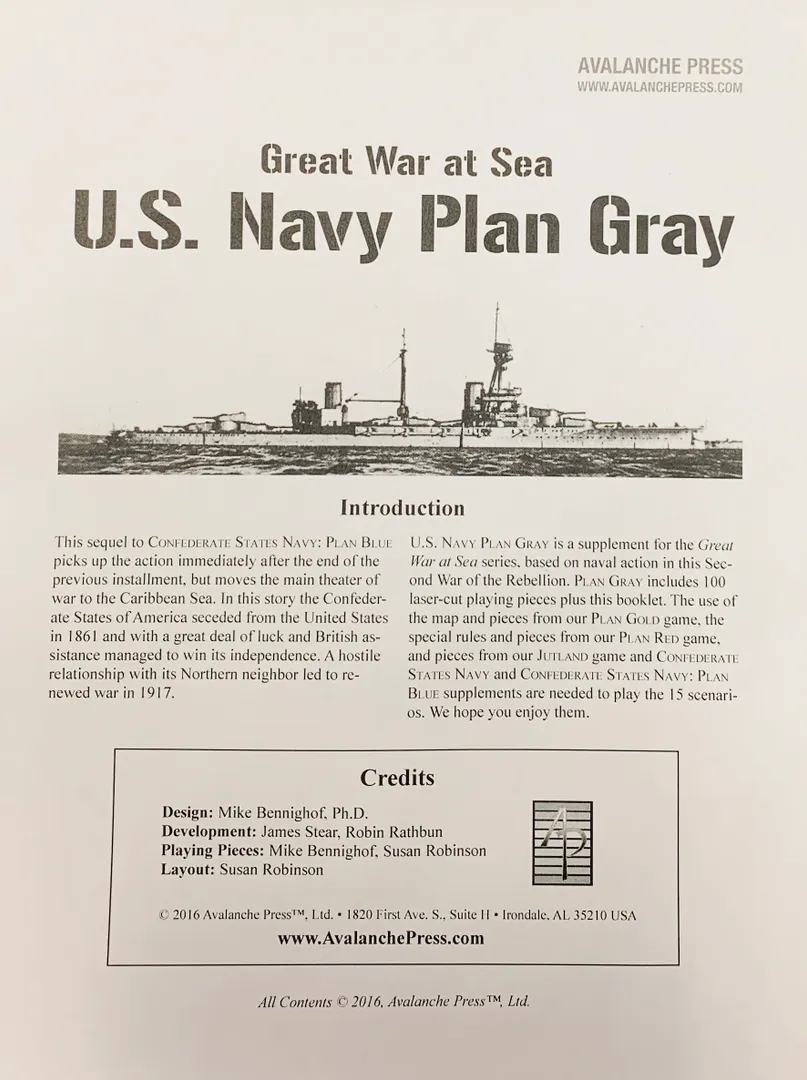
Great War at Sea: U.S. Navy Plan Gray is an expansion for Great War at Sea: C.S. Navy Plan Blue released in 2016 for 1–2 players, 30–180 minutes per game, and ages 12 and up. It was designed by Michael Bennighof and its main mechanics are Dice Rolling, Secret Unit Deployment, and Hexagon Grid.




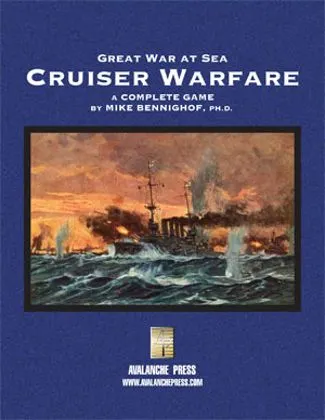

From the published: Picking up the story from C.S. Navy: Plan Blue, Great War at Sea: U.S. Navy Plan Gray looks at naval operations in the Second War of the Rebellion as the outnumbered Confederate States Navy along with its British, Canadian and Imperial Mexican allies battles the much larger Union fleet. In Plan Blue, we covered the early months of the war that followed the Confederacy’s surprising declaration of war against the United States. U.S. Navy Plan Gray sees action taking place in both the North Atlantic theater (on the map from U.S. Navy Plan Red) and in the Caribbean (on the map from U.S. Navy Plan Gold). The Confederates have managed to keep their communications to Britain open, but now the North threatens the economically-vulnerable southern flank of the Confederate Empire in places like Cuba, Santo Domingo and Panama. The Union fleet adds powerful new warships: additional members of the New York, Nevada and Pennsylvania classes, fast battle cruisers, torpedo battleships (actually proposed in the real world!), some obsolete torpedo rams (the proposed improved version of the useless Katahdin), and the "small battleship" alternative armed with four 16-inch guns (also a real proposal). The economically-weaker Confederacy tries to even things up with deadly but fragile torpedo cruisers and some small coast defense ships. The Imperial Mexican Navy is there to help out, with a dreadnought and some other foreign-built ships. And there are small contingents from the minor Caribbean powers, Denmark and the Netherlands. U.S. Navy Plan Gray is a supplement for the Great War at Sea series, based on battles that never happened. It is not a complete game: Ownership of U.S. Navy Plan Red, U.S. Navy Plan Gold, Jutland, C.S. Navy: Plan Blue and Confederate States Navy is necessary to play all of the ten scenarios included. Plan Gray includes 80 laser-cut and mounted playing pieces: 60 "long" pieces representing major warships and 20 square ones representing smaller craft.
Great War at Sea: U.S. Navy Plan Gray supports 1–2 players according to the catalogue. This range comes from the publisher’s listed player count, so the game can be set up for any group size within it. Some setups, rules and scoring details may still vary by player count, so check your edition’s rulebook for the exact configuration.
The listed playing time for Great War at Sea: U.S. Navy Plan Gray is 30–180 minutes. This is the publisher’s estimate for a full game. The actual duration depends on the group, the player count and familiarity with the rules: first sessions usually run longer, while experienced groups often finish faster. Setup and teaching time are not included in this estimate.
The catalogue lists Great War at Sea: U.S. Navy Plan Gray for ages 12 and up. This is the publisher’s recommendation and reflects reading demands, rule complexity and small components rather than theme alone. Younger players can often join with help from an adult, so check the age guidance on your edition and consider your group’s experience with board games.
Great War at Sea: U.S. Navy Plan Gray belongs to these categories: Wargame, Nautical, and Expansion for Base-game. Its main mechanics are Dice Rolling, Secret Unit Deployment, and Hexagon Grid. Categories describe the theme and setting of a game, while mechanics describe what players actually do on their turns. Each mechanic links to a catalogue hub with similar games, which helps when you want something comparable.
The credited designers of Great War at Sea: U.S. Navy Plan Gray are: Michael Bennighof. These credits come from the published game data and name the people responsible for the game’s design, not its illustrators or publishers. Designer pages on MeepleRules collect other titles by the same designers, which helps when you enjoy a game and want to find similar ones.
The catalogue lists Great War at Sea: U.S. Navy Plan Gray as an expansion for Great War at Sea: C.S. Navy Plan Blue. Expansions add new content, rules or scenarios to the base game and usually cannot be played on their own, so you need Great War at Sea: C.S. Navy Plan Blue to use it. Check that your edition of Great War at Sea: C.S. Navy Plan Blue is compatible, as some expansions were revised between editions.