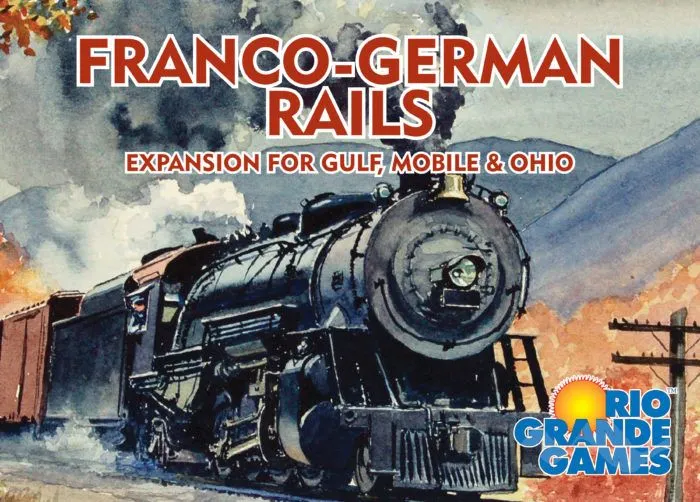
- BGG rating
- 6.8
Gulf, Mobile & Ohio: Expansion #1
- 3–5 players
- 75 min
- Complexity 3.0/5
- 2009
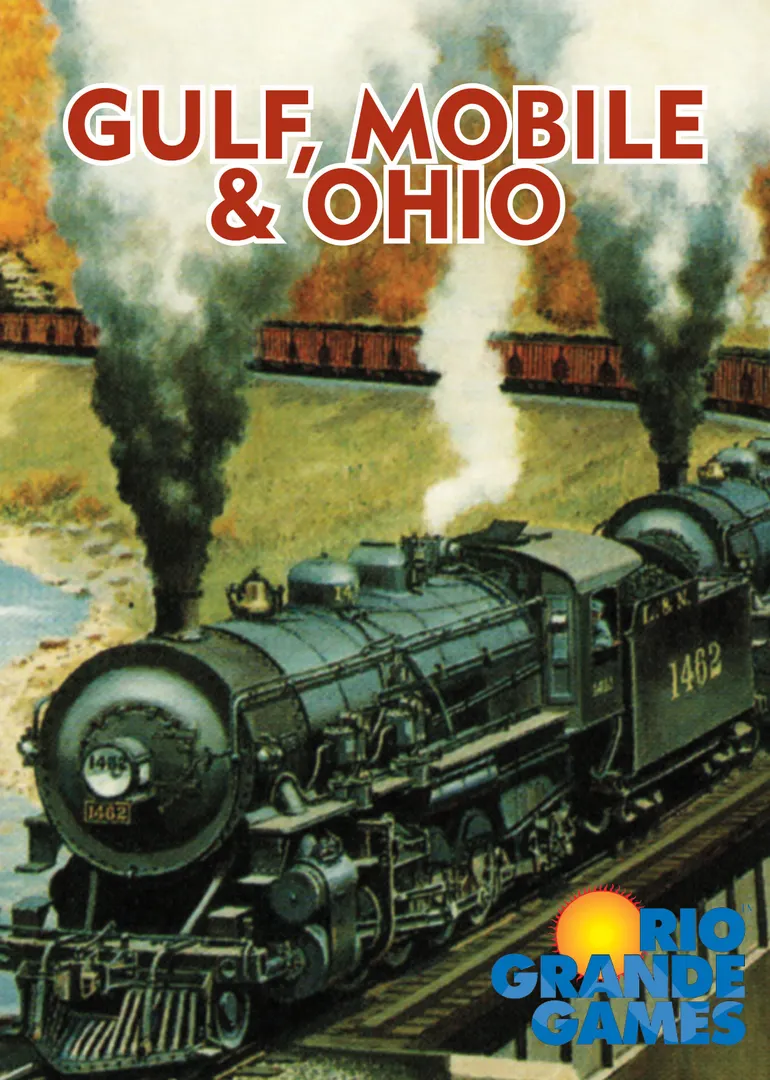
2008
Rules assistance for Gulf, Mobile & Ohio
Plain-language explanations of turns, card effects and disputed situations, with official source references and saved question history.
For 3 players
What would you like to know?
Answers come from the official rulebook, with the page to check.
Gulf, Mobile & Ohio is a board game released in 2008 for 3–5 players and 45–60 minutes per game. It was designed by John Bohrer and its main mechanics are Auction / Bidding, Income, and Hexagon Grid.



In Gulf, Mobile & Ohio, the third entry in Winsome Games's Historic Railroads System, players build railroads in the South that existed between 1830-1860, with the game board featuring cities from Richmond to New Orleans, and from Memphis to Savannah. Twenty-three different railroad lines exist in the game, each represented by two shares of stock: a charter share for the player who founds this railroad, and a common share that might be auctioned later in the game. Eight railroads are designated as starting lines, and initially only the shares for these eight lines are available to players. Railroad lines will be represented on the game board with wooden cubes that come in six colors, with the number of cubes ranging from 6 to 32. On a turn, a player takes one of four actions: • Charter a railroad: The active player starts an auction for the charter share of a railroad that hasn't yet been founded. Players place bids for this share, with the winner claiming this charter share, placing a cube of the color that's most common on it, then using the money spent in the auction to place additional cubes on the game board at a cost of $3/cube. One cube of the same color is placed in the railroad's starting city (and sometimes you have a choice of starting city), and additional cubes are placed on track intersections and in connecting cities. You must bid enough that you can place this line in at least two cities. If the color of the cube that's most available in the stock is already in this city (thanks to railroad lines previously built), then the active player can't put this line up for auction. Whenever you build or expand railroad lines, you can't place cubes so that two lines of the same color touch. If a white cube has been placed in Grenada, for example, you can't found the MC or M&T lines in that city if white is the most common color of cubes. • Auction a common share: Once the charter share of a line has been acquired, the active player can start an auction for the common share of that line, with the winning bid once again being used to expand that line with additional cubes of that railroad's color, although in this case you have no building requirement and a winning bid of $0 is allowed. After each auction, a "common share" tracking marker is moved, and after the second such movement, players receive dividends from the bank for the shares they hold: $5 for a charter share when that railroad has issued only that one share, and $3 for each share otherwise held. • Expand a line: If you own the charter share of a line, you can spend your funds to expand this line. • Pass: If all players pass in turn, the game ends. When a railroad line expands into a city that's the starting city for a railroad line not yet available in the auction pool, you take the two shares of that new line and place them in the auction pool. Each time you build railroad lines, you score victory points: 1 VP for founding a new line (with three lines being worth 2 VP), 1 VP for placing a cube in a city (2 VP for going into Atlanta), and 1 VP for the first time that a line connects to a line of each other color (which can occur only in cities). If all players pass in turn or the sixth color of cubes is on the board following the chartering of a railroad, the game ends. Whoever has the most points wins!
Gulf, Mobile & Ohio supports 3–5 players according to the catalogue. This range comes from the publisher’s listed player count, so the game can be set up for any group size within it. Some setups, rules and scoring details may still vary by player count, so check your edition’s rulebook for the exact configuration.
The listed playing time for Gulf, Mobile & Ohio is 45–60 minutes. This is the publisher’s estimate for a full game. The actual duration depends on the group, the player count and familiarity with the rules: first sessions usually run longer, while experienced groups often finish faster. Setup and teaching time are not included in this estimate.
Gulf, Mobile & Ohio has a complexity rating of 2.8 out of 5 from BoardGameGeek players, which makes it a medium-light game. The rating reflects how much rules knowledge, planning and decision-making a typical game demands. Expect a longer first teach for heavier games, and use a preparation guide before game night.
Gulf, Mobile & Ohio belongs to these categories: Economic and Trains. Its main mechanics are Auction / Bidding, Income, and Hexagon Grid. Categories describe the theme and setting of a game, while mechanics describe what players actually do on their turns. Each mechanic links to a catalogue hub with similar games, which helps when you want something comparable.
The credited designers of Gulf, Mobile & Ohio are: John Bohrer. These credits come from the published game data and name the people responsible for the game’s design, not its illustrators or publishers. Designer pages on MeepleRules collect other titles by the same designers, which helps when you enjoy a game and want to find similar ones.
The catalogue lists Gulf, Mobile & Ohio as a base game. It can be played on its own with the components in the box and does not require any other title. Expansions, if any exist, add new content or rules on top of it and are listed separately in the catalogue with a link back to this base game.