
- BGG rank
- BGG #3,779
- BGG rating
- 7.5
Through Ice & Snow
- 1–4 players
- 45–90 min
- Complexity 3.2/5
- 2024
2023
Rules assistance for Ierusalem: Anno Domini
Plain-language explanations of turns, card effects and disputed situations, with official source references and saved question history.
For 1 player
What would you like to know?
Answers come from the official rulebook, with the page to check.
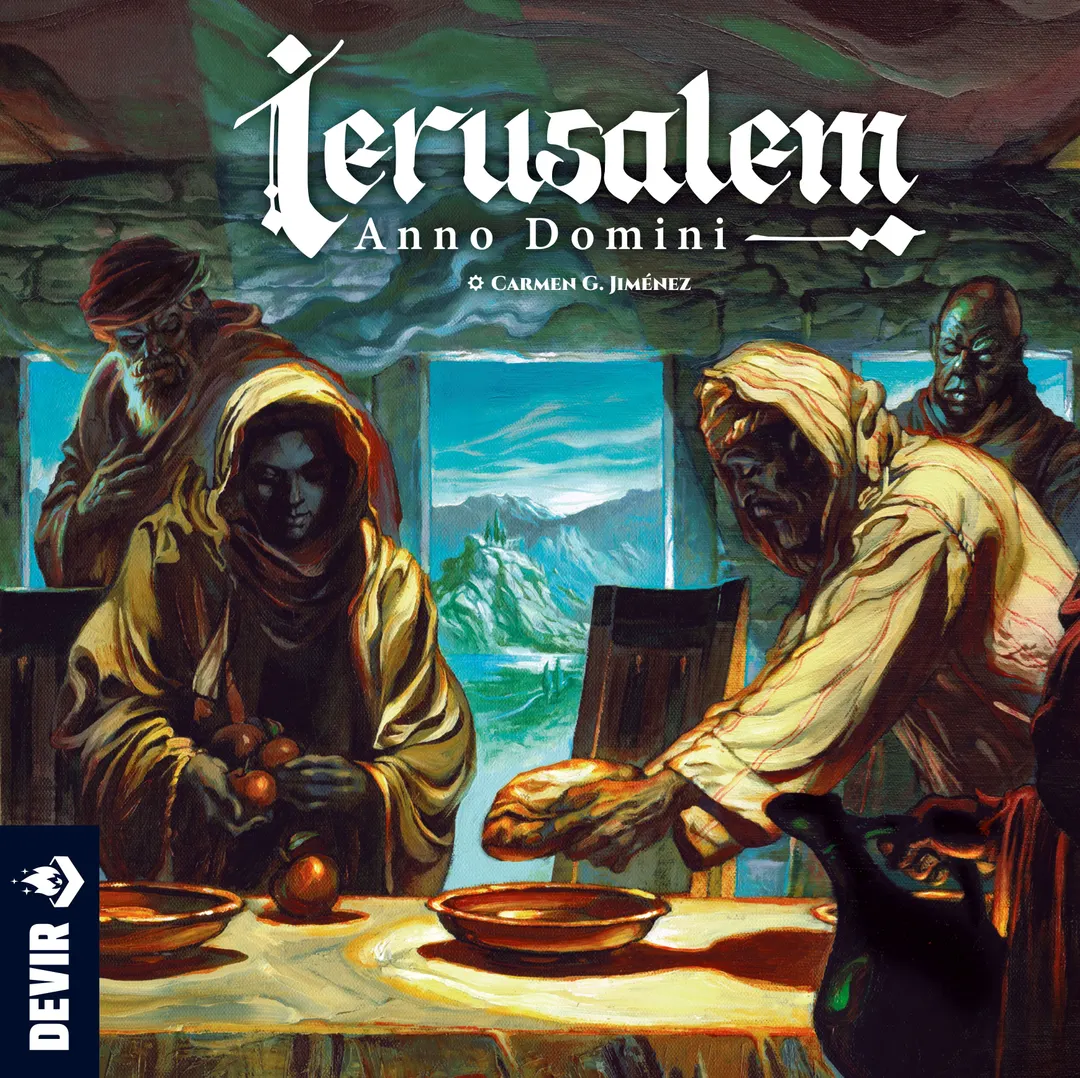
Ierusalem: Anno Domini is a board game released in 2023 for 1–4 players, 90 minutes per game, and ages 12 and up. It was designed by Carmen García Jiménez and its main mechanics are Hand Management, Set Collection, and Grid Movement.





Jerusalem, spring 33 AD: A crowd gathers at the city gates to welcome Jesus of Nazareth as he prepares to celebrate the Passover seder with his apostles and followers. With a revolutionary message, he has garnered supporters everywhere but also looks of suspicion among religious authorities. The Last Supper will soon be celebrated, and the fate of one of the most influential characters in human history will be sealed. In Ierusalem: Anno Domini, we represent one of the communities of followers of Jesus of Nazareth who, coming to Jerusalem from nearby towns and villages, want to approach the place of the Last Supper and position ourselves as close as possible to the seats of Jesus and his apostles. The closer we are, the more points we earn at game's end. We also score for offering tokens and parable tiles we've accumulated. Different locations are shown on the board: the market, the desert, the mountain, the lake, and the temple. After sending our followers to one of these locations, we obtain stones, bread, and fish, as well as denarii or cards that allow us to do more than one action. Among these actions, players can choose between listening to a parable, going to the table, changing seats, or doing a favor, among other things. All this happens while the patience of the Sanhedrin runs out. When this happens, as symbolized by a tile moving in a marker, the endgame is triggered. However, the main element of the game is the cards. Each card has a symbol corresponding to one of five key locations in the game. As we play them, we form combinations that allow us to bring the apostles to the table of the Last Supper. The optimal placement of our followers around Jesus and the apostles will also be done through the management of letters, as well as various resources at our disposal. Behind a very immersive theme, Ierusalem: Anno Domini will not disappoint lovers of good challenges. Players have a wide range of possibilities at their fingertips and multiple ways to earn points. Preparing the best strategies to get the most out of your followers will be one of the keys to victory. Devout gamers don't need to look further: Here is your game! —description from publisher
Ierusalem: Anno Domini supports 1–4 players according to the catalogue. This range comes from the publisher’s listed player count, so the game can be set up for any group size within it. Some setups, rules and scoring details may still vary by player count, so check your edition’s rulebook for the exact configuration.
The listed playing time for Ierusalem: Anno Domini is 90 minutes. This is the publisher’s estimate for a full game. The actual duration depends on the group, the player count and familiarity with the rules: first sessions usually run longer, while experienced groups often finish faster. Setup and teaching time are not included in this estimate.
The catalogue lists Ierusalem: Anno Domini for ages 12 and up. This is the publisher’s recommendation and reflects reading demands, rule complexity and small components rather than theme alone. Younger players can often join with help from an adult, so check the age guidance on your edition and consider your group’s experience with board games.
Ierusalem: Anno Domini has a complexity rating of 3.2 out of 5 from BoardGameGeek players, which makes it a medium-weight game. The rating reflects how much rules knowledge, planning and decision-making a typical game demands. Expect a longer first teach for heavier games, and use a preparation guide before game night.
Ierusalem: Anno Domini belongs to these categories: Ancient and Religious. Its main mechanics are Hand Management, Set Collection, and Grid Movement. Categories describe the theme and setting of a game, while mechanics describe what players actually do on their turns. Each mechanic links to a catalogue hub with similar games, which helps when you want something comparable.
The credited designers of Ierusalem: Anno Domini are: Carmen García Jiménez. These credits come from the published game data and name the people responsible for the game’s design, not its illustrators or publishers. Designer pages on MeepleRules collect other titles by the same designers, which helps when you enjoy a game and want to find similar ones.
The catalogue lists Ierusalem: Anno Domini as a base game. It can be played on its own with the components in the box and does not require any other title. Expansions, if any exist, add new content or rules on top of it and are listed separately in the catalogue with a link back to this base game.