
- BGG rank
- BGG #12,967
- BGG rating
- 6.8
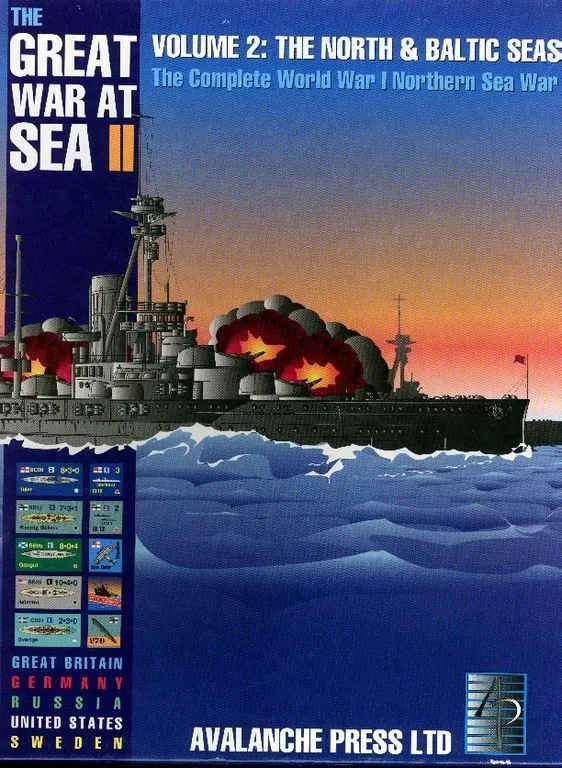
Great War at Sea 2: The North & Baltic Seas
- 2–4 players
- 180 min
- Complexity 2.8/5
- 1998
Rules assistance for Infantry Attacks: Winter's Battle
Plain-language explanations of turns, card effects and disputed situations, with official source references and saved question history.
What would you like to know?
Answers come from the official rulebook, with the page to check.
Infantry Attacks: Winter's Battle is an expansion for Infantry Attacks: August 1914 released in 2023. It was designed by Michael Bennighof and its main mechanics are Dice Rolling and Hexagon Grid.





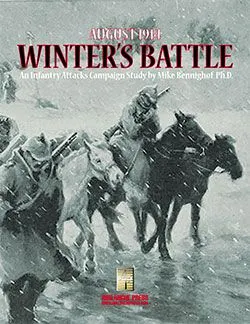
In February 1915, the Germans launched an offensive in East Prussia designed to drive the Russians out of their last foothold in German territory. Despite the bitter cold and heavy snow, the Germans crushed the Russian 10th Army and secured a major victory though not enough to knock Russia out of the war as had been hoped. Winter’s Battle is a Campaign Study (a short book of scenarios and history) based on the Second Battle of the Masurian Lakes (we covered the First Battle in August 1914). The Germans, reinforced by newly-raised divisions and troops transferred from the Western Front, inflicted as many as 135,000 casualties including 80,000 prisoners taken, at a cost of some 32,000 of their own. Winter’s Battle adds 11 new scenarios to Infantry Attacks: August 1914, split into two chapters, each with a battle game to link the scenarios together. This being an Avalanche Press product, there’s also the background story of the battle. It requires August 1914 and Fall of Empires (for some additional Russian pieces) to play all 11 scenarios. —description from the publisher
Infantry Attacks: Winter's Battle belongs to these categories: Wargame, Expansion for Base-game, and World War I. Its main mechanics are Dice Rolling and Hexagon Grid. Categories describe the theme and setting of a game, while mechanics describe what players actually do on their turns. Each mechanic links to a catalogue hub with similar games, which helps when you want something comparable.
The credited designers of Infantry Attacks: Winter's Battle are: Michael Bennighof. These credits come from the published game data and name the people responsible for the game’s design, not its illustrators or publishers. Designer pages on MeepleRules collect other titles by the same designers, which helps when you enjoy a game and want to find similar ones.
The catalogue lists Infantry Attacks: Winter's Battle as an expansion for Infantry Attacks: August 1914. Expansions add new content, rules or scenarios to the base game and usually cannot be played on their own, so you need Infantry Attacks: August 1914 to use it. Check that your edition of Infantry Attacks: August 1914 is compatible, as some expansions were revised between editions.